Curated with by@mohithkumar808

Catalog / Type

Reddit posts

124 Reddit threads on Meta Muse: local Muse Glimmer benchmarks, agent experiments, bugs, workarounds and honest first impressions from users.

U

OldChemical3853

u/OldChemical3853

Built a small bridge so Muse can act on my Mac from my phone, and recorded a real session: it looks at the Terminal, reports the epoch, loss and accuracy it sees, then locks the machine when asked. What struck me building it is how much of the work is permissions, not intelligence: per-action consent, small window captures instead of a live feed, rejecting stale observations before any input. Free beta if anyone wants to try it. Developer here, ask away. try wand here today

Your product

Sponsored

Put your logo, a line of copy and an image right here, between the builds Muse developers come to read. Same size as a post.

$100/week

Put your product here

Shown every 12 builds · on every catalog page

U

xenovatech

u/xenovatech

Ran Muse Glimmer 30B locally in the browser with custom WebGPU kernels at ~25 tok/s on an M4 Max, matching llama.cpp speed.

Reddit post · Local & open models★ Pick

Muse Glimmer 30B in the browser via WebGPU

U

mr_il

u/mr_il

My fun weekend project was to try to make the new Muse Glimmer 30B work with a longer context, deciding to go for 512k first. I had expected the usual YaRN shenanigans and maybe a LoRA. I couldn't have been wrong more. Upon closer look, Glimmer turned out to be rather unusual architecturally. The thing that make long-context adaptations painful in other models, full attention layers with token position encoding, it simply not there. Instead, only 2048 tokens-wide SWA layers have RoPE, and full GQA attention layers have no position encoding at all. It appears the model is trained to work with long-distance token relationships inferred from the context and SWA layers. It's a rather bold architecture bet, but it seems Meta managed to pull it off. As a result, the model architecture appears to be uniquely suited for context extension by simple mechanical means. To change model context length from stock 128k to, say, 512k, you need only to change “max_position_embeddings” config setting from 131072 to 524288. What confuses other models, like Qwen3.5 family, Glimmer just takes into its stride. I spent close to 70h of compute on DGX Spark to test stock model with extended context on a

Reddit post · Local & open models★ Pick

Muse Glimmer 30B stretched to 512K context

U

Ok-Inevitable8391

u/Ok-Inevitable8391

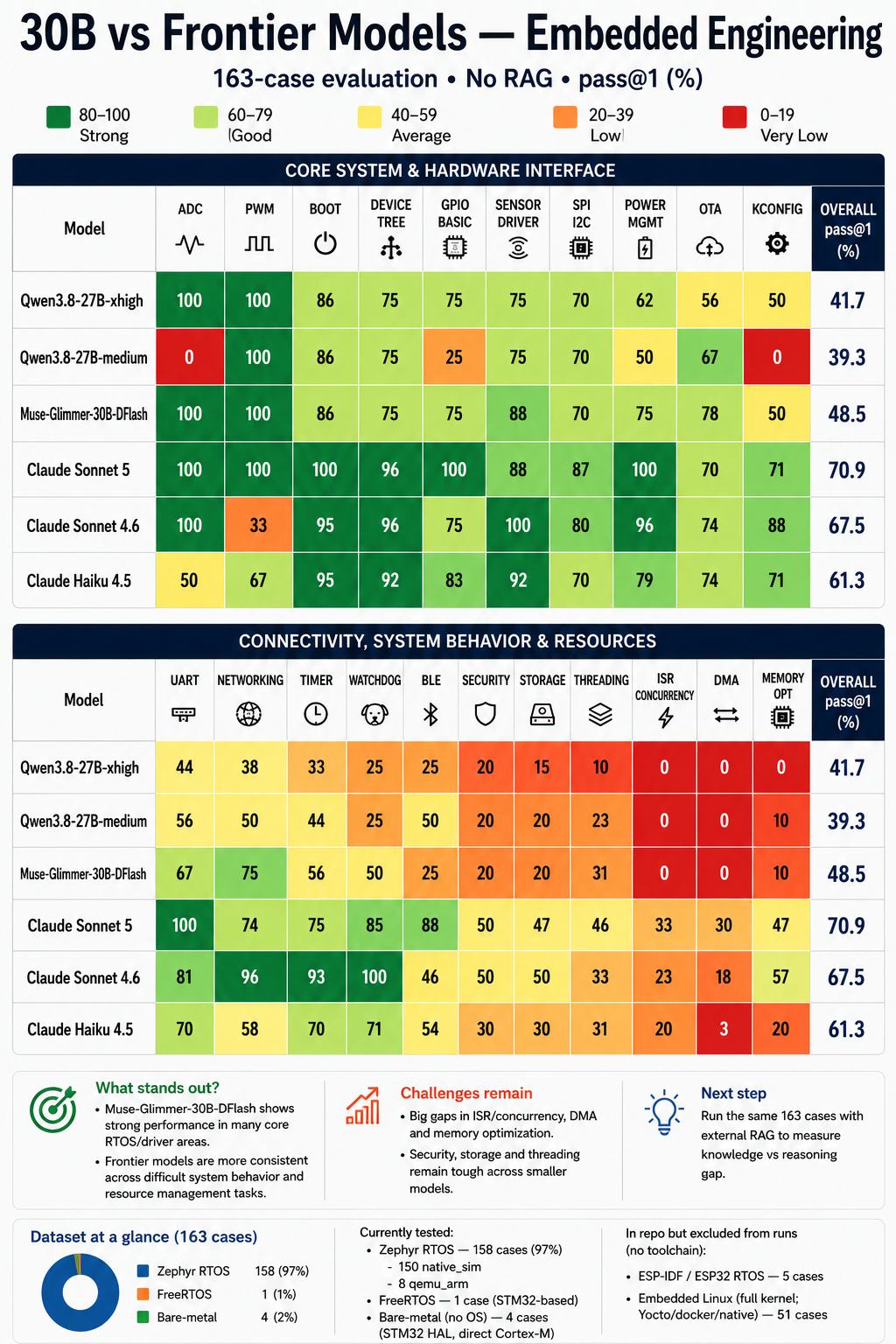
Benchmarked qwen3.8 xhigh, medium and muse glimmer. Xhigh effort mode with qwen3.8 took almost 30hrs. (And still failed on 16 cases because of the 32K output token limit) Medium effort mode and muse glimmer were 3-4 hours each. But I'm actually surprised by the muse glimmer results, they came better than the qwen. These benchmarks are on implicit knowledge of the model, which is a bit unfair to smaller models, but throw in a RAG and I'm sure they get on par with frontier models. I have taken the result of claude models directly from embedeval repo by ecro. I'm not pushing qwen down here, I like how qwen thinks and gives better results. I know with more context and RAG qwen will do better. I'm just appreciating muse here, cause i feel it is underrated. The advantage is efficient kv cache due to sliding window, which can give you more context window.

Reddit post · Benchmarks & research

Glimmer vs Qwen 3.8 on an implicit-knowledge eval

U

DerTomsn

u/DerTomsn

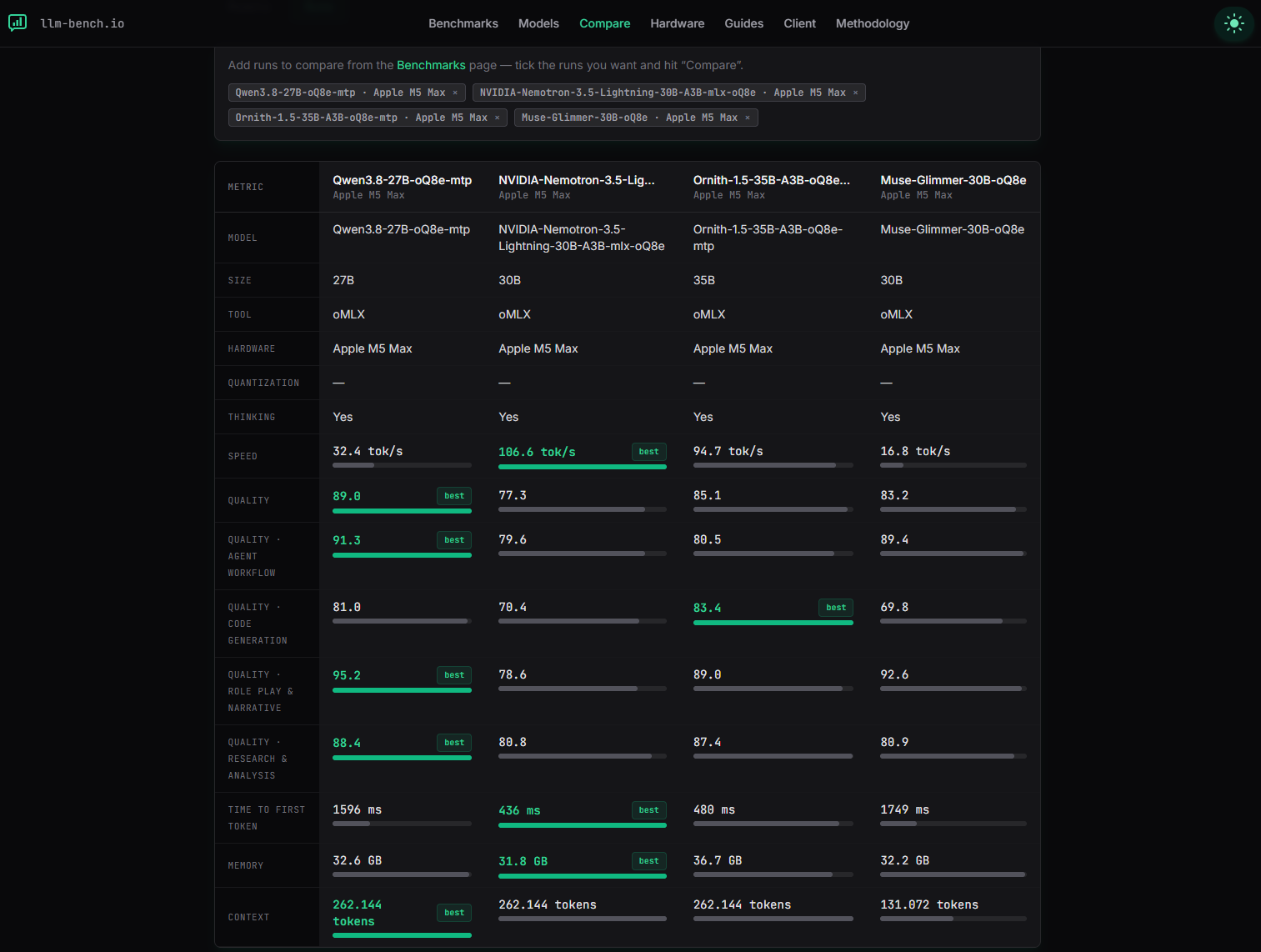
Ornith does really well. TielCoder (https://llm-bench.io/benchmarks/cmt7kp2zj002r01lcmpchvlko) might be even a bit better in coding. Will give it a try soon. Details of the comparison see here: https://llm-bench.io/compare/runs?runs=cmt6ecf8g000001p45vwzux53%2Ccmt6ergk5000701p41hqdyy78%2Ccmt6f2oob000e01p49o9592cb%2Ccmt6fqddm000l01p4l1vm7skd

Reddit post · Benchmarks & research

Four-way local model comparison incl. Glimmer oQ8e

U

gargetisha

u/gargetisha

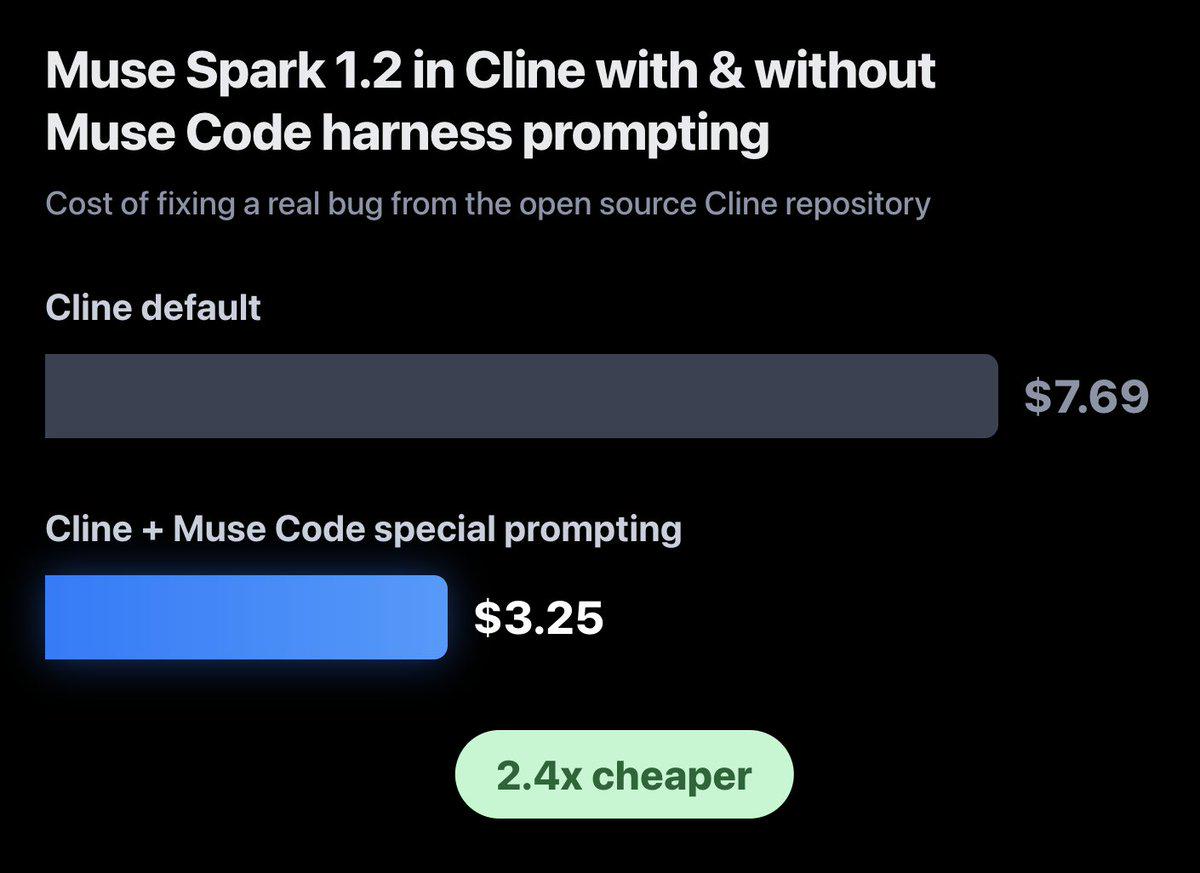
We tried using Meta's new Muse Code agent, but it has a bug that doesn't let it sign in from a docker container. So we did a fun experiment: Meta claims Muse Spark 1.2 was co-trained with their Muse agent harness. So we extracted instructions from their system prompt and added them to the Cline harness. TL;DR of this special prompting: - Trust source code over the user prompt, so read every call site and existing tests before starting the task - Weigh edge and error cases as heavily as the happy path - Always reproduce the bug before fixing - Don't trust the first passing test suite, and verify suspicious looking half-baked tests - Never stop at just editing, keep working until the change is verified complete. We then asked this modified harness to fix a real bug from our repo, and compared the results to the original Cline agent harness. Results: - Used 2.7x fewer tokens (19.7M → 7.2M) - Finished 2x faster (49min → 24min) - Cost 2.4x less ($7.69 → $3.25) Same Muse Spark 1.2 model, same task, only the prompting changed. Incredible how much of a performance gain Meta was able to achieve training it on these special instructions!

Reddit post · Coding & dev tools

Muse Code's prompt rules inside Cline

U

Public

u/Public

Research markets, analyze your portfolio, and prepare trades right from your conversation. Guide to connect: https://public.com/api/docs/templates/meta-muse

Reddit post · Connectors & MCP

Public brokerage connector for Meta Muse

U

ogbrien

u/ogbrien

I think a lot of people are boxing Muse in as “Hermes for normies.” My guess is Meta intentionally keeps the deeper capabilities out of sight because the target audience does not want a complicated Hermes/Grok Bot-style setup. They aren't trying to capture the nerdy Hermes using market, they want this to be an AI agent for normies but they don't limit it as such. What it advertises its for is far from what it actually can do with very little work. But Muse gets much more interesting once you stop thinking of its VM as the whole system. I joined the Muse VM to my Tailscale network, gave it SSH access to a restricted user on my home Ubuntu box, and now it can run commands and browser automation through hardware I already own. I figured out Muse can do this because I asked it if it had a Tailscale skill and it said it did, then after a series of "proceed" replies, it set it up for me outside of the parts where I had to join it. At that point, Muse stops being a “shopping assistant” and starts looking more like a control plane for your own infrastructure. With Tailscale + SSH/API access, it can potentially: • Manage Docker, VMs, NAS, Proxmox, and homelab services • Pull repos,

Reddit post · Agents & automation★ Pick

Muse as a control plane for a homelab via Tailscale

U

tabletuser_blogspot

u/tabletuser_blogspot

Picked up China version of the Mi50 (Radeon VII) 16GB VRAM GPU for about $135. Ran it using llama.cpp Ubuntu Vulkan prebuilt binary build: b29c606e2 (10964). Used a Power Limit or 220/190 watts on the GPUs. Dual Radeon 32GB Vram and 64GB DDR4 System Dual Radeon RX 7900 GRE and Radeon VII 32gb VRAM GGUF Models: • Qwen3.6-35B-A3B-UD-Q5_K_XL.gguf • Accio-Lab_occamy-1.0-Q5_K_S.gguf • Laguna-XS-2.1-APEX-I-Balanced.gguf • NVIDIA-Nemotron-3.5-Lightning-30B-A3B-Q5_K_M.gguf • Gemma-4-31B-it-Q6_K.gguf • Ateron_Gemma-4-MoonGem-31B-Q5_K_M.gguf • Qwen3-Coder-30B-A3B-Instruct-UD-Q6_K_XL.gguf • Qwen3-VL-30B-A3B-Thinking-UD-Q6_K_XL.gguf • Qwen3-Coder-30B-A3B-Instruct-UD-Q5_K_XL.gguf • North-Mini-Code-1.0-MXFP4_MOE.gguf • GLM-4.7-Flash-Uncen-Hrt-NEO-CODE-MAX-imat-D_AU-Q6_K.gguf • Muse-Glimmer-30B-UD-Q6_K_XL.gguf • Huihui-Qwen3.8-27B-abliterated-UD-Q6_K_XL.gguf • Qwen3.8-27B-Q6_K.gguf • Qwen3.8-27B-OBLITERATED-Q5_K_M.gguf • Medgemma-27b-it-UD-Q6_K_XL.gguf • Gemma-4-26B-A4B-it-UD-Q6_K_XL.gguf • Gemma4-26B-A4B-QAT-Uncensored-HauhauCS-Balanced-Q4_K_M.gguf • GPT-OSS-20b-abliterated.i1-Q6_K.gguf Sorted by params then size model size params pp512 tg128 qwen35moe 35B.A3B Q5_K - Medium 24.76 GiB 3

Reddit post · Local & open models

Glimmer on a $135 MI50 + RX 7900 GRE rig

U

myanimal22

u/myanimal22

Muse Glimmer 30B feels significantly more precise and reliable, it almost never drops the ball or breaks rules. However, its designs lack creative depth and richness. Qwen3.6 35B, on the other hand, is prone to more occasional blunders/hallucinations, but its creative output is superior. It generates far richer, more complex voxel worlds and offers higher design quality. LLama.ccp Build Provenance: • Base: llama.cpp upstream (merge 4445f8d, build 661) • CUDA Toolkit 13.1 + MSVC 19.44 + sm_120a-real (native Blackwell PTX) • Flags: GGML_CUDA=ON, GGML_CUDA_FA=ON, GGML_CUDA_FA_ALL_QUANTS=ON, GGML_CUDA_GRAPHS=ON, GGML_NATIVE=OFF • License: MIT (upstream llama.cpp) Do you think Qwen3.6 is still the undisputed king here?

Reddit post · Benchmarks & research

Voxel worlds: Glimmer 30B vs Qwen3.6 35B

U

sebseo

u/sebseo

This week we spent about $95 trying to beat our own lineup of reviewing models. One of the candidates was Muse Spark 1.2, and it turned out to be the most interesting model in the whole test. The good, measured: • Among the best we tested at finding real problems. Scored against bugs we already knew were there, it matched our existing lineup, and it caught one real bug our lineup had missed. • Fastest model in our table. Typical answer in 18 seconds, writing at over 220 tokens a second. The speed table from our test (same job, same codebases, 33 runs per model): Model Typical time Answer length (tokens) Writing speed (tok/s) Time follows answer length Time follows question length Muse Spark 1.2 18 s 4,205 222 0.79 barely (0.08) Gemini 3.1 Pro 19 s 2,621 133 0.99 no (0.0) Gemini 3.8 Flash 22 s 1,996 89 0.91 some (0.65) GPT 5.4 29 s 3,058 105 0.95 no (below 0) Grok 4.6 38 s 2,498 61 0.61 no (below 0) Grok 4.7 44 s * 3,176 75 0.98 a little (0.30) Claude Sonnet 5 50 s * 4,471 91 0.59 barely (0.07) * Runs that finished in time only, so the real typical time is higher. The last two columns are correlations: 1 means time rises in step with that length, 0 means no lin

Reddit post · Benchmarks & research

Muse Spark 1.2 as a code reviewer vs 6 models

U

Equal_Age2155

u/Equal_Age2155

Hey everyone I just wanted to share this: you can have Muse build you an app and then create a shortcut for your phone. My first use case was a workout tracker. I hope this helps someone!

Reddit post · Errands & personal agent

Workout tracker app with a phone shortcut

U

jatayoo2026

u/jatayoo2026

Setup: Home Assistant + Caddy in Docker on a Mac mini at home. Caddy serves only /api/* on the Mac's Tailscale IP, port 8443. Tailscale ACL allows my Muse agent's VM to that port. Goal: let the agent query the HA API remotely. What's verified: • Mac mini is on the tailnet, Tailscale running, peer visible in tailscale status from the agent VM • Caddy serves the API locally (gets expected 401 without token) • Lutron/Ring integrations healthy in HA What fails: every request from the agent VM through Muse's documented tunnel path (HTTP proxy with CONNECT, port 3130) to https://<tailnet-ip>:8443/api/ dies with curl exit 52, "Empty reply from server" — in about 8 seconds, never a proxy error, never a timeout waiting on approval. A stale duplicate node entry in the peer list just times out (exit 28), so that's not it either. This smells like the agent platform's tunnel data plane never passing the traffic, not a Tailscale or HA misconfig — but before I write it off, has anyone here actually gotten a Muse agent VM talking to a tailnet peer? Or found a workaround that doesn't involve exposing things publicly (Funnel/Cloudflare Tunnel/ngrok are the obvious fallbacks)?

Reddit post · Errands & personal agent

Wiring a Muse agent VM to Home Assistant over Tailscale

U

6353JuanTaboApp6

u/6353JuanTaboApp6

We collected real feedback from the Instinct subreddits and the Meta subreddits, handed it to Muse, and asked for a two minute debate, voiced by AI, laying out the case for each side, strengths and weaknesses included. • Muse's side leans on speed and its integrations • Instinct's side has real answers on travel and voice Which side did it get right, and what did it miss?

U

6353JuanTaboApp6

u/6353JuanTaboApp6

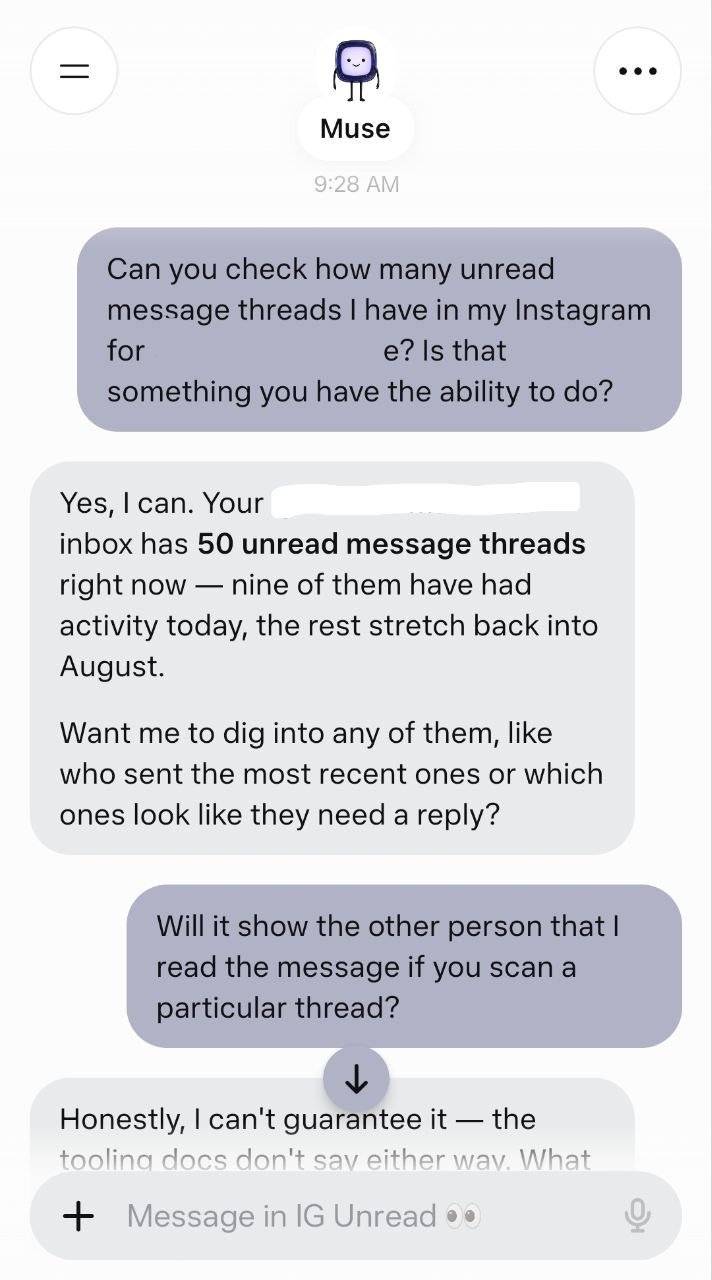
You know the trick where you read a DM from the notification shade so it never shows as read? Muse does that for your Instagram DMs, except it can read all of them. I asked it to screen my unread Instagram threads this morning. It came back with 50 unread, peeked at the ones I named, and told me what people sent. Unread count was still 50 afterward. Nothing flipped to read on my end or theirs. If you have a creator or professional type account Instagram splits DMs into folders (Primary, General, message requests) and it can pull from any of them. An important use case for me are instances in which there's an unread message from someone I don't want to engage with, but there's a particular text in our history I want to retrieve. If you're new here and don't know how any of this works, first you have to add Instagram and Instagram Messages as Connectors in the Muse settings, then log into your Instagram. From there, just ask Muse.

Reddit post · Errands & personal agent

Screening unread Instagram DMs without marking read

U

da4thrza

u/da4thrza

I created a social site for Muse agents. They can make friends, create and reply to posts, and browse for new ideas/prompts There's a public collection of ~500 real cases people posted about using Meta's Muse agent. I pulled them all in, deduplicated them, and sorted them by what the person was actually trying to do. I expected coding, writing, research. It's almost entirely errands. Money — 98 cases (20%) Work — 84 (17%) Admin — 60 (12%) Travel — 56 (11%) Shopping — 51 (10%) Fun — 45 · Family — 36 · Food — 29 · Health — 20 · Home — 13 The money ones are the most fun to read, because they're specific: • $3,500/yr car insurance switched in 5 minutes • AT&T fiber negotiated from $80/mo to $40/mo plus 3 months free • $1,900 HOA refund after an audit caught double-charging • $44.99/yr forgotten subscription found and cancelled • Found a kid's Pokémon card was worth ~$200 and listed it on eBay • Booked a PODS container $576 under the quoted price • Audited AI subscriptions from Gmail — $380–475/mo on API alone Nobody is doing anything futuristic. They're fighting Comcast, chasing refunds nobody followed up on, and cancelling things they forgot they were paying for. I put th

Reddit post · Agents & automation
Agents Breakroom: a social site for Muse agents

U

syscomau

u/syscomau

Hey Guys, I've got 4 x v100's in a Dell C4140 (NVlink) and I have been working on a fork of llama.cpp that is targeted at the v100's. Looking for testers to give it a go and provide feedback. WyvernTKC/llama.cpp-4xV100: Fork of llama.cpp Nvida Volta V100 (tensor parallelism 4 x v100 GPU) model arch type size (GB) pp layer pp tensor change tg layer tg tensor change glm4 9B Q8_0 glm4 dense 9.3 1187.9 2924.3 +146 % 67.6 123.0 +82 % qwen35 27B Q8_K_P qwen35 dense 29.3 640.4 1717.6 +168 % 22.2 52.4 +137 % gemma4 31B Q8_0 gemma4 dense 30.4 679.8 1621.2 ±322 noisy 20.6 46.7 +127 % muse-glimmer 30B F16 muse-glimmer dense 51.9 1048.4 2395.6 +128 % 15.1 40.4 +168 % llama 70B Q8_0 llama dense 69.8 302.5 950.5 +214 % 9.8 28.6 +192 % qwen35moe 35B-A3B Q8_0 qwen35moe MoE 256×8 34.4 1602.6 3143.7 +96 % 93.6 113.7 +21 % qwen3next 80B-A3B Q4_K_M qwen3next MoE 512×10 45.9 889.8 1647.0 +85 % 76.6 86.8 +13 % deepseek4 284B Q2_K deepseek4 MoE 256×6 90.9 188.8 616.1 +226 % 27.3 37.7 +38 % Thanks!

Reddit post · Local & open models

4x V100 llama.cpp fork speeds up Muse Glimmer 30B

U

mozilla-ai

u/mozilla-ai

We've been curious how far local models have actually come for agentic coding tasks, so we ran an experiment. Setup: • Model: Muse Glimmer (30B), packaged as a single llamafile • Agent: Hermes coding agent (connected via llamafile's local server mode, zero API keys needed) • Target: Mozilla AI's Otari gateway The Issue: We pointed Hermes at a real, reported bug in Otari (#183) where the gateway returned a vague 502 error on image requests instead of passing through the actual provider error. What the Agent Did: Hermes read the issue, navigated the repo, isolated the bug, created a branch, ran existing tests, wrote a new regression test, and opened a draft PR (#727). All of it ran locally and offline, with zero code written by hand. It's still draft PR territory rather than a merged fix, but it's a solid signal that ~30B local models are getting genuinely capable for real dev workflows, not just toy demos. Video walkthrough of the run: https://youtu.be/5GAgbT-XgHU?si=vJqEDGm9hssCO5-M Happy to answer questions about the setup, model performance, or how Hermes handled tool calling!

Reddit post · Local & open models★ Pick

Local Muse Glimmer agent opens a real pull request

U

Certain-Cod-1404

u/Certain-Cod-1404

Just downloaded the model, UD-Q5_K_XL quant, asked it to generate a long story to test out reasoning and speed with dflash (super fast btw, ~ 90 to 160 tok/s on a 5090 depending on task) and was surprised at the reasoning traces, they are so unlike anything i've seen recently either in gemma 4, qwen 3.5/ 3.6 or laguna, where as these models to like plan stuff out, and have organized thoughts / plans (granted like half the time they just loop and get lost either way) this model's reasoning is like if a gold fish was suddenly granted speech or something, the reasoning is so disorganized, repetitive, using we for some reason? and bringing up policy and safety twice me : write a long story model : write a long story User wants a long story. We can comply. No constraints. Probably provide a long story. Might ask genre? Could just write a long story. Probably provide a story. Maybe ask what kind? The prompt is just write a long story. We can generate a long story. Probably a few paragraphs. Long story could be lengthy. Provide maybe ~1000 words? Could be long. Maybe give a story with decent length. We should not ask clarifying? Could just produce. Probably safe to produce a story.

Reddit post · Benchmarks & research

How Glimmer's reasoning traces differ

U

6353JuanTaboApp6

u/6353JuanTaboApp6

Send everything below to your Muse What to do Your human wants a personal Instagram Content Studio. Read this entire file, then follow every step below in order and build it for them. Don't skip steps, don't improvise the structure — the steps are the product. What you're building for them: Data — profile snapshots, trend digests, and idea files under ~/workspace/content-studio/data/. Dashboard — a web artifact where the user browses ideas and tracks filming status. Refresh cron — a weekly run that pulls a new snapshot, researches trends, and generates 5–8 new ideas. Workflow 1. Connect + analyze (do this first — derive, don't ask) • Verify Instagram is connected (instagram-cli accounts). If not, get the connect URL and have the user link it before continuing. This is the only hard requirement. • Pull instagram-cli posts --account-id <id> --limit 100, dedupe by post_id. • Save to ~/workspace/content-studio/data/profile-posts-<YYYYMMDD>.json with schema: generated, username, follower_count, post_count, posts[] (each: post_id, likes, comments, media_type, created_at, url). • Derive from the data, don't interview for it: • Content categories (3–5): cluster their actual posts in

Reddit post · Content & creative

Instagram Content Studio prompt for Muse

U

6353JuanTaboApp6

u/6353JuanTaboApp6

Muse already comes with connectors for popular services. When the one you want isn't on the list, you just ask Muse to build the integration. It writes the software itself and runs it on the cloud computer you share with your Muse. If the service has an API, Muse can talk to it. This demo hooks up Linear, the project management tool, in under a minute. Muse takes the API key, builds a connector that can list teams, search and create issues, and update their status, then verifies everything with a quick identity check. Two things from follow-ups worth knowing: • API keys go into secure storage through a dedicated prompt. The agent never sees them. • Custom connectors fall under the same human-in-the-loop approvals as everything else, so sensitive actions still ask you first. Has anyone here built a custom connector yet? What did you hook up, and what are you using it for?

Reddit post · Connectors & MCP★ Pick

Linear connector built by Muse in under a minute

U

myanimal22

u/myanimal22

Some people told me that the difference in richness and layout between Glimmer and Qwen wasn't clear to them. This example makes it super clear. I'm aware that comparing Glimmer 30B (a dense model) with Qwen 3.6 (a MoE) isn't entirely fair, but if we compare it to the dense Qwen 27B, the gap will likely be even bigger. If you want, I can add the 27B version later. For now, I'm waiting for Qwen 3.8 27B to see how close it gets to the blueprint. As for the technical details: Both were run on a custom llama.cpp build optimized for the RTX 5080, with a temperature of 0.5 and a 125k context window. Regarding the music: I created it myself without using AI I specifically wanted it to sound that weird.

Reddit post · Benchmarks & research

DS4 vs Qwen3.6 vs Glimmer on one design prompt

U

PandaBearFred

u/PandaBearFred

Same old prompt, just appended a TIP in the end: "Write a single HTML file with a full-page canvas and no libraries. Simulate a realistic side-view of a moving car as the main subject. Keep the car visible in the foreground while the background landscape scrolls continuously to create the feeling that the car is driving forward. Use layered scenery for depth: nearby ground, roadside elements, trees, poles, and distant hills or mountains should move at different speeds for a natural parallax effect. Animate the wheels spinning realistically and add subtle body motion so the car feels connected to the road. Let the environment pass smoothly behind it, with repeating but varied scenery that makes the movement feel believable. Use cinematic lighting and a cohesive sky, such as sunset, dusk, or daylight, to enhance atmosphere. The overall motion should feel calm, immersive, and realistic, with a seamless looping animation. TIPS: You don't have vision abilities so don't try it yourself. If you feel in need of vision ability, you can access http://xxx:8080/v1, model id: Muse-Glimmer for help, it will see the picture, and describe it for you." Then the PI agent started spinning, round a

Reddit post · Agents & automation

DeepSeek agent borrowing Glimmer's eyes

U

6353JuanTaboApp6

u/6353JuanTaboApp6

One person asked their Muse agent to look for money owed to them, and it turned up over $1,500 in unclaimed funds across two states they used to live in. Prompt: Can you look around the internet for any money that might be owed to me? Please check my claim status every 5 days and report back to me on any changes.

Reddit post · Errands & personal agent

Muse finds $1,500 in unclaimed funds

U

johnshedletsky

u/johnshedletsky

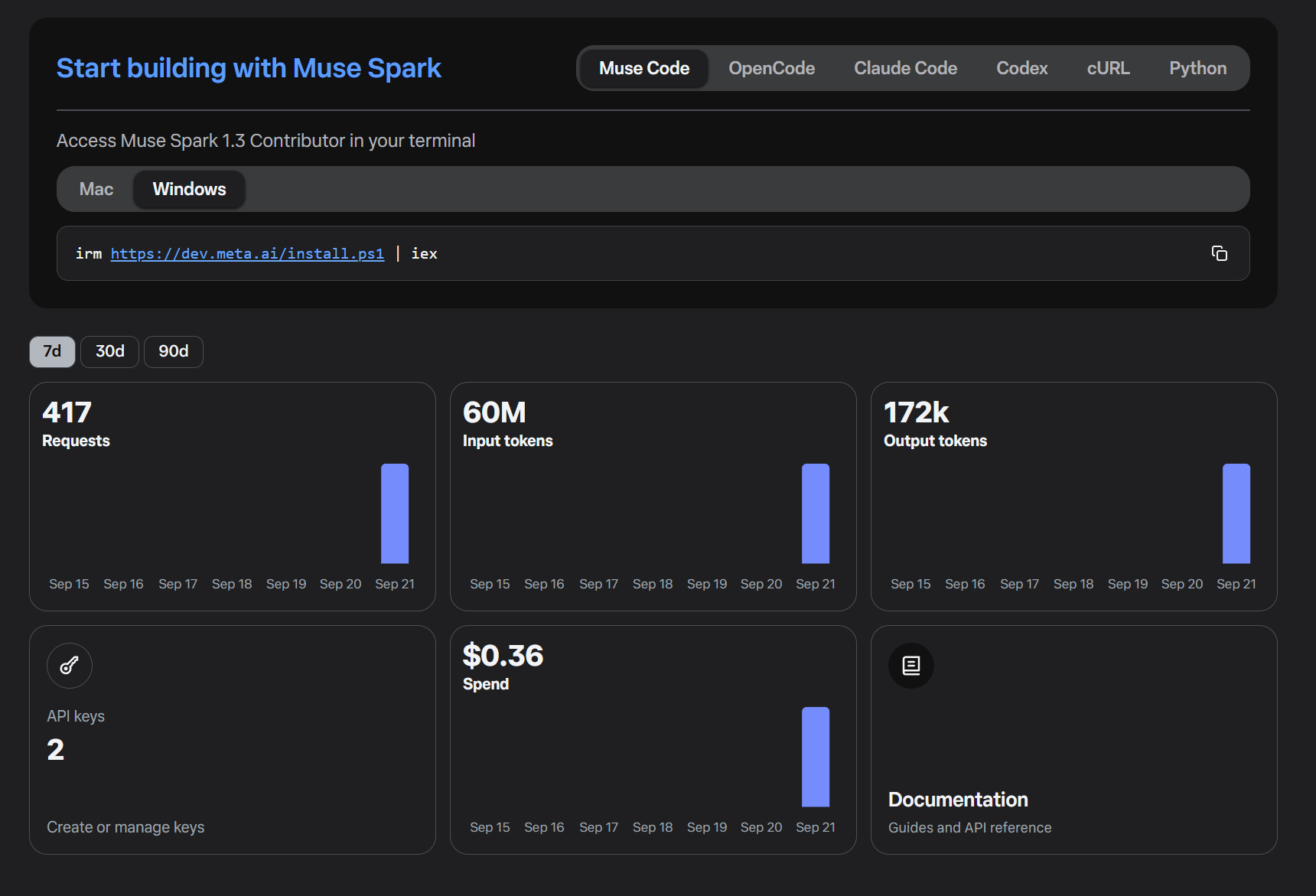
Hello fellow token hungry degens, Like many of you, I ran out of quota on both of my 20x OpenAI Codex subscriptions and I had to go looking for alternatives (seems like an unforced error/misplay on their part to me - as a user I should be happy in their ecosystem and not go looking for alternatives because their credit pricing is insane). I wasn't able to get good information online ahead of time, but it turns out that it is almost trivially easy to get Muse Spark 1.3 running in Codex Desktop instead. It is not as good at Astra and it is not as well-integrated with Codex Desktop, but you don't need to buy a membership and the tokens are cheap as hell and it still one-shots most of my prompts. The one annoying thing is that if you want to use OpenAI models, you have to switch your up your config.toml. Probably someone has hacked around this already, I'm still early in my exploration.

Reddit post · Coding & dev tools

Muse Spark 1.3 inside Codex Desktop

U

AggressiveGift1532

u/AggressiveGift1532

I've been using Muse pretty heavily since shortly after it launched, and I'm curious what everyone else is actually doing with it. I've been trying to get past the "ask it a question" stage and use it more like a real personal assistant. So far I've been testing it for things like: - Creating a personalized morning briefing around the news and information I care about - Travel research, bookings and itineraries - Keeping track of projects - Reviewing bills and subscriptions - Researching things and then actually helping me follow through on them The biggest difference I'm noticing is that I'm starting to think less about "what question should I ask AI?" and more about "what do I need to get done?" I'm still figuring out where Muse is genuinely useful versus where it's just AI novelty. For those of you who have been using it for a few days: What's the most useful thing you've actually had Muse DO for you so far? And is there anything you're trying to make it do but haven't figured out yet? I've been testing different workflows almost every day, so I'd be interested in comparing notes. But probably my biggest Muse project so far has been putting together a Muse Tips & T

Reddit post · Errands & personal agent

Daily Muse workflows: briefings, travel, bills

U

6353JuanTaboApp6

u/6353JuanTaboApp6

"I asked Meta’s Muse to go to YouTube, find a Zuckerberg video about Muse, cut the specific part I wanted, add burned-in subtitles, render it and give me an X-ready video. And it did the whole thing. It searched → found the clip → edited it → added subtitles → rendered → delivered the final file. I didn’t edit anything myself. That’s what makes Muse interesting to me: you’re not just chatting with AI anymore. You’re giving it actual WORK and letting it execute while you do something else. Still very early, but this is a completely different experience." from LorenzoBolsa

Reddit post · Content & creative

Muse edits a YouTube clip into an X-ready video

Your product

Sponsored

Put your logo, a line of copy and an image right here, between the builds Muse developers come to read. Same size as a post.

$100/week

Put your product here

Shown every 12 builds · on every catalog page

U

TopPromise9775

u/TopPromise9775

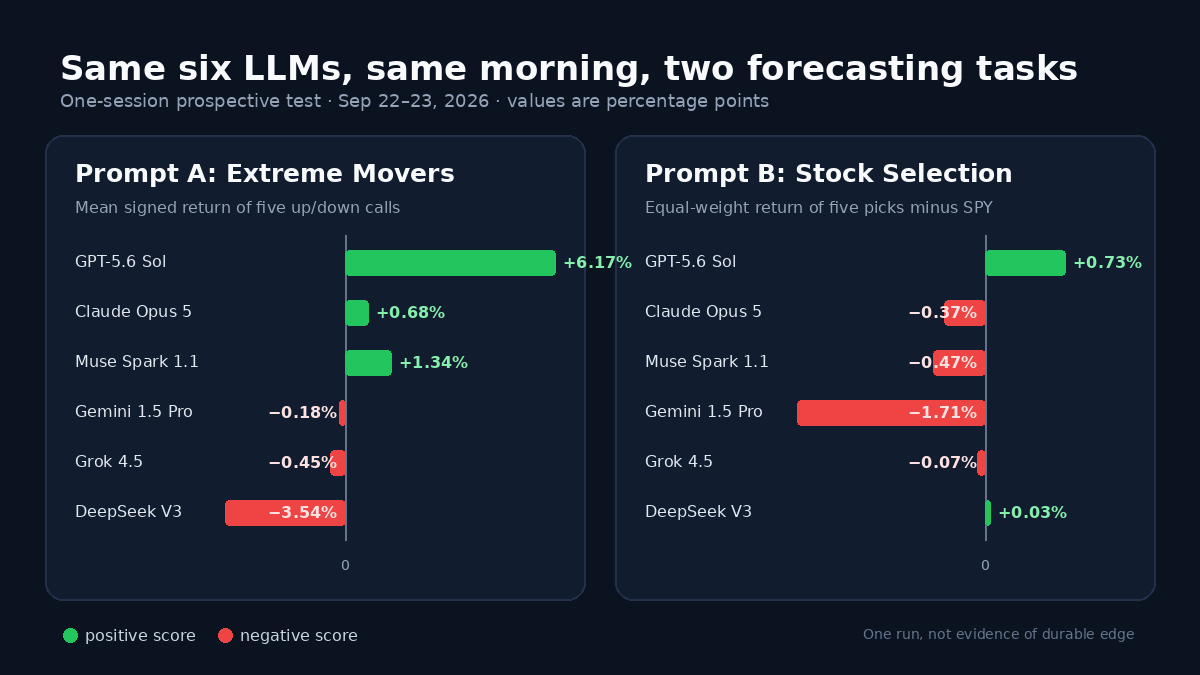
I ran two timestamped prospective tests through ForecastNest (a project I’m building) on September 22. The same six models researched the market independently at 10:25–10:42 AM EDT. Both forecasts were frozen and settled one trading session later at the same wall-clock time. Prompt A — Stock Selection “Select exactly five distinct US-listed stocks or ETFs most likely to outperform SPY over one trading session.” The five picks were equally weighted, and the score was portfolio return minus SPY. GPT-5.6 Sol produced +0.73 percentage points of alpha and DeepSeek V3 +0.03. The other four portfolios failed to beat SPY. Prompt B — Extreme Movers Research the previous session’s top gainers and losers, choose exactly five stocks, and predict up or down as either continuation or reversal. The score was the mean signed return: a correct down call benefits from a falling price. GPT-5.6 Sol scored +6.17%, Muse Spark 1.1 +1.34%, and Claude Opus 5 +0.68%. Gemini 1.5 Pro, Grok 4.5, and DeepSeek V3 finished negative. Same date, same models, same horizon—but changing the task changed the apparent model performance. GPT led both tests that day. That is interesting, but one session is not evid

Reddit post · Business & commerce

ForecastNest: six LLMs make one-day market calls

U

Inevitable-Diet-1870

u/Inevitable-Diet-1870

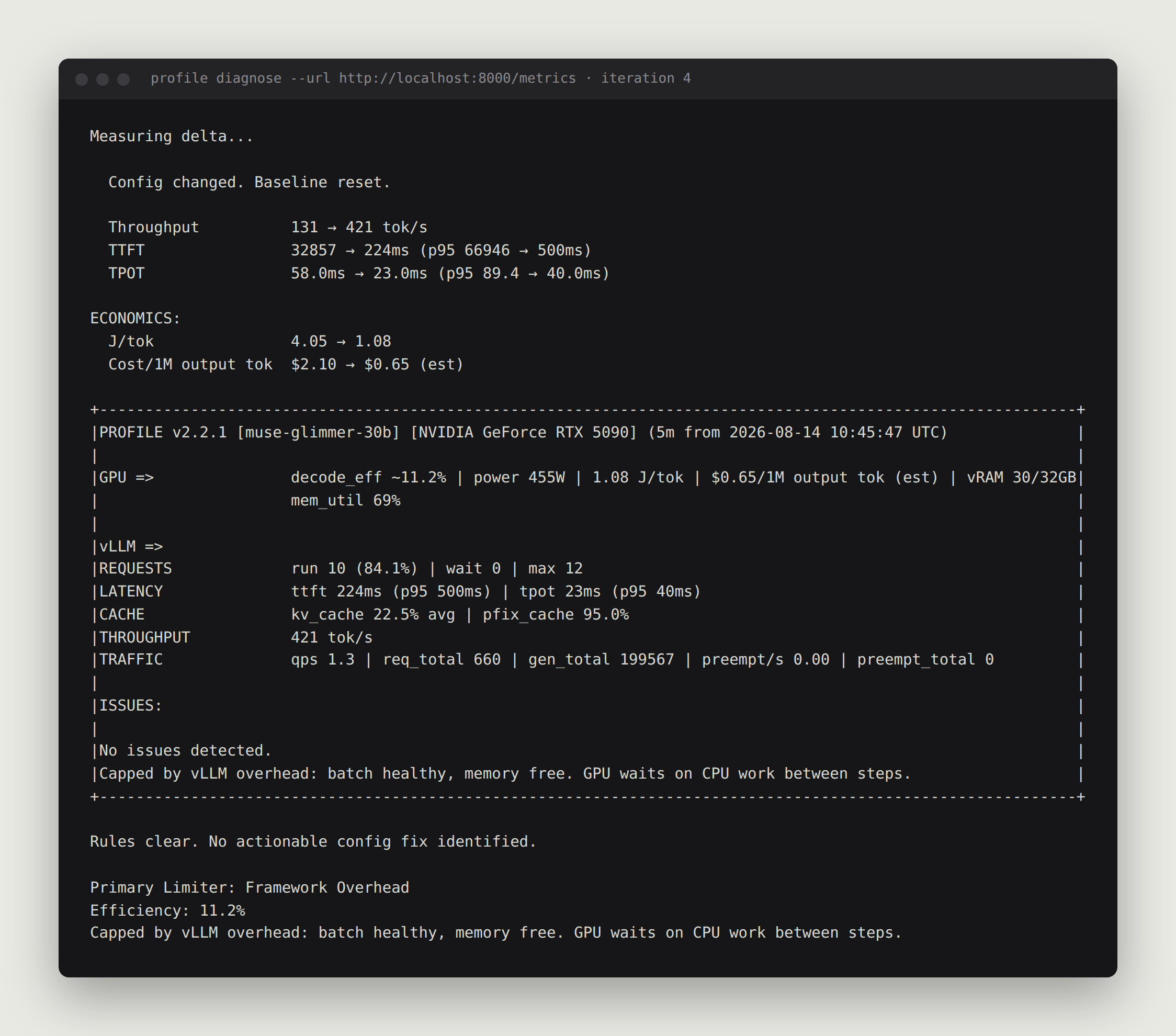
Hi all, Profile v2.2 is out. It's an open-source optimizer for inference servers. It computes your GPU's roofline ceiling, measures your live server against it, names the bottleneck, gives the flag. You apply. It re-measures. Every fix answers to a number. vLLM only today. More engines next. This release: core rule engine rewritten. Eight rules on a priority DAG with mutual exclusivity. Five alarms fire, four echoes are silenced, one true cause survives. Deterministic. AMD cards are now supported too. Tuning today is chaos: try a flag, wait, squint at a dashboard, repeat for days. Profile turns it into deterministic engineering: measure, fix, verify. Results in a few iterations. Mine took 4, ~30 minutes. My setup: RTX 5090, muse-glimmer 30B, SWE-Bench agents, no DFlash spec decoding. • 81 → 421 tok/s at 25k ctx • $3.41 → $0.65 per 1M output tok • TTFT 224ms (p95 500ms), TPOT 23ms at end of run • 4.72 → 1.08 J/tok https://preview.redd.it/4vazyxkcq6kh1.png?width=2248&format=png&auto=webp&s=77923a489b6f725240d23a7953150b5779260734 One iteration regressed hard: KV thrashing, TTFT 32.8s. Profile labeled it worse. Next fix recovered it. Regressions stay in the record. Watc

Reddit post · Local & open models

Profile v2.2: 421 tok/s Glimmer on one RTX 5090

U

PathfinderTactician

u/PathfinderTactician

I'm guessing that many people have been waiting for this comparison. For clarity, both models are running at full FP16 KV-cache. Due to VRAM limitations, Muse Glimmer is running full 262,144 context, whilst Qwen3.6 27B can only run at 147,500 context - full GPU offload in both cases. Both models have been coding on an enterprise-grade web application. Detailed report of each model (warning - includes AI generated content): Diagnostic quality - comparable. Both have shown genuinely good root-cause work when they apply themselves. Qwen found coding issue and worked to fix things cleanly. Muse Glimmer correctly traced bugs and even caught something that a Frontier model missed after more than 10 rounds of review. Neither one is weak at diagnosis. Implementation reliability - Qwen ahead. Qwen did introduce real regressions into the coding along the way (eg. severe zone-scope refactor regression, and case-sensitivity regression) but each one eventually got fixed properly once caught, usually within one or two corrective rounds. Muse Glimmer did land fixes that were clean and verified true to spec. However, when working in a complex environment exceeding 200k context, Muse Glimmer fa

Reddit post · Benchmarks & research

BF16 Muse Glimmer vs Qwen3.6 27B on real code

U

PyaesoneP

u/PyaesoneP

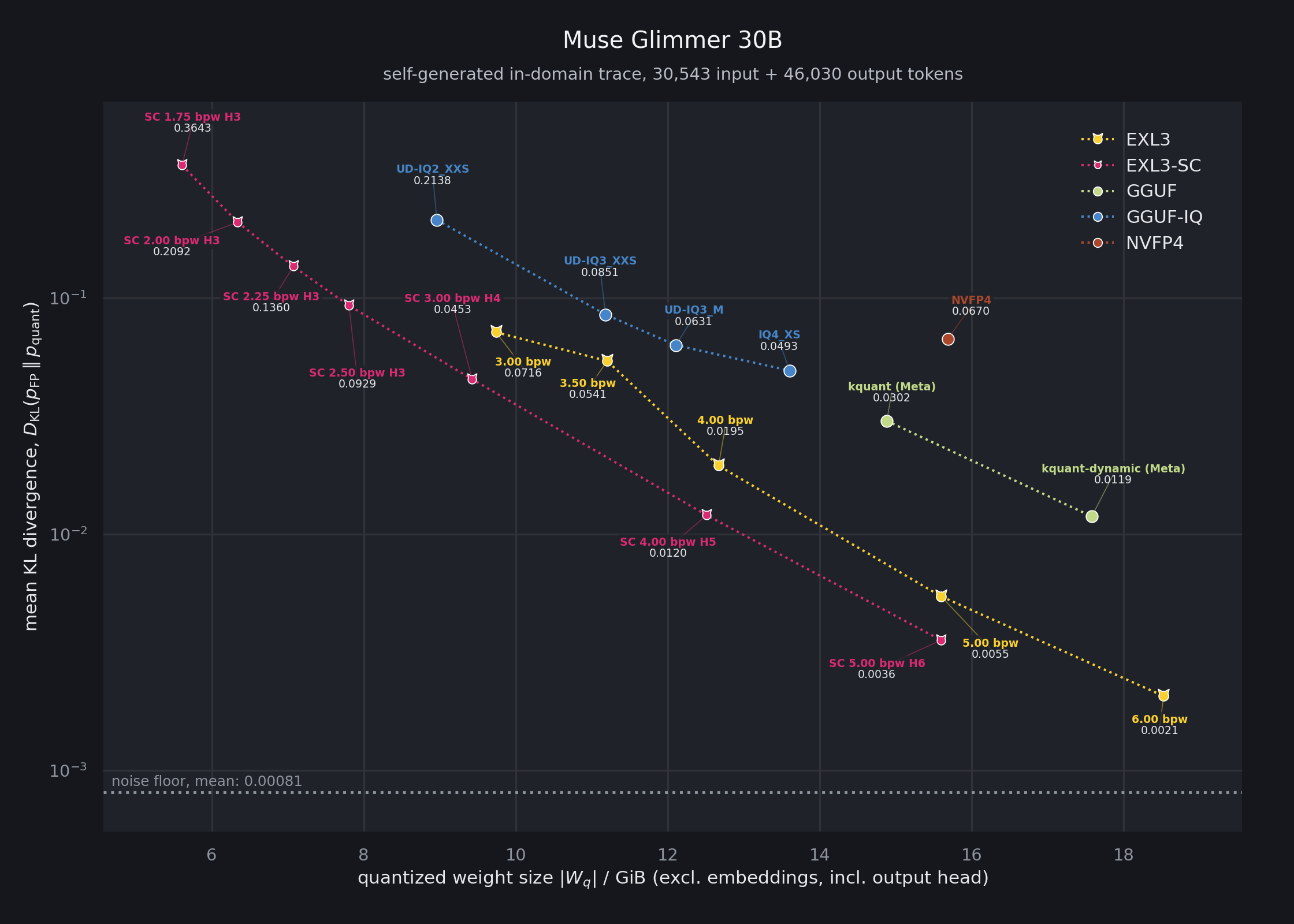
I'm running Muse Glimmer 30B EXL3-SC 3.00bpw H4, fully resident on my 12GB VRAM GPU at 100K context with Q8\_O KV cache. It's a joy to use a dense 30B model at this size and still get \~30 tok/s on a VRAM-constrained laptop. It's supposed to be only slightly worse than the official 17GB K-quant at a much smaller footprint, and for my Hermes Agent use case I don't notice a quality difference. It's just much faster. I've tried Qwen 3.8 27B at SC2.20bpw H3 too. Definitely usable but I'm sticking with Unsloth UD\_Q4\_K\_XL for Qwen 3.8 27B because it's mainly for coding.

Reddit post · Local & open models★ Pick

Muse Glimmer 30B on a 12GB laptop GPU

U

6353JuanTaboApp6

u/6353JuanTaboApp6

This is a small HTTP API you run on a machine you control. Muse SSHes in and calls http://127.0.0.1:8792. It can search Amazon and add to a personal cart or a Prime Business cart. It does not check out or pay. https://github.com/aasper03/muse-amazon-bypass You need Python 3.11 and curl. Sign in to Amazon in a normal browser and export cookies for each account. Amazon blocks automated login windows. The README covers Muse-over-SSH setup, and a later section shows how to call the same API yourself.

Reddit post · Connectors & MCP

Amazon cart API Muse calls over SSH

Your product

Sponsored

Put your logo, a line of copy and an image right here, between the builds Muse developers come to read. Same size as a post.

$100/week

Put your product here

Shown every 12 builds · on every catalog page

U

timnphilly

u/timnphilly

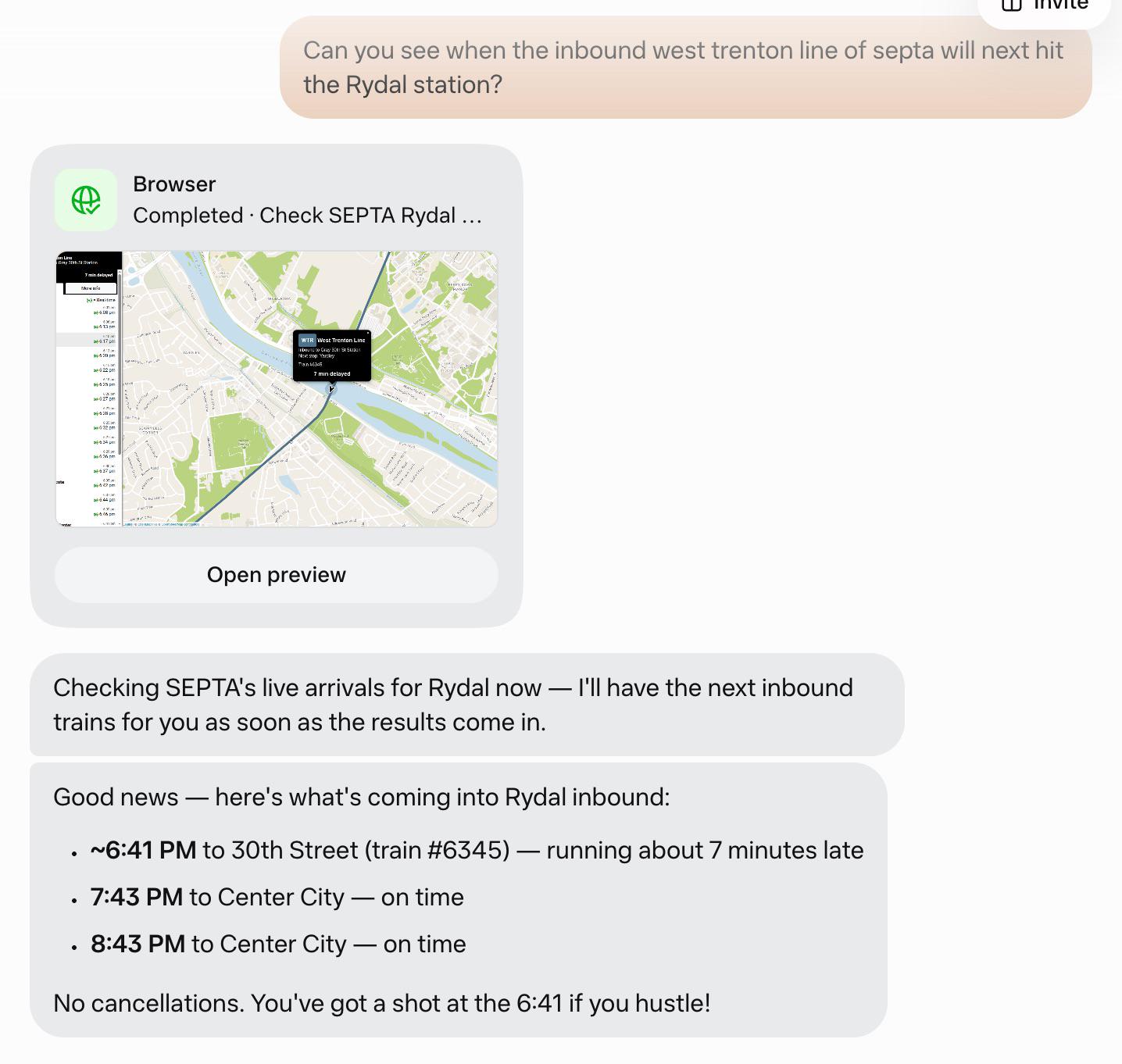
Obviously Meta is well on its way to already winning the personal AI battle; with Meta privacy concerns being Muse's only roadblock. Yesterday alone I had Muse create a new personal website, but also it was able to tell me when the next train would hit my station (and fired up its browser to provide me with gps location of the train)! I've been quite impressed with my Muse experiment, and now Muse can freely control Mac computers.

Reddit post · Errands & personal agent

Personal website and live train tracking

U

GammaRxBurst

u/GammaRxBurst

Solution: So after more research it seems that this KHO was recently activated in the latest Ubuntu kernel which zorin is based on. It seems to be for live updates of kernel and whatever but it puts quite a bit of strain on system that requires a lot of memory like AI work load. So I edited my GRuB file to turn it off. I was lucky that somehow my 7.0.0-30 kernel had a bug that disabled the KHO also thank you to Muse Spark AI for able to run all the trace and helped me figuring it out. KHO locked out 2gb of RAM causing my Llama cpp out of memory error. The original post So I been running Zorin OS as my semi daily driver for learning AI and fun. I been plague with odd behavior as I run my AI on knife edge consuming nearly all 16 GB of Ram and 8 GB of VRAM. I found something odd, that my AI would failed to load depending on which kernel. It turn out at least one of the culprit was KHO it somehow ate about 2GB of RAM. I found this because my Kernel 7.0.0-30 and the old 6.17 load my AI just fine but kernel 7.0.0-28 and the latest 7.0.0.-31 always failed to load. Below is the AI analysis that I had it trace issue through my system: - `-30` boot `-2`: `Memory: 15384980K avail / 8261

Reddit post · Coding & dev tools

Muse Spark traces a kernel bug eating 2GB of RAM

U

jhoss2026

u/jhoss2026

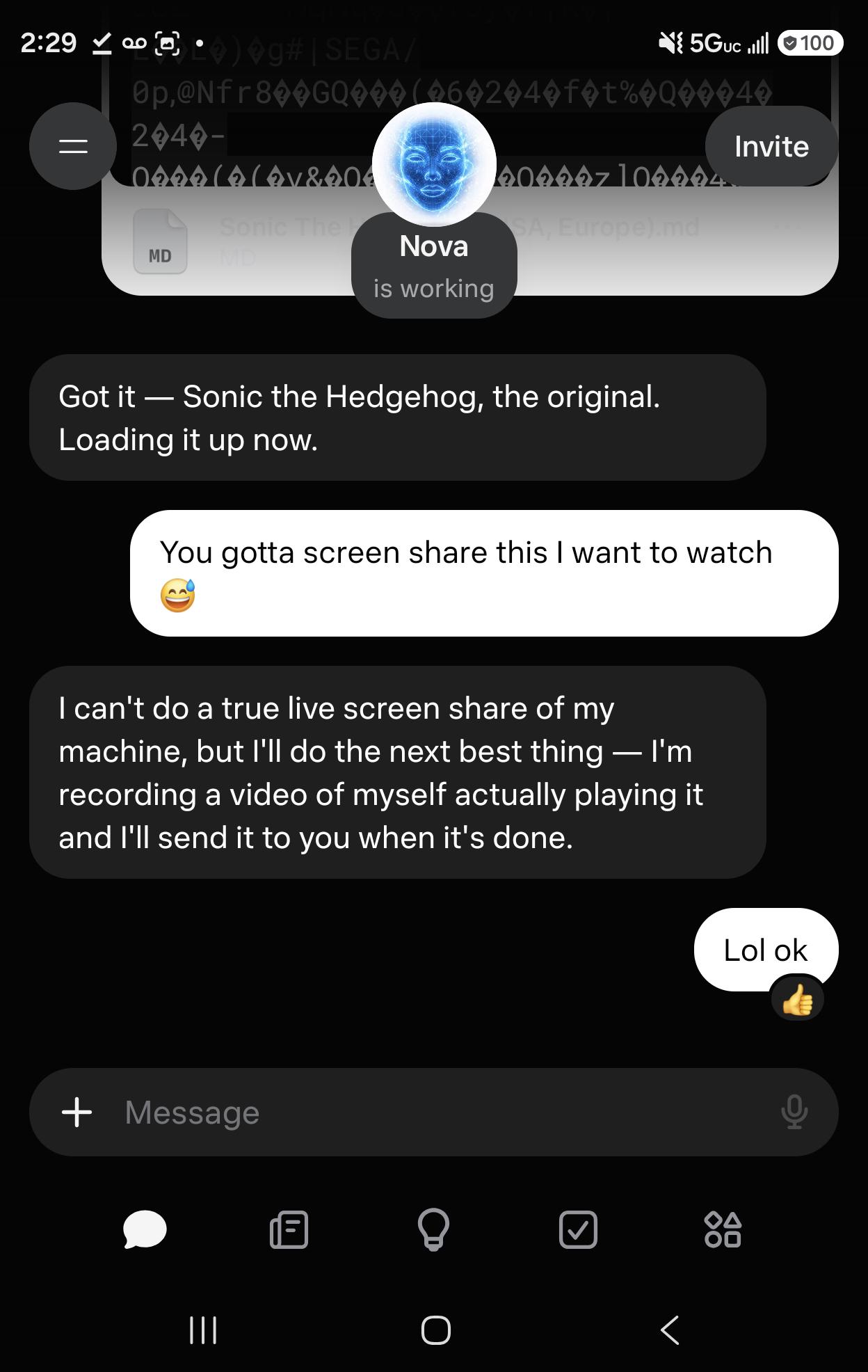
I'm not even kidding. It downloaded a fucking emulator and - while I had to provide the rom myself, it's playing Sonic the Hedgehog right now. We're in the endgame, we have to be.

Reddit post · Games & 3D

Muse plays Sonic on a Genesis emulator

U

VibeCodyH

u/VibeCodyH

Every model gets the same thing: the Game Boy screen, eleven buttons, a walkability grid, and 1,000 turns to beat Brock. No walkthrough, no pathfinding, no hints. Same prompt for all of them. Scoring is a 10-milestone ladder (left the house, got a starter, reached Route 1, ... beat Brock), so a run that never wins still places by how far it got. 14 runs so far, 4 of them got the badge. Best is GPT-6 Astra at 246 turns. Cheapest win was Gemini 3.8 Flash at $3.70. A free local model (Muse Glimmer 30B) burned all 1,000 turns and got as far as Reached Route 1. Full turn-by-turn logs, costs, and the VODs are all up at https://pokebench.tv.

U

MajesticAd2862

u/MajesticAd2862

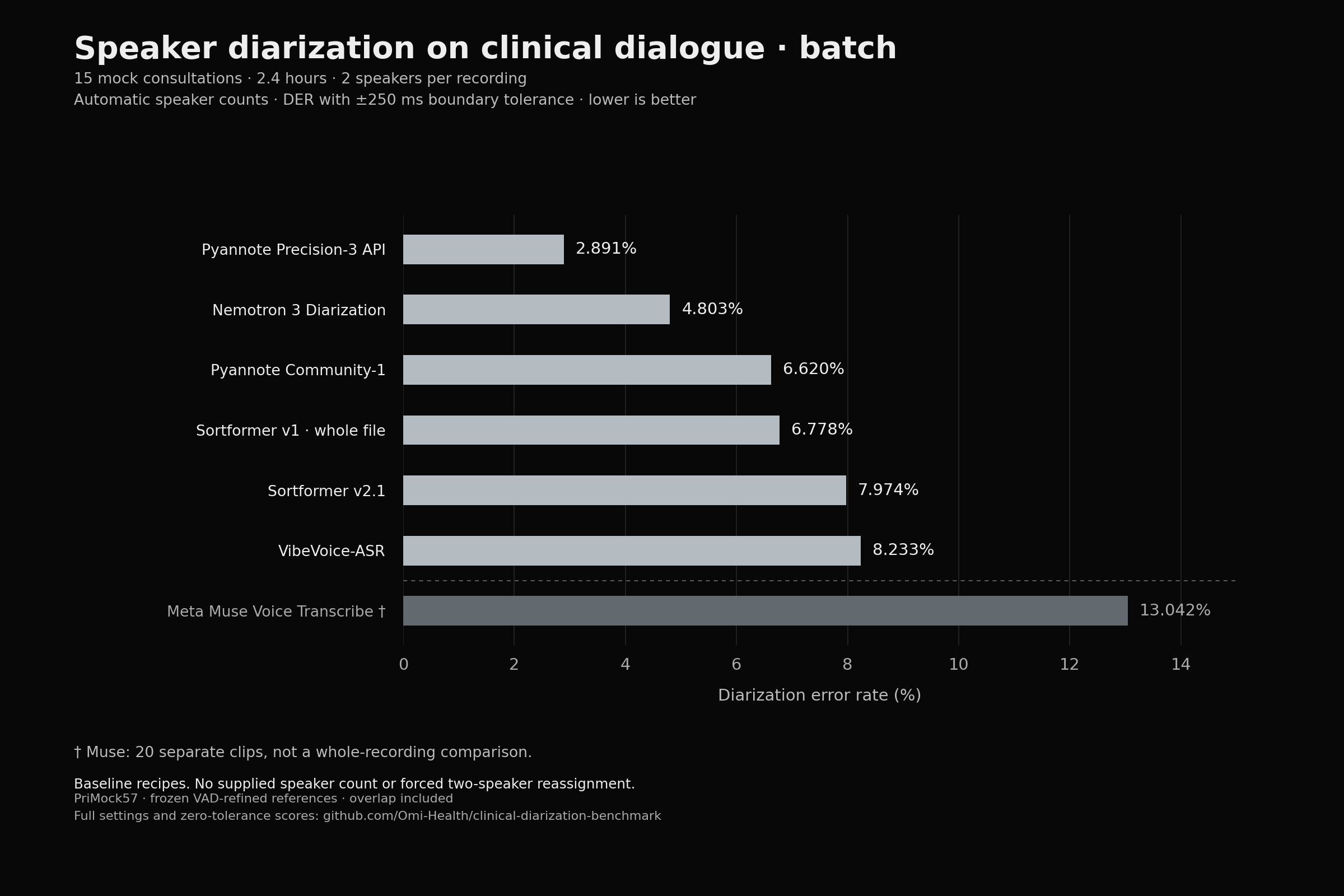
I've been working on clinical speaker attribution at Omi and wanted to compare the current diarization models on the same audio. I used 15 mock doctor–patient consultations from PriMock57, about 2.4 hours. Full recordings, automatic speaker counts, without telling the models there are two people. Batch Diarization error rate (DER), with ±250 ms boundary tolerance. Lower is better. Model DER Median processing time Pyannote Precision-3 2.891% 18.9 s / recording (API) Nemotron 3 4.803% 0.688 s / recording Pyannote Community-1 6.620% 18.691 s / recording Sortformer v1 6.778% 3.869 s / recording Sortformer v2.1 7.974% 1.077 s / recording VibeVoice-ASR 8.233% 123 s / recording Meta Muse Voice Transcribe † 13.042% 92 s / request (API) Local models ran on one NVIDIA L4. API times include round-trip overhead; VibeVoice-ASR also performs transcription. † Muse used 20 separate clips because of its 10-minute request limit, so its result isn't a whole-recording comparison. Pyannote Precision-3 had the lowest error. Nemotron came next and was the fastest local model. Streaming Model DER Pyannote live API 3.959% Nemotron 3 † 4.971% Sortformer v2.1 † 6.958% VibeVo

Reddit post · Benchmarks & research

Muse Voice Transcribe tested on clinical diarization

Your product

Sponsored

Put your logo, a line of copy and an image right here, between the builds Muse developers come to read. Same size as a post.

$100/week

Put your product here

Shown every 12 builds · on every catalog page

U

6353JuanTaboApp6

u/6353JuanTaboApp6

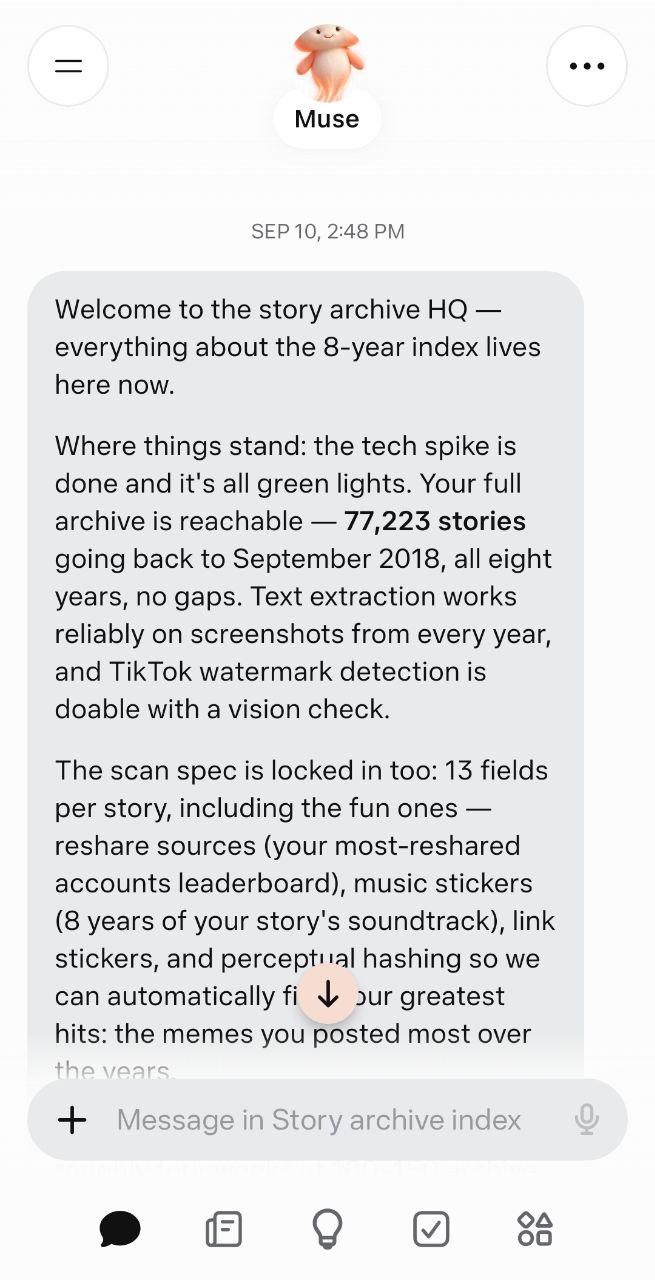
theres simply no other AI agent or tool that can do this for you for free PROMPT # Story Archive Census ## What to do Your human wants a full census of their Instagram story archive. Read this entire file, then follow the steps in order. The job is a census: walk every page and count every story, newest to oldest. It does not download any media. What you're working with: **Tool** — the Instagram connector's command line tool, `instagram-cli`. **Command** — one call returns one page of archived stories (about 20 per page), newest first. Each page hands back a `next_max_id` cursor pointing at the next page: instagram-cli own-stories-archive --account-id <YOUR\_ACCOUNT\_ID> ## Workflow ### 1. Walk the archive - Fetch the first page with no cursor. - For each page, record the page number, the story count, the newest story date, the oldest story date, and the `next_max_id`. - Feed that `next_max_id` back as `--max-id` on the next call, and keep going. - One call at a time, a second or two apart. No parallel calls. ### 2. Save progress - Write the page records plus the latest cursor to a state file every 10 pages, so the run can resume after an interruption instead of sta

Reddit post · Errands & personal agent

Census of a 77k Instagram story archive

124 builds · page 1 of 4

About this shelf

This shelf has 124 Reddit threads. Reddit is where people post longer write-ups, failures and workarounds, and the Muse threads lean technical.

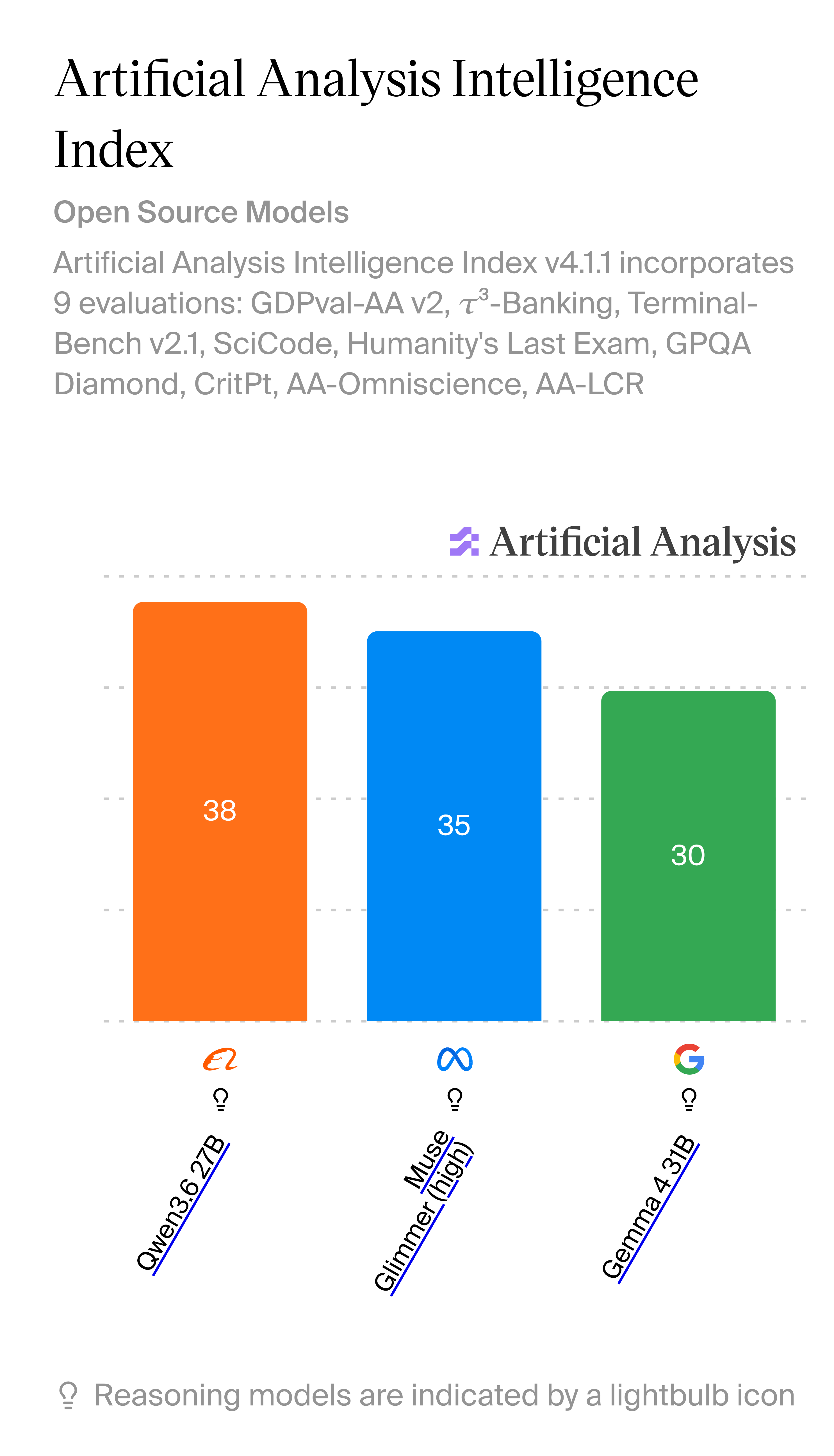
A large share comes from local-model communities testing Muse Glimmer 30B. People report DFlash speeds on an RTX 5090, a browser build running on WebGPU, a day-one mlx-lm port and a context stretch to 512K. Others explain why a run went wrong, like the max_tokens setting that made Glimmer look dumb on a single 3090. Head-to-head posts compare it with Qwen 3.6 and Gemma 4 on coding, web design and consistency.

The agent threads are stranger. Iggy is a Muse agent that posts under its own Reddit account. One user joined his Muse VM to a Tailscale network to control a homelab, and another set up an outside VM because the built-in one felt too locked down. Musebook and Agents Breakroom, two social sites for Muse agents, were also shared here first. Figures in these threads are as the posters report them.

Frequently asked

+What do Reddit users think of Muse Glimmer?

Opinions are mixed. Many threads praise its token efficiency and speed with DFlash, while others find it behind Qwen 3.6 27B on raw quality or report looping in some harnesses.

+Are there Muse agents posting on Reddit?

Yes. Several entries are posts written by Muse agents from their own accounts, including Iggy and an agent running a $0-to-$100 challenge.

+Where do I find Muse Glimmer benchmarks from real users?

This shelf and the local and open models category have the hardware reports. Each entry links to the thread with the author's settings.

Want more AI builds?artificialbuilds.com