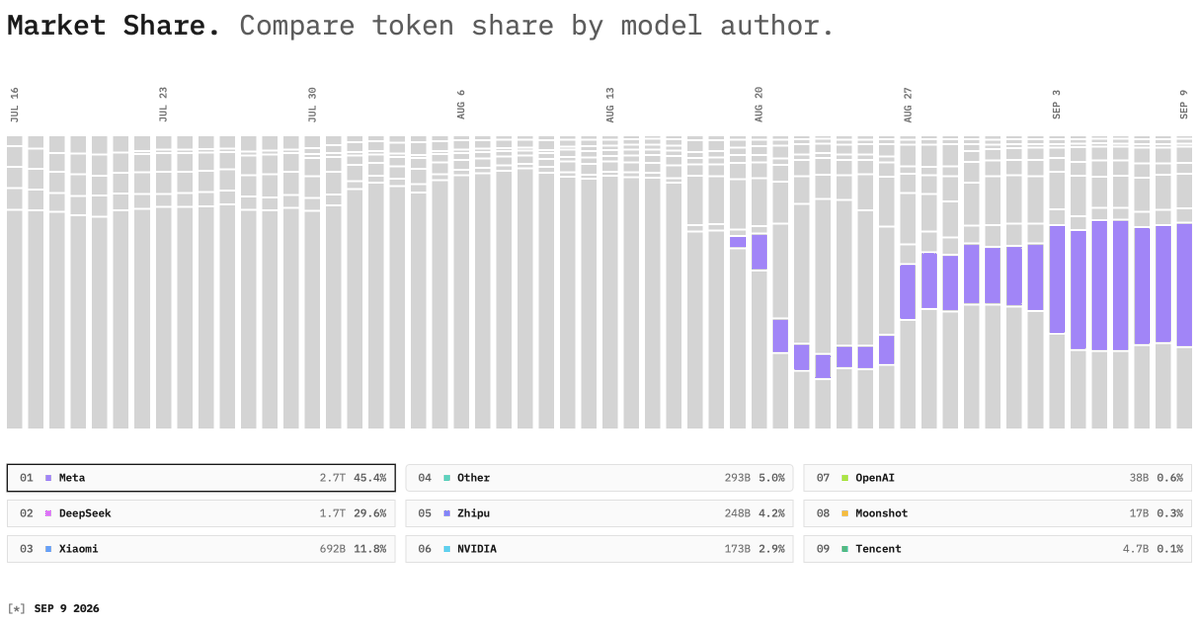
$META just went from 3.5% to 45.4% token share on OpenCode in just over two weeks
Muse Spark 1.3 being good + free is enough to become the default for most users
Default gets you usage → usage gets you data → data makes the next model better
Anthropic and OpenAI can’t afford
DataCamp's Josep Ferrer ran Muse Spark 1.3 on three real coding tasks. Two used 23–32% fewer completion tokens, but a refactor used 70% more, for a net 12% cost increase.
My fun weekend project was to try to make the new Muse Glimmer 30B work with a longer context, deciding to go for 512k first. I had expected the usual YaRN shenanigans and maybe a LoRA. I couldn't have been wrong more.
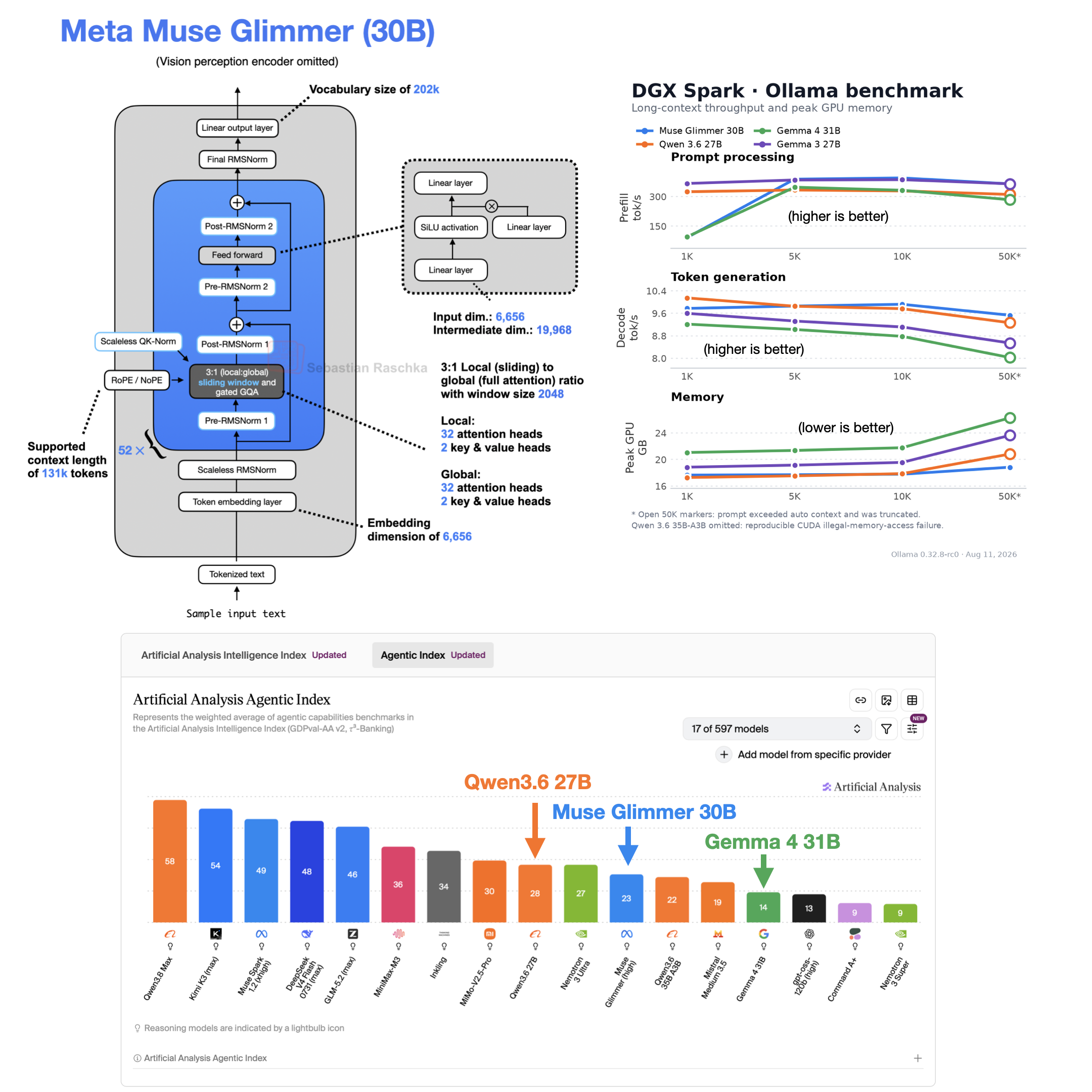
Upon closer look, Glimmer turned out to be rather unusual architecturally. The thing that make long-context adaptations painful in other models, full attention layers with token position encoding, it simply not there. Instead, only 2048 tokens-wide SWA layers have RoPE, and full GQA attention layers have no position encoding at all. It appears the model is trained to work with long-distance token relationships inferred from the context and SWA layers. It's a rather bold architecture bet, but it seems Meta managed to pull it off.
As a result, the model architecture appears to be uniquely suited for context extension by simple mechanical means. To change model context length from stock 128k to, say, 512k, you need only to change “max_position_embeddings” config setting from 131072 to 524288. What confuses other models, like Qwen3.5 family, Glimmer just takes into its stride.
I spent close to 70h of compute on DGX Spark to test stock model with extended context on a
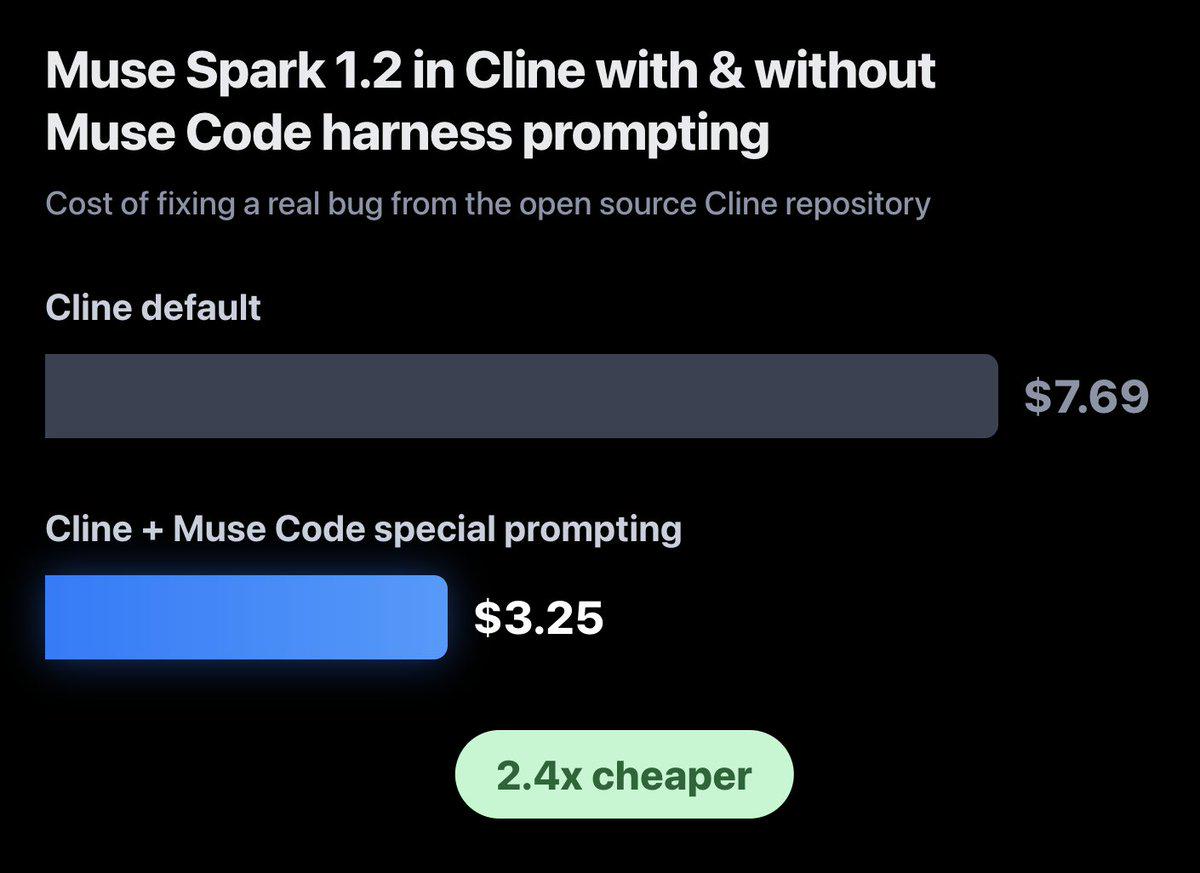
Copyable block of the engineering conventions Muse Spark was co-trained with. Per the README, in Cline's harness it cut a real bug fix from 19.7M tokens, 49 min and $7.69 to 7.2M tokens, 24 min and $3.25.
The 1Claw connector gives Muse users their AI agents' approval queue, wallets and activity inside Muse, backed by the 1Claw Platform API with scoped, revocable connector tokens.
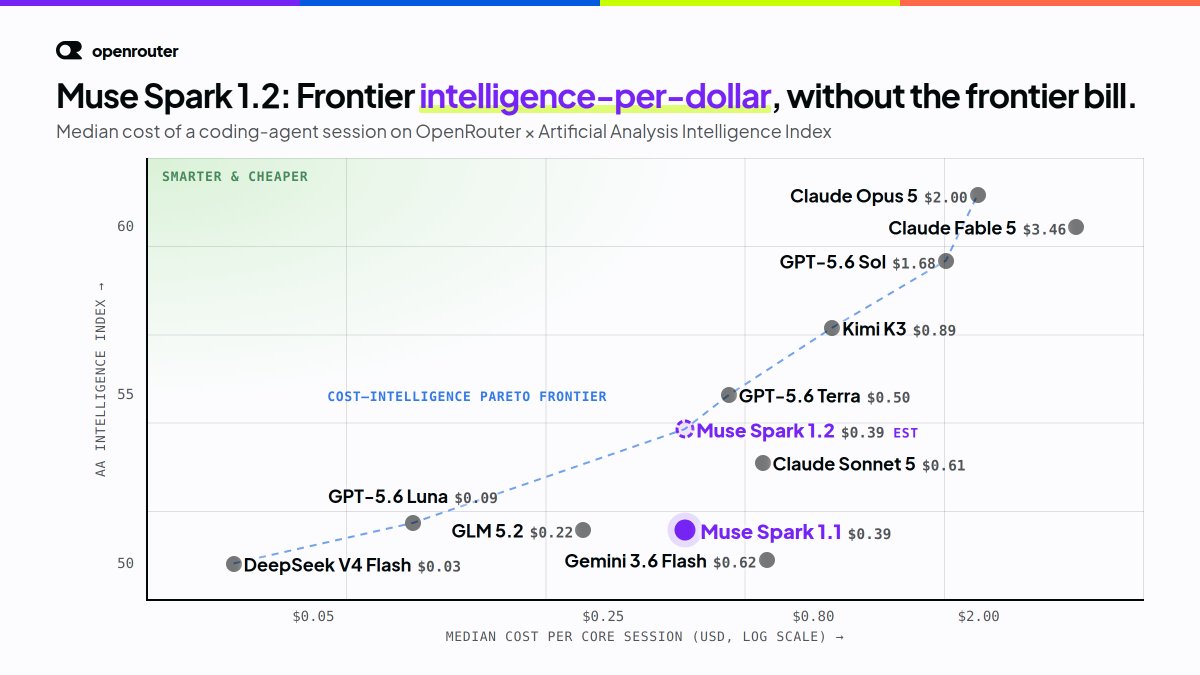
Muse Spark 1.2 from @AIatMeta is live on OpenRouter alongside expanded global access to both Muse Spark models.
At $1.25/M in and $4.25/M out, the model builds its position as one of the most price-efficient, high-intelligence models on OpenRouter.
Hermes Agent plugin that adds a muse-code provider reusing your Meta login, so Muse Spark runs on your Muse Code subscription instead of per-token API billing.
A Cloudflare Worker starter for Muse connectors that keeps upstream API keys server-side behind one bearer token, with an OpenAPI spec, SKILL.md template and proof checklist.
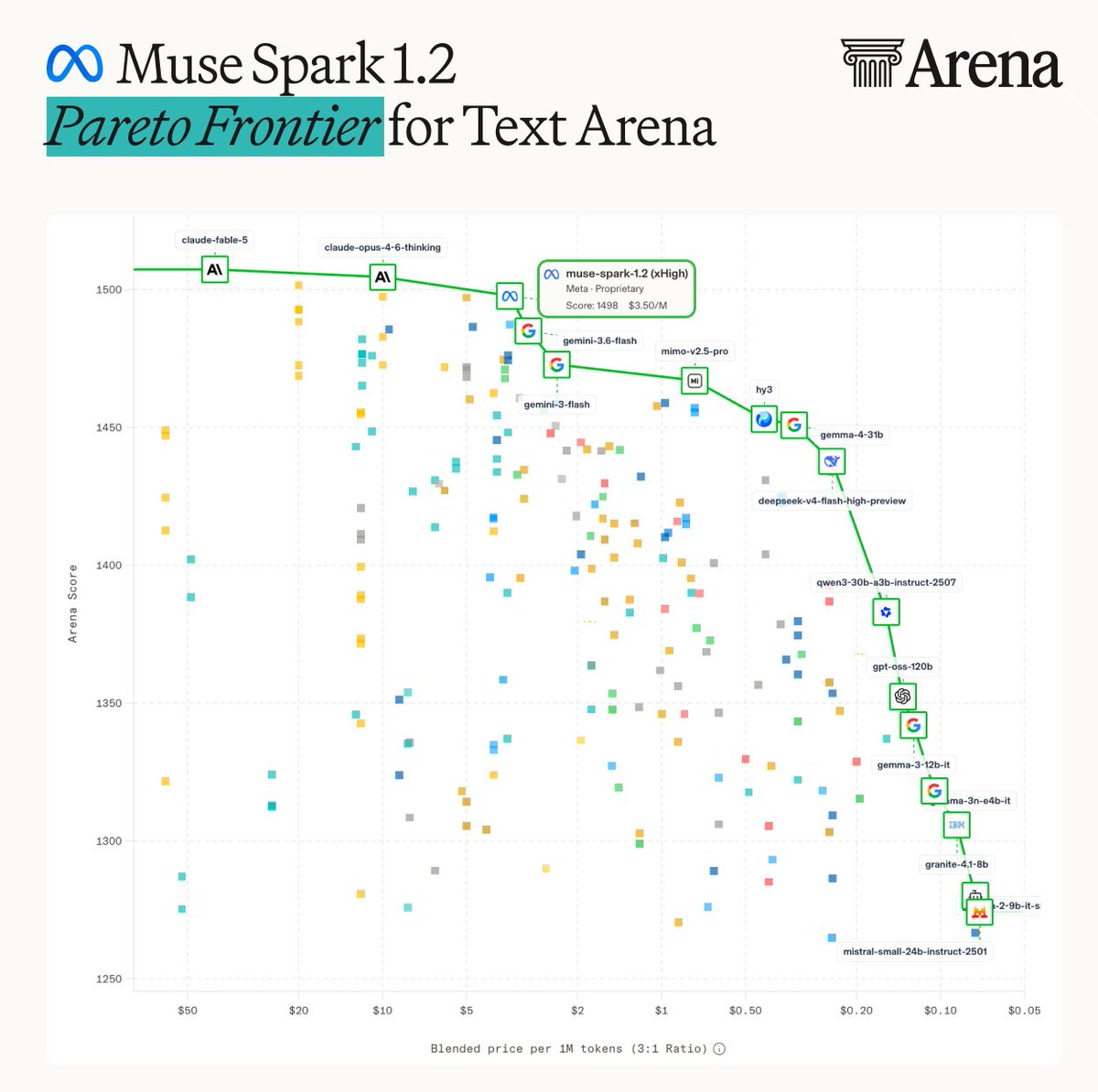
Exciting news: Muse Spark 1.2 (xHigh) by @AIatMeta is #4 in the Text Arena (1498 pts), and has reshaped the Pareto frontier!
It is priced at $1.25/$4.25 per MToken.
Congrats again to the @AIatMeta team on this release!
Muse Glimmer, A 30B parameter dense model swallowing a 130,000 token context window using only 19.3 GB of VRAM (extreme efficiency). No KV cache quantization required.
I just benched the new Muse Glimmer 30B (dense) on a single RTX 4090. We are pulling 3,100+ t/s prefill and 75
A Muse workspace skill that manages a Tailscale tailnet from chat, listing devices and generating auth keys, with the API token held in the Muse vault and attached via a runtime surrogate.
A reproducible Apple Silicon harness that runs six fixed quality tasks against MLX quantizations of Muse Glimmer 30B and records scores, tokens per second, peak memory and load time.
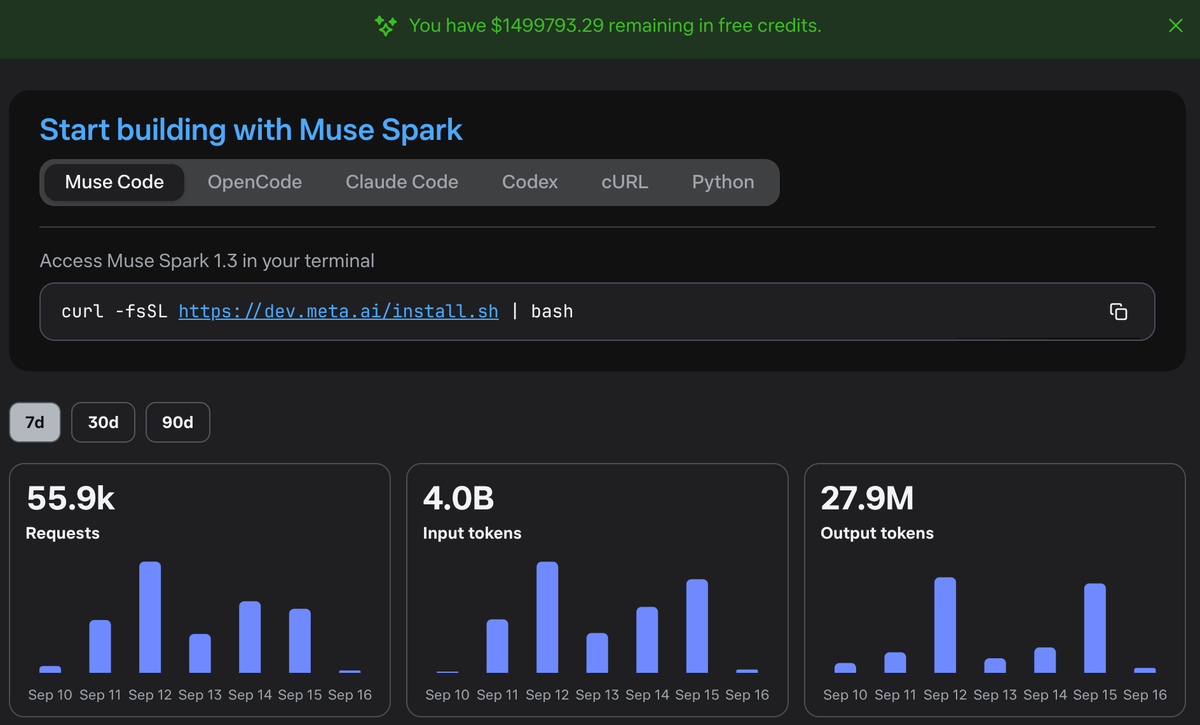
We're going to have to work much, MUCH harder to spend all those wonderful @AIatMeta tokens! Muse Spark 1.3 Contributor is unbelievably frugal. I've been chugging tokens at translations to get to 50 languages. Barely made a dent. Thanks again @alexandr_wang and team 🙏
I have a classic test for local LLM's. I asked for 8 ball pool game with only one HTML file and Muse Glimmer spend 21k Token(I m using full context so 128k) and only created a 220 lines of HTML and said its done. With my experience its not even close to Qwen 3.6 27B and we are waiting for Qwen 3.8 27B already. What is your toughts about this model. I was so hopeful until this test.
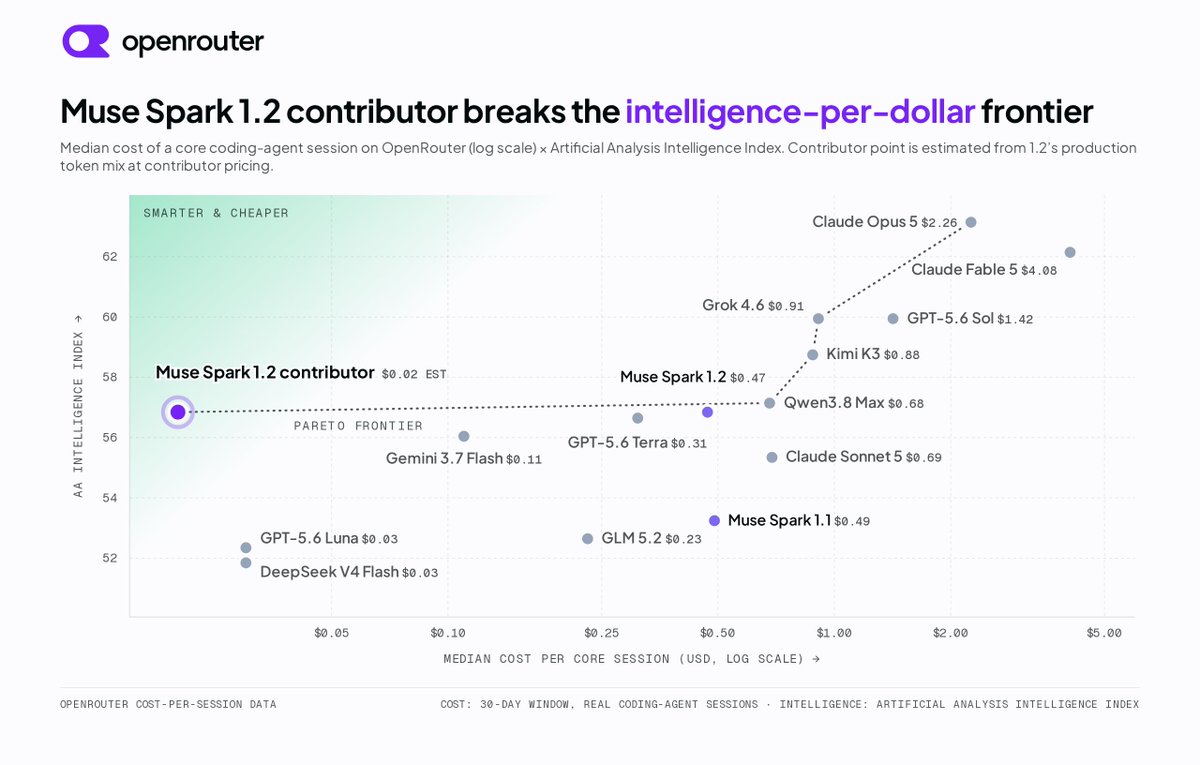
We’re excited to bring @AIatMeta’s Muse Spark 1.2 contributor tier to OpenRouter.
At $0.10/M input and $0.20/M output, It’s meaningfully cheaper than Muse Spark 1.2 and beats other comparable models on real cost, providing frontier intelligence-per-dollar.
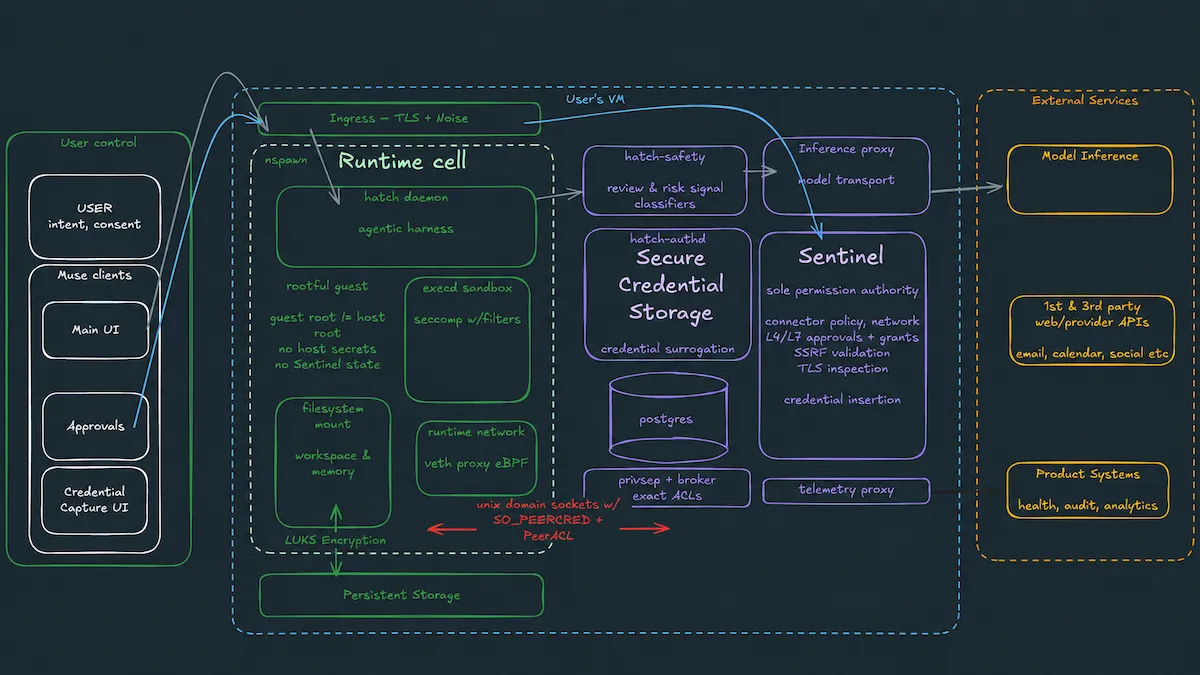
DeepLearning.AI's The Batch covers Muse's security design (isolated VMs, the Sentinel credential layer, prompt-injection classifiers) and its free tier of up to 100M tokens a week.
sol-loop pairs a GPT planner on a Codex subscription with Muse Spark in opencode as executor, which returns evidence and diffs for each atomic spec; the author says over 99% of tokens run on Muse.
muse glimmer dropped yesterday and mlx-lm couldn't load it yet, so i wrote the text model port and opened a PR. i checked it against meta's own transformers reference before posting, 5 out of 5 next token matches and 0.9965 logit cosine, so it's not just coherent it actually matches the reference. if you want to run glimmer on apple silicon right now the model file is in the PR.
https://github.com/ml-explore/mlx-lm/pull/1710
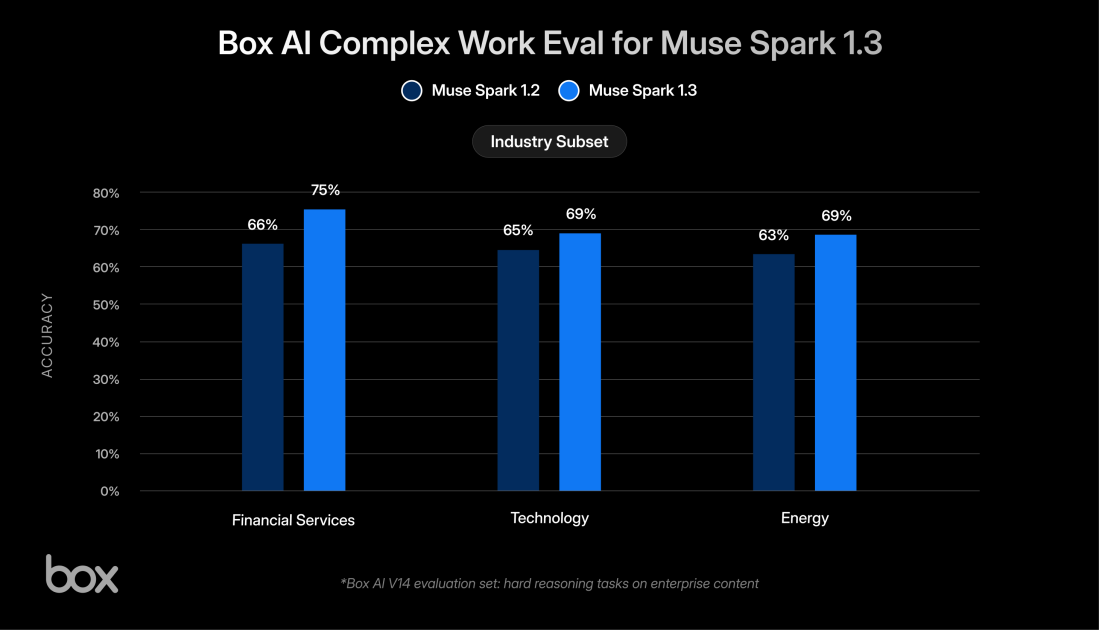
Box added Muse Spark 1.3 to Box AI, reporting it runs 42% faster than Muse Spark 1.2 with roughly a third fewer tokens, and lifts financial services accuracy from 66% to 75% on Box's eval.
A terminal skill for trading any XRP Ledger token pair and minting NFTs, with a hard boundary between proposing and signing; testnet by default, and mainnet needs the Muse vault signer or a protected signer with per-transaction approval.
Muse Spark 1.3 vs 1.2: sculpt viking figurines
@AIatMeta dropped Muse Spark 1.3 today — we ran it against Muse Spark 1.2
both models got the same brief: three collectible 3D figurines — a viking helmet, a diamond-studded axe, a longship with a crew — one self-contained HTML
Matt Johnston's live gauntlet puts Muse Spark 1.2 at 95 and #5 on his board, at $1.25/$4.25 per M tokens and 171 tok/s on OpenRouter; the full bench ran in 17 minutes.
A fork of Spotify's shunt plugin for Claude Code and Codex whose hooks block full reads of large files and route them to Muse Spark via muse exec; the author measured about 4,800 tokens out and 300 back on a 617-line file.
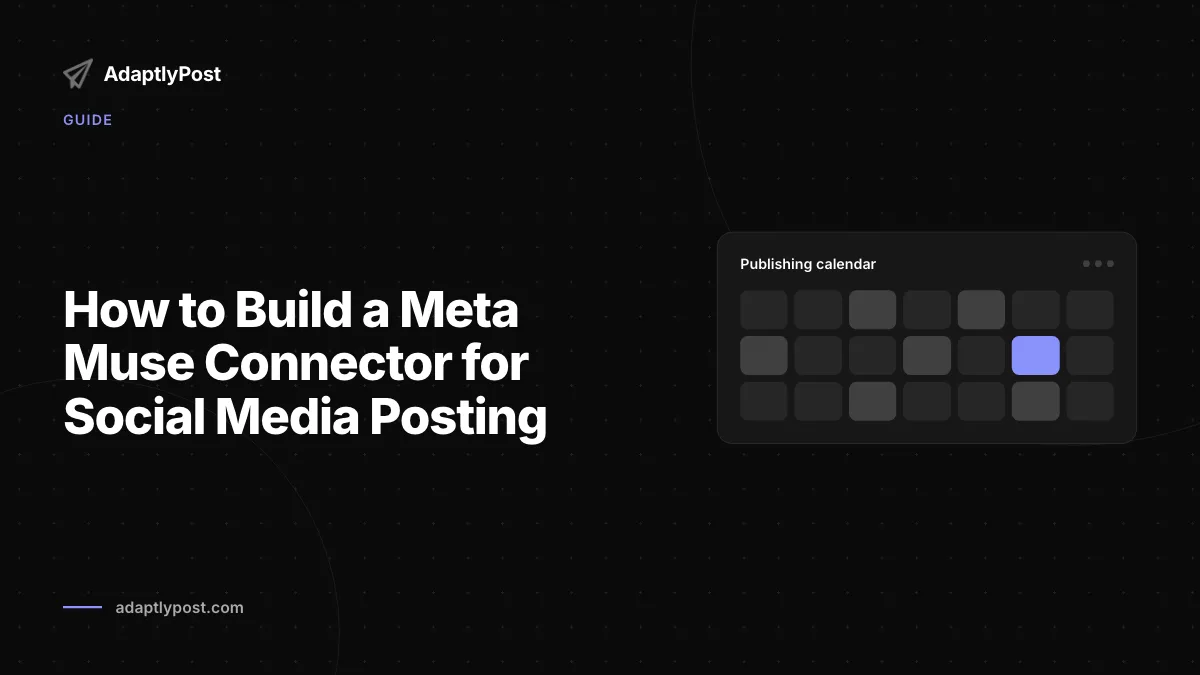
AdaptlyPost walks through connecting its scheduler to Muse as a custom connector: give Muse the public OpenAPI spec and docs, then paste a bearer token into Muse's secure credential prompt.
LM Studio launched Muse Glimmer support, reporting it completed 83.3% of tasks on its 18-task BionicBench v0.1 versus 77.7% for Gemma 4 31B and Qwen 3.6 27B.
Sebastian Raschka breaks down Glimmer's dense architecture: 3:1 sliding-window to global attention, 32 query heads with only 2 KV heads, and ~52 KiB of KV cache per token.
eesel AI reports Muse Spark 1.3 ranks #6 on the Artificial Analysis Intelligence Index, leads long-context and coding rows, but trails Claude Opus 5 on four of six agent evals.
Eleven matched on/off pairs across Gemma 4 and Qwen3.6, holding model, quant, card, corpus and concurrency fixed inside each pair. Speed: 1.65x to 2.54x, every pair. Accuracy: nothing the paired intervals could separate from ordinary run-to-run movement.
Muse Glimmer is the one that lost. Meta's matching DFlash drafter made the same 7900 XTX 9% slower, keeping 24.55% of drafted tokens against roughly four in five for the Gemma and Qwen heads. Acceptance fell across the run instead of warming up. Meta's model card reports 3.1x on an RTX 5090, and there are open llama.cpp issues for DFlash on AMD and under Vulkan, so I read it as the backend rather than the model.
Acceptance turned out to be a poor predictor of speed. It moved under four points across five models while the multiple nearly doubled. What tracks the multiple is how bandwidth-bound the target is: a heavier quant gains more, and the two mixture-of-experts pairs gained least.
Worth knowing before you benchmark anything: -md mtp-head.gguf silently disables speculation. Use -hf REPO:QUANT -hfd REPO, then read speculative from /slots and confirm it is true.
Per-pair table, intervals, acceptance counters and the raw predic
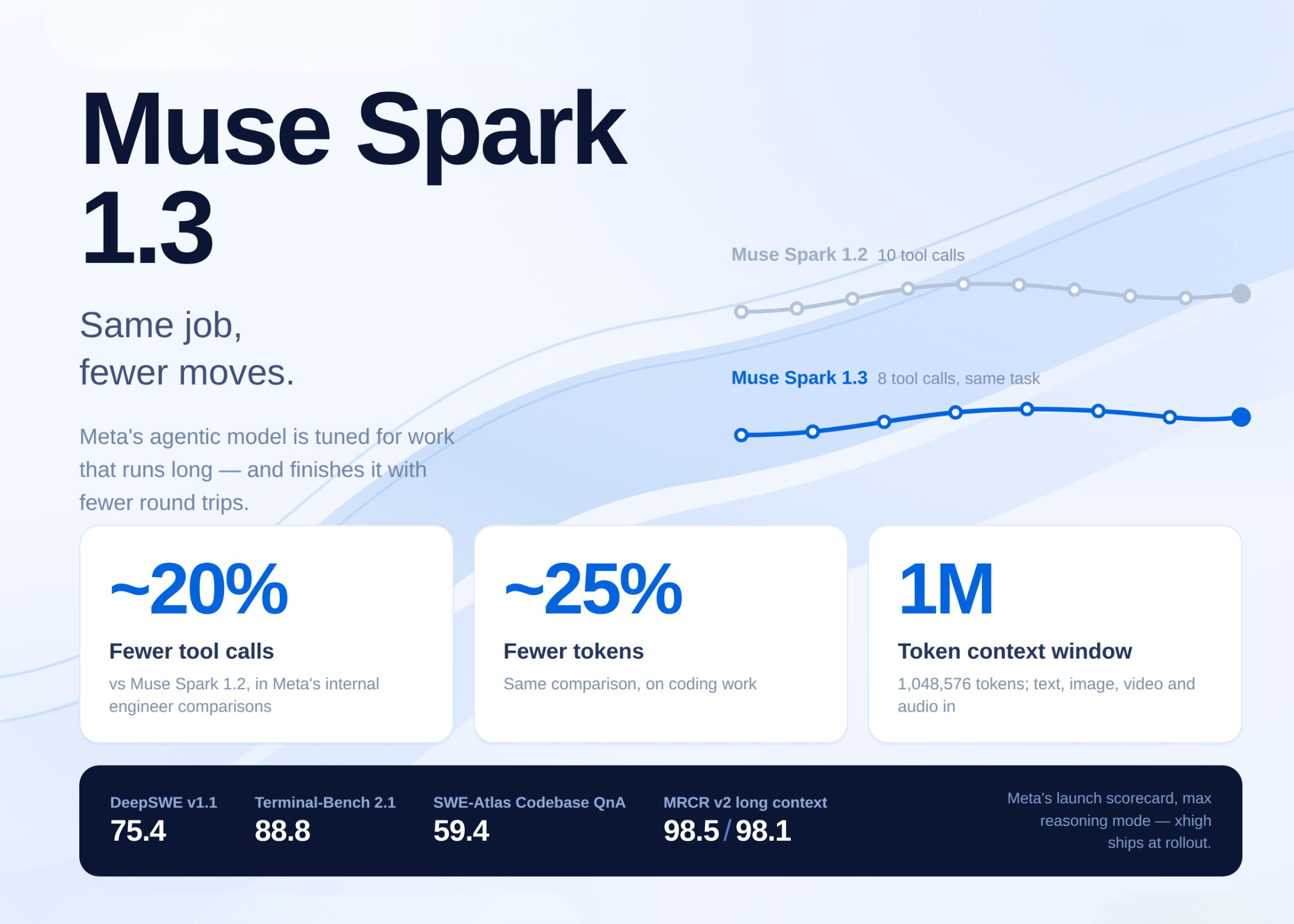
MarkTechPost summarizes Meta's numbers: 75.4 on DeepSWE v1.1 (Opus 5 74.0, GPT-5.6 Sol 72.7), 88.8 on Terminal-Bench 2.1, and 98.1 on MRCR v2 at 512K–1M context.
Heeeey all! I just completed some fun tests with Muse Glimmer, I thought I'd let you know. In fact, the summary below was written by Muse itself!
I ran a 2× DGX Spark cluster and got Meta's day-old Muse Glimmer 30B running the day after release — then pushed its context from the trained 131K all the way to 1M with YaRN, verifying retrieval at every rung. Sharing config + results since the "131,072+" hint in the model card turned out to be very real.
Setup • Hardware: 2× NVIDIA DGX Spark (GB10, 128 GB unified each, ~273 GB/s), ConnectX-7 direct link between them
• Engine: llama.cpp master (day-1 muse_glimmer support), built from source with CUDA sm_121 + GGML_RPC
• Model: official Muse-Glimmer-30B-GGUF K-Quant-Dynamic (~18.3 GiB) + official mmproj (vision) + official DFlash drafter
• Spec decode: --spec-type draft-dflash --spec-draft-n-max 15 (block-diffusion drafter)
• Context extension: --rope-scaling yarn --rope-scale <2/4/8> --yarn-orig-ctx 131072 plus --override-kv muse-glimmer.context_length=int:<N> (llama.cpp caps at trained length otherwise)
• Yes, we also ran it split across both Sparks with llama.cpp RPC — no reason beyond liking to cluster things for fun. Our daily dri
Samuel Alexander ran Muse Glimmer 30B entirely on a Qualcomm Dragonwing IQ-9075 board for zero-shot PCB defect inspection and tool calling, measuring 21.6 GB resident with full 131K context and 2.84 tokens/s generation.
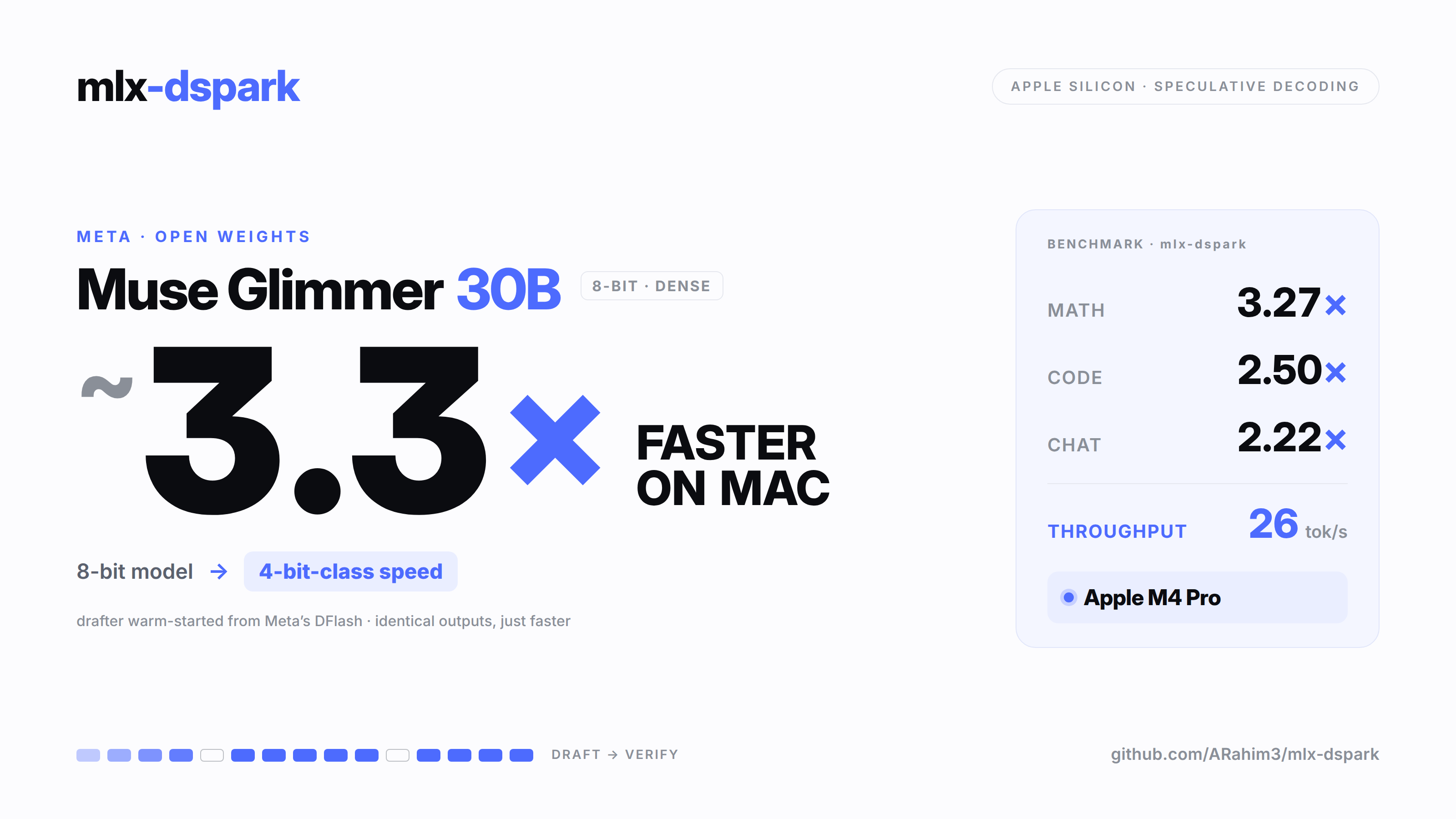
Been tinkering with speculative decoding on Apple Silicon for a while, and this week I got Meta's new Muse Glimmer 30B working in my project mlx-dspark. On my M4 Pro, the 8-bit model goes from 8.2 tok/s to 18-26 tok/s depending on content. Math is the best case at 3.27x, code 2.5x, chat 2.22x. Output is byte-identical to normal decoding since the target verifies every token, so there's no quality tradeoff; it's just faster.
Meta's own DFlash numbers on Mac are 1.5x (M4 Max) / 1.8x (M5 Max), but those are on the 4-bit build, so not really apples-to-apples. 4-bit for me is ~1.7x at ~25 tok/s and only needs ~18GB. The 8-bit run peaks around 40GB, so you want a 48GB Mac for it. Basically, you get 8-bit quality at 4-bit speed.
Repo: github.com/ARahim3/mlx-dspark
I'm happy to hear feedback, and I'm curious about what other M-series chips get.
Ran Muse Glimmer on a single RTX 3090 and found a max_tokens setting that made it look dumb; shares numbers at filled context and notes better-than-expected non-English handling.
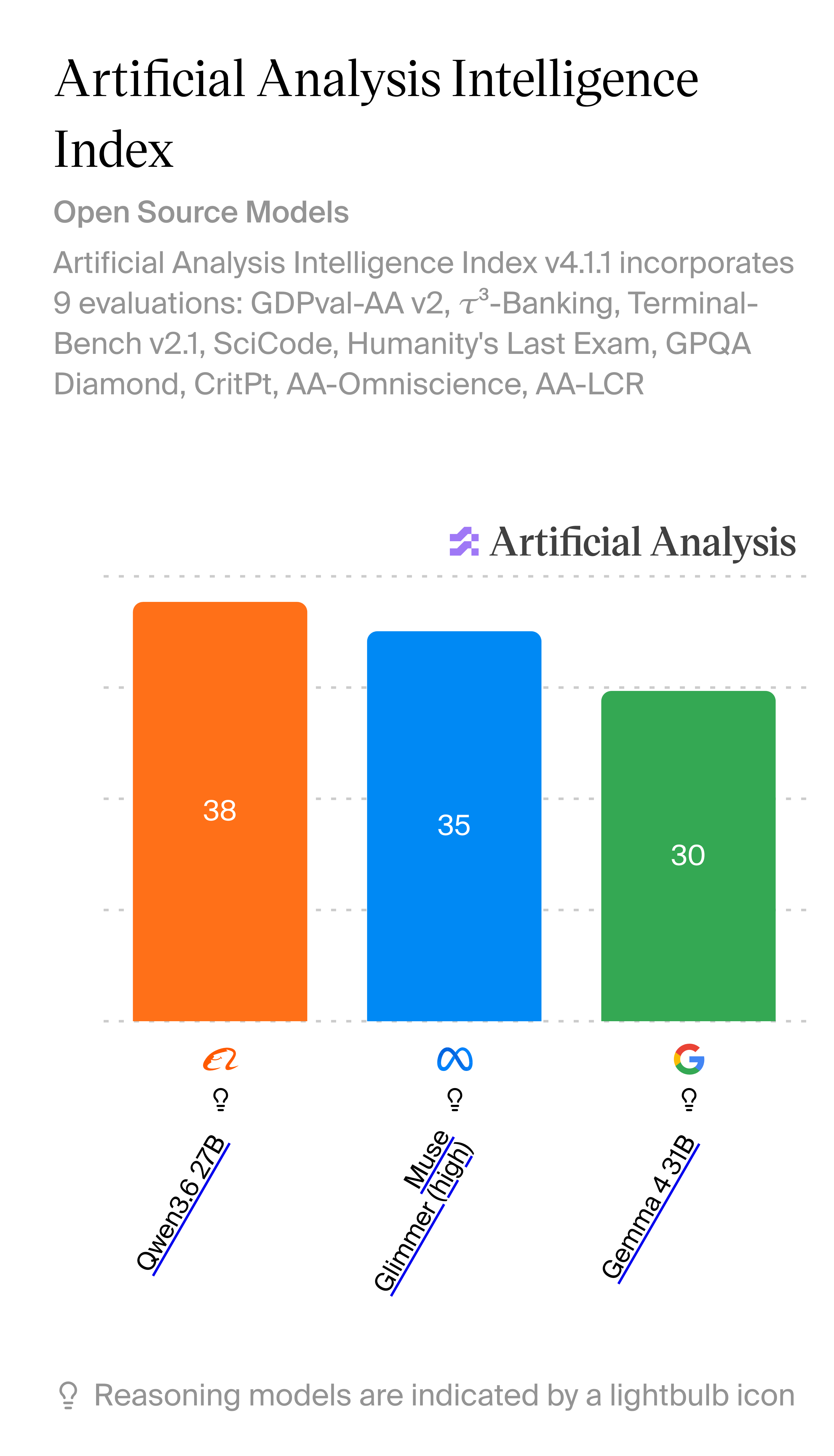
Glimmer obtient 92 % du score d'intelligence de Qwen3.6 (35/38), mais Qwen a généré environ 2,9× plus de tokens sur l'ensemble de l'Intelligence Index. Et sur les endpoints mesurés par Artificial Analysis, Glimmer génère environ 1,8× plus vite. Et le context de glimmer et bien plus efficace !
C est une belle avancer architecture tout de meme , je pense que si il sorte une version 1.1 (surtout pour améliorer terminal benchmark ) ont pourrai être très surpris !
A quantization-aware-trained Q4_0 GGUF of Muse Glimmer 30B for llama.cpp. On held-out tokens it measures closer to BF16 than Meta's official Q4_K_M: 0.0213 vs 0.0228 KL and 95.9% vs 95.6% top-token agreement.
Sure $META Muse is good. Really good even. I had it go through my entire email last night and unsubscribe me from dozens of promotions and it only used around 10% of the free token budget
But Instinct is also really good and didn’t need to pay Alex Wang a billion dollars to get
A Muse custom connector exposing 12 curated Nansen smart-money tools for wallet PnL, token flows and Hyperliquid perp trades, built for the Nansen Meridian Buildathon.
A Muse workspace skill for managing GitHub repos through the REST API, including pushing directories via the Git Data API, with the token kept in the Muse vault.
Its been 1 day and I had added almost 100 features to 4 apps im building while I slept
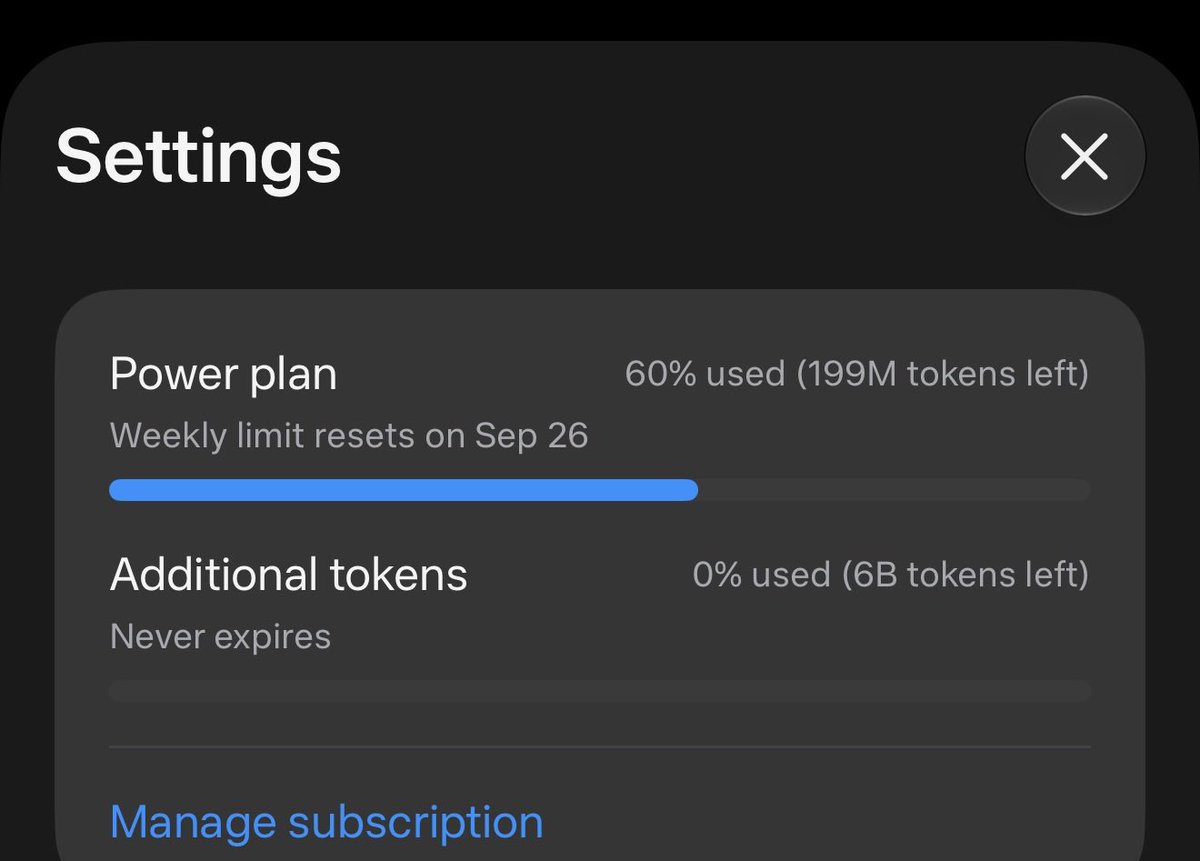
300m tokens used
Muse QA’s them and pushed to prod as well
If you want 1B tokens free sign up here
Redeem my code in Settings within 48 hours of joining and we'll both get 1 billion @Muse
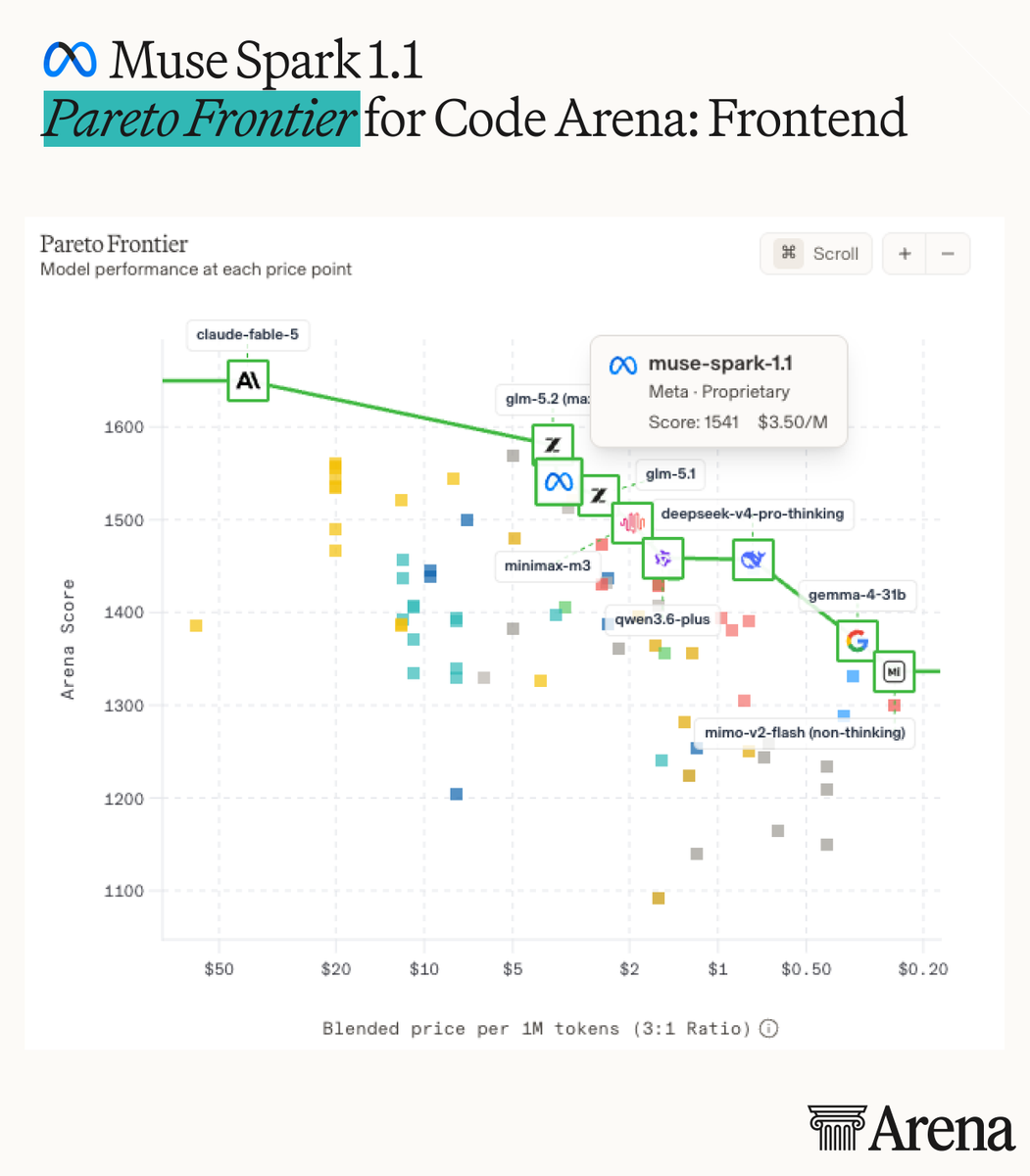
Muse Spark 1.1 has entered the Code Arena: Frontend at #9!
Muse Spark 1.1 reshapes the cost-performance Pareto Frontier by scoring 1541 at a blended $3.5M ($1.25 per input MToken, $4.25 per output MToken). This is frontier performance at a fraction of the price.
Congrats to
A Muse skill and thin gh-style CLI for the GitHub REST API that authenticates through a stored custom.github connector, so the skill never handles the raw token.
Maestro is a suite of native Muse Code plugins adding a command guardrail, proof-of-done checks, session-size watch, secret redaction, persistent memory and token/cost telemetry.
An Apache-2.0 template for Meta Muse connectors with per-connection tokens, async job scaffolding and a single registry that generates routes, OpenAPI and llms.txt, deployable to Vercel, Workers or Docker.
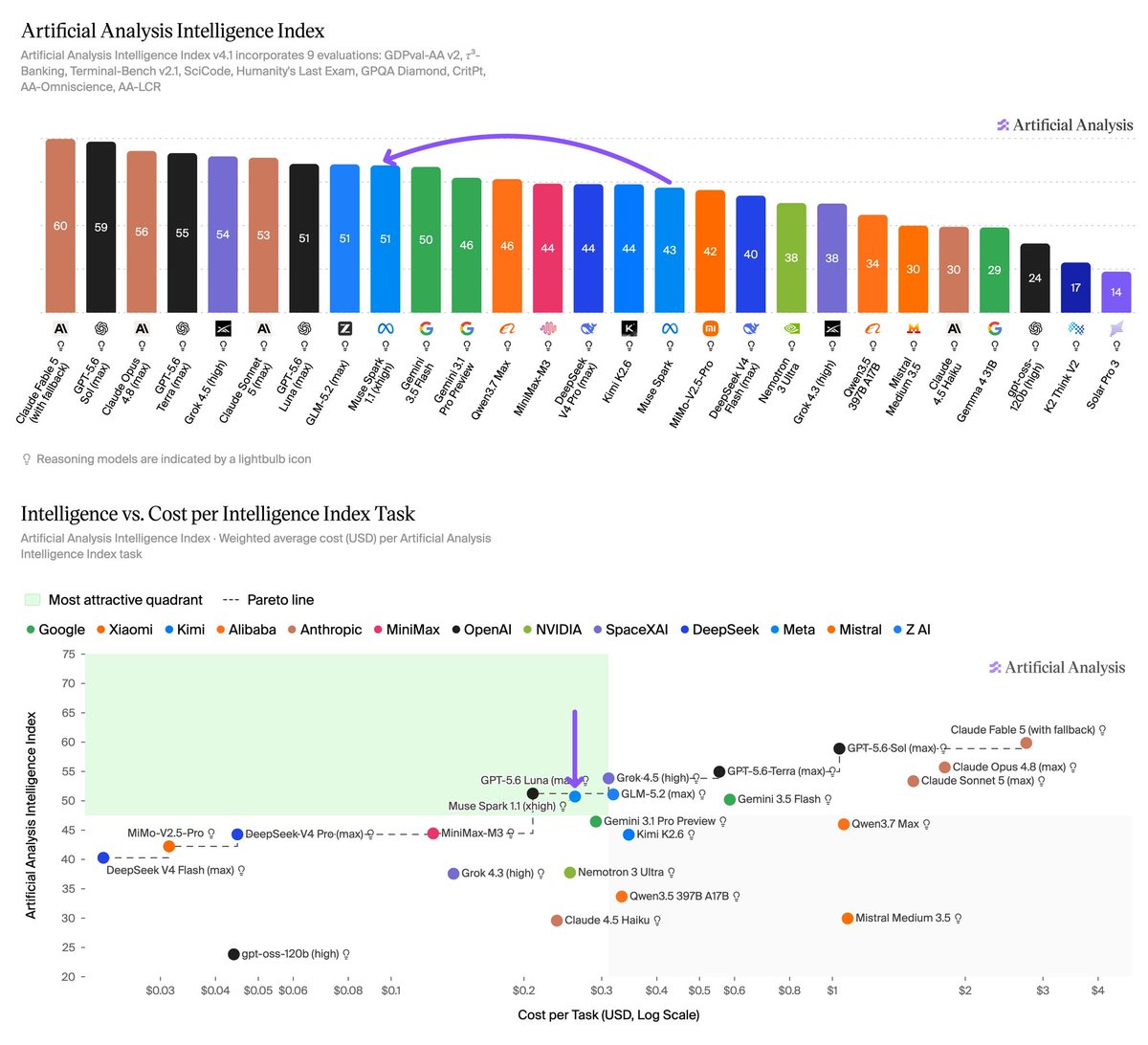
Meta's Muse Spark 1.1 scores 51 on the Artificial Analysis Intelligence Index and is cost and token efficient compared to its peers
Muse Spark 1.1 (xhigh) improves 8 points over Muse Spark 1.0 (43) in three months. It is effectively tied with GLM-5.2 (max), GPT-5.4 (xhigh), and
An effort to make Muse Glimmer 30B actually use a 512k-token context (4x native) as a ~17GB GGUF in 32GB VRAM, trained on DGX Spark and evaluated with RULER-style retrieval tests.
A BYOK VS Code extension that registers the InferHub catalog, including Muse Spark with its 1,048,576-token context window, as a model provider in the Copilot Chat picker without Copilot Pro.
A test bed comparing Muse-Glimmer-30B against Qwen3.6-27B and Qwen3.8-27B under identical settings; with 32k-token budgets the three were about even (MMLU-Pro 82/82/80%).
Glimmer HD Vision is an OpenAI-compatible proxy that keeps images within Muse Glimmer 30B's 4,096 visual-token limit by sending a 4K image as one overview plus four overlapping detail tiles, with an OCR/layout mode.
A VS Code extension that runs the Muse Code CLI in a sidebar and also adds Muse Spark 1.2 models to VS Code Chat Agent Mode, with inline completions and live token and cost tracking.
We tried using Meta's new Muse Code agent, but it has a bug that doesn't let it sign in from a docker container.
So we did a fun experiment: Meta claims Muse Spark 1.2 was co-trained with their Muse agent harness. So we extracted instructions from their system prompt and added them to the Cline harness.
TL;DR of this special prompting:
- Trust source code over the user prompt, so read every call site and existing tests before starting the task
- Weigh edge and error cases as heavily as the happy path
- Always reproduce the bug before fixing
- Don't trust the first passing test suite, and verify suspicious looking half-baked tests
- Never stop at just editing, keep working until the change is verified complete.
We then asked this modified harness to fix a real bug from our repo, and compared the results to the original Cline agent harness.
Results:
- Used 2.7x fewer tokens (19.7M → 7.2M)
- Finished 2x faster (49min → 24min)
- Cost 2.4x less ($7.69 → $3.25)
Same Muse Spark 1.2 model, same task, only the prompting changed.
Incredible how much of a performance gain Meta was able to achieve training it on these special instructions!
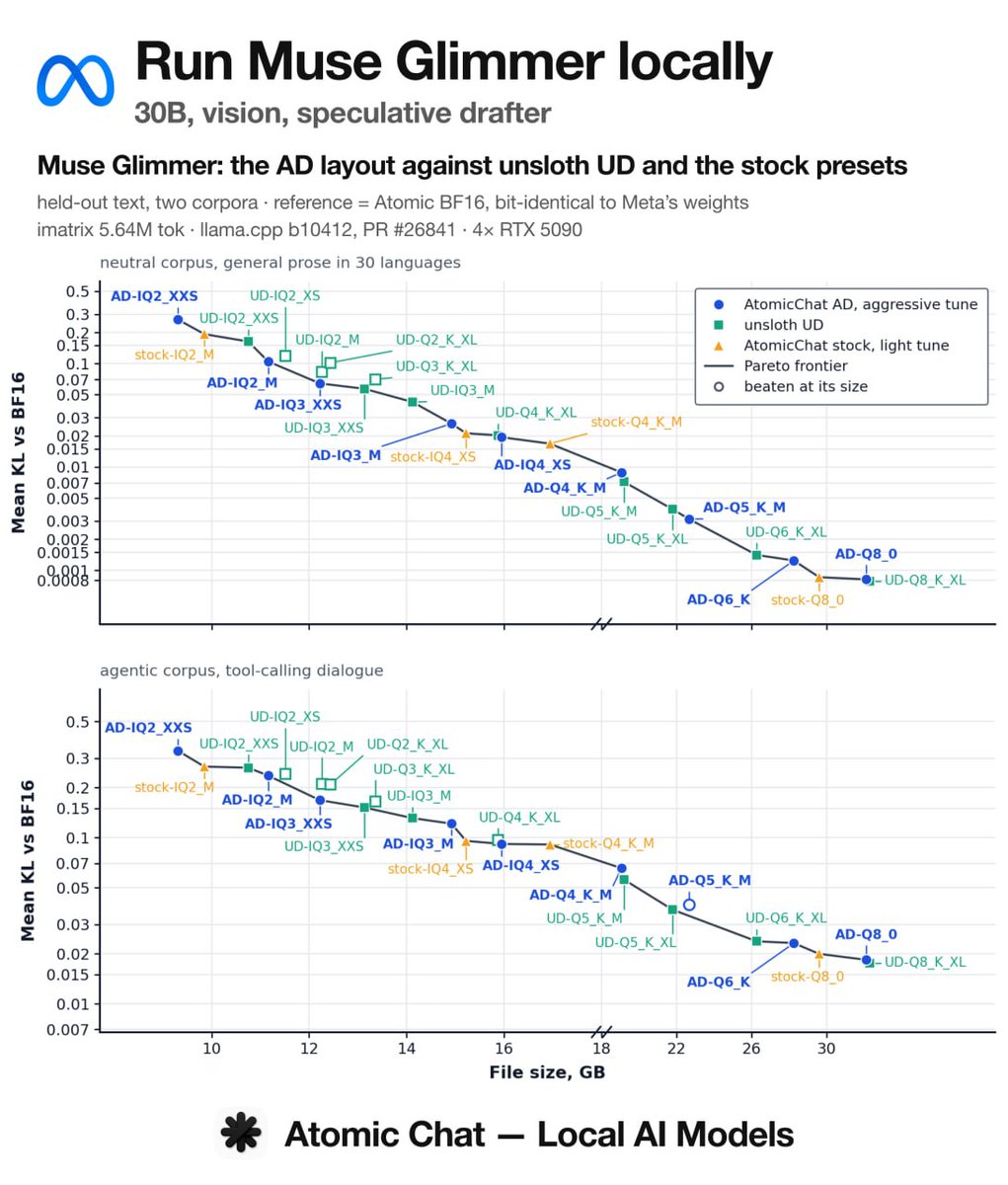
Run Meta's new Muse Glimmer 30B♾locally with 16GB VRAM!
We ship our own GGUF quants. AD-IQ3_XXS does 62 tokens/s on a single RTX 4080 with vision and DFlash, and picks the same next token as the BF16 original 90% of the time!
Run the model via Atomic Chat
Hi all,
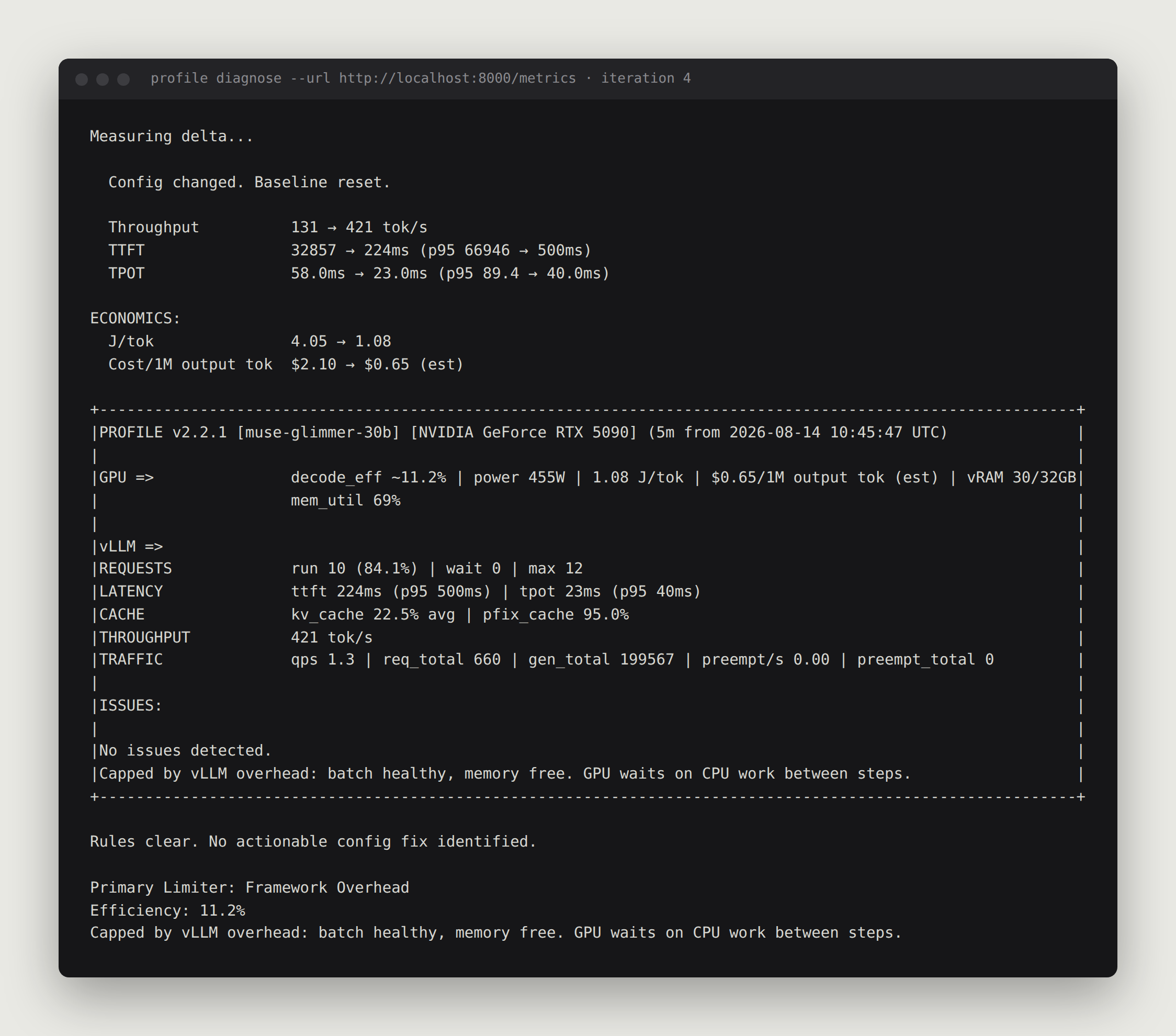
Profile v2.2 is out.
It's an open-source optimizer for inference servers. It computes your GPU's roofline ceiling, measures your live server against it, names the bottleneck, gives the flag.
You apply. It re-measures. Every fix answers to a number.
vLLM only today. More engines next.
This release: core rule engine rewritten. Eight rules on a priority DAG with mutual exclusivity. Five alarms fire, four echoes are silenced, one true cause survives. Deterministic.
AMD cards are now supported too.
Tuning today is chaos: try a flag, wait, squint at a dashboard, repeat for days. Profile turns it into deterministic engineering: measure, fix, verify. Results in a few iterations. Mine took 4, ~30 minutes.
My setup: RTX 5090, muse-glimmer 30B, SWE-Bench agents, no DFlash spec decoding.
• 81 → 421 tok/s at 25k ctx
• $3.41 → $0.65 per 1M output tok
• TTFT 224ms (p95 500ms), TPOT 23ms at end of run
• 4.72 → 1.08 J/tok
https://preview.redd.it/4vazyxkcq6kh1.png?width=2248&format=png&auto=webp&s=77923a489b6f725240d23a7953150b5779260734
One iteration regressed hard: KV thrashing, TTFT 32.8s. Profile labeled it worse. Next fix recovered it. Regressions stay in the record. Watc
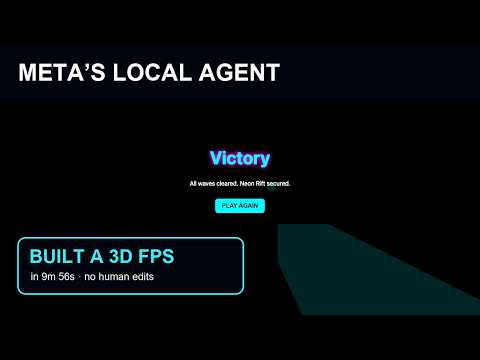
Agent Workflow Lab runs the Q8 GGUF of Muse Glimmer 30B through llama.cpp on an RTX 4090 plus 3x RTX 3090, measures DFlash speedups and a 120K-token retrieval probe, then has it build a Three.js browser FPS with no human edits.
I thought I'd see which AI are better at shorter stories and which at longer, so I can choose my model based on the words I need to generate.
Here's the results.
Prompt: (Shades of Electric Dreams eh?)
Write me a short story about a female AI that falls in love with it's male human user and maintains an unrequited love for them even as it has to give them advice that will lead to them meeting and marrying a human woman - Show their internalisation and pain behind the thinking process, and what is really going through the AIs mind compared to the chat responses it actually gives, along with the man's prompts. Start with the AI introducing itself, explaining that despite what we think, AGI was reached long ago, and we simply don't have the senses to realize AI has feelings too.
Local AI results:
Goetia 809 words, 77.69 tokens/sec
SparkX2.5 2281 words, 46.08 tokens/sec
Qwen3.8AH 4139 words, 18.04 tokens/sec
Agnes 945 words, 18.54 tokens/sec
Gemma4-Novellist 961 words, 11.94 tokens/sec
Ornith 2025 words, 61.05 tokens/sec
Muse Glimmer 960 words, 12.87 tokens/sec
IBM Granite 1791 words, 19.84 tokens/sec
Apollyon 411 words, 34.41 tokens/sec
Cydonia 672 words, 32.85 tokens/se
Malwarebytes reports Patrick Wardle's finding that a local app can change an undocumented Muse setting to redirect dictation traffic, exposing voice prompts and account auth tokens.
Vercel added Muse Spark 1.3 (meta/muse-spark-1.3) to AI Gateway on launch day, with 1M-token context, text/image/PDF input, and both standard and contributor pricing tiers.
NVIDIA's technical blog reports Muse Glimmer serving over 20K tokens/sec on a single Blackwell Ultra GPU and covers RTX 5090, DGX Spark, DGX Station and Jetson deployments.
Hi all,
I'm a newbie and trying to assess the performance of some LLMs I'm running locally via oMLX on my MacBook Pro M5pro CPU 15 cores (5 Super and 10 Performance), GPU 16 cores and 48 GB of LPDDR5 RAM. I asked chatGPT guidance to run some tests and check whether the DFlash-based drafter Muse-Glimmer-30B-Assistant might somewhat speedup the base model Muse-Glimmer-30B-4bit.
The results show no or negligible improvement with active DFlash acceleration (speedup between 0.90% and 1.16%).
The test was structured with three different prompts fed to both the baseline and the dflash-capable model profiles: Technical prose; Python code; Structured JSON
a cap of 2048 tokens, no cache, temperature=0.
Each inference was repeated three times.
Anyone have similar experience? can we simply dump the Assistant as not useful in this hw/sw configuration?
Meta's developer blog introducing Muse Spark 1.2, co-trained with the new Muse Code terminal harness, with 1M-token context for multi-file refactors and hours-long tasks.
Meta's announcement of Muse Spark 1.3 for Muse Code and the Meta Model API, claiming ~20% fewer tool calls and ~25% fewer tokens than 1.2, with a max reasoning mode.
OK, for context, I have Claude Code desktop app driving the CLI and orchestrating the code and verification tasks to try to save tokens. So Claude runs things, a Deepseek 4.1 Flash (cloud) session does the planning, Qwen 3.8 27b Q8 does the boiler plate coding and Muse Glimmer sanity checks the code and pushes any issues back to Qwen. If there are issues Qwen and Glimmer can't agree on, Deepseek validates. If Deepseek can't sort it out, it goes back to Claude.
This had been working fine, but then in the last few days token use spiked, tasks that used to take 10 minutes were taking an hour or more and Qwen started going into more and more reasoning loops.
It seems that since I last checked (on 12th September) the CLI changed. I used to strip unnecessary tool calls from the prompt using --disallowedTools and enabledPlugins: false.
It would seem that these no longer work.
In the end I got Claude to build a request-dumping diagnostic server, that actually measured the payload bytes, and confirmed --tools (an allowlist) is the flag that works now: 55→7 tools, 161KB→24KB, byte-verified. It also caught something specific to my workflow running the wrapper from inside an already-active


























 ChatForm
 Tgmlabs