
A controlled local benchmark on an M1 Max comparing Muse Glimmer 30B with Qwen 3.6 35B and Qwen 3.8 27B on tool calling and data-science tasks; Glimmer passed 24/30 versus Qwen 3.8's 30/30.
GitHub · Benchmarks & research
42 builds · page 1 of 1
A controlled local benchmark on an M1 Max comparing Muse Glimmer 30B with Qwen 3.6 35B and Qwen 3.8 27B on tool calling and data-science tasks; Glimmer passed 24/30 versus Qwen 3.8's 30/30.
GitHub · Benchmarks & research
Your product
Sponsored
Put your logo, a line of copy and an image right here, between the builds Muse developers come to read. Same size as a post.
Shown every 12 builds · on every catalog page
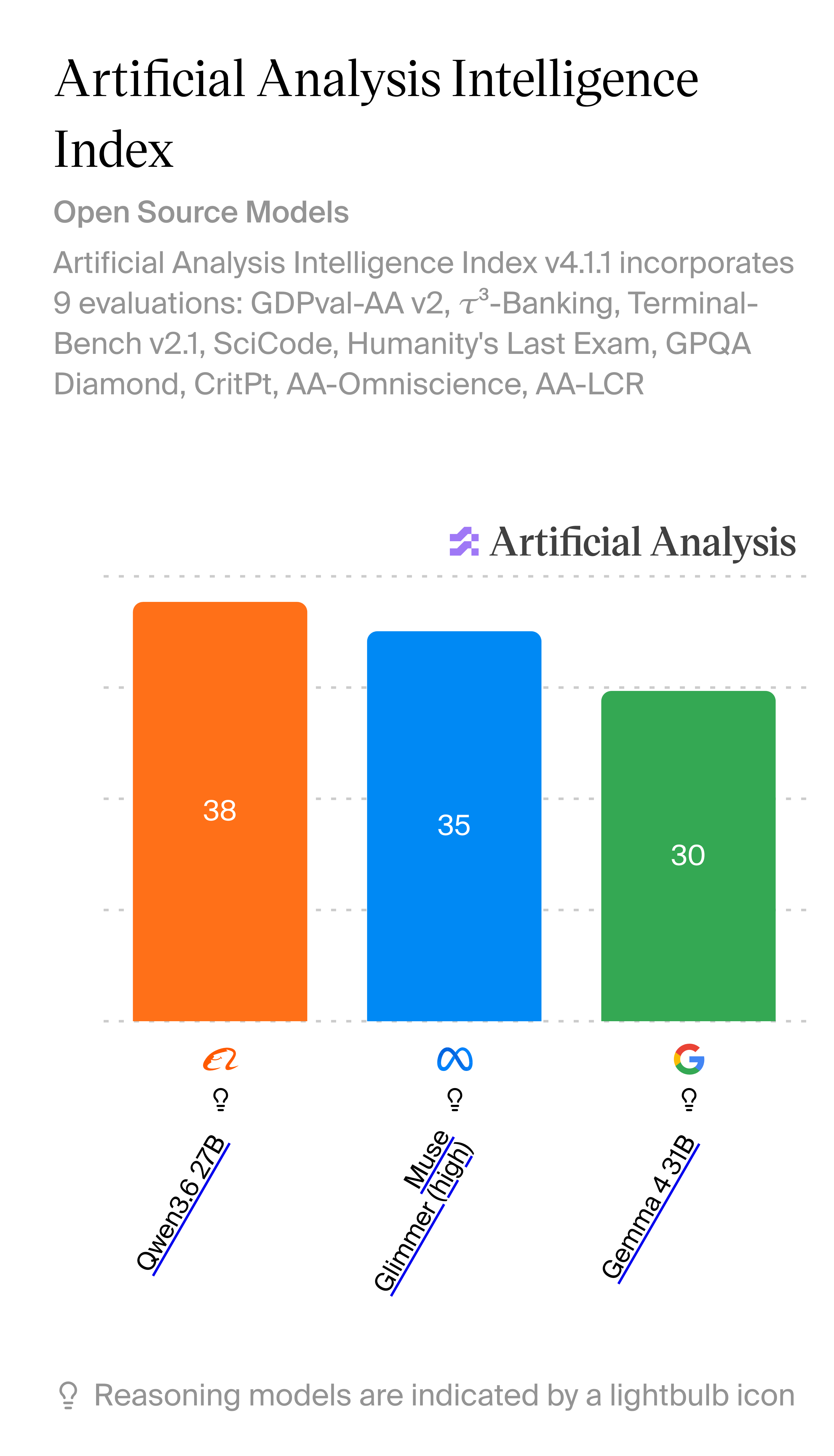
Glimmer obtient 92 % du score d'intelligence de Qwen3.6 (35/38), mais Qwen a généré environ 2,9× plus de tokens sur l'ensemble de l'Intelligence Index. Et sur les endpoints mesurés par Artificial Analysis, Glimmer génère environ 1,8× plus vite. Et le context de glimmer et bien plus efficace ! C est une belle avancer architecture tout de meme , je pense que si il sorte une version 1.1 (surtout pour améliorer terminal benchmark ) ont pourrai être très surpris !
Reddit post · Benchmarks & research
A harder rematch between Muse Glimmer and Qwen 3.8 27B (bumped to high reasoning) on the TalkWithMe project.

Video · Benchmarks & research· ♥ 267
xCreate runs a Q9 MLX build of Muse Glimmer against Qwen 3.6 on a 512 GiB M3 Ultra using the Inferencer app.

Video · Local & open models· ♥ 129
A few things right off the bat: • it reasons very efficiently. Like Grok 4.5 levels of efficient thinking • it quantizes very well. My first few tests with iq3_xxs were better than Qwen/Gemma behaved at that size • its knowledge depth is amazing. It beats Qwen3.6 27B on no-tools trivia. • in OpenCode it is a much more efficient agent than 27B. Both models accomplish their tasks but Muse-Glimmer got there faster every time I'll say that it's worse at most things coding, probably being closer to Gemma4-31B level.. but damn there's a lot of places where I'd use this model on a 24GB GPU right now and it's been a while since anything has filled that spot except for 3.6-27B
Reddit post · Benchmarks & research
Some people told me that the difference in richness and layout between Glimmer and Qwen wasn't clear to them. This example makes it super clear. I'm aware that comparing Glimmer 30B (a dense model) with Qwen 3.6 (a MoE) isn't entirely fair, but if we compare it to the dense Qwen 27B, the gap will likely be even bigger. If you want, I can add the 27B version later. For now, I'm waiting for Qwen 3.8 27B to see how close it gets to the blueprint. As for the technical details: Both were run on a custom llama.cpp build optimized for the RTX 5080, with a temperature of 0.5 and a 125k context window. Regarding the music: I created it myself without using AI I specifically wanted it to sound that weird.
Reddit post · Benchmarks & research
started trying out rather recent 'frontier' about ~30b param models recently, there are many choices including QWen 3.8 - this is nevertheless a great model, practically 'one-shotting' code refactoring tasks https://huggingface.co/Qwen/Qwen3.8-27B https://huggingface.co/unsloth/Qwen3.8-27B-GGUF code refactoring is still deemed 'difficult', practically 'infinite' permutations and dependencies which LLMs need to work through itself for code refactoring. But that in terms of style, I'm liking Muse Glimmer better https://research.meta.ai/blog/introducing-muse-glimmer-open-agentic-model https://huggingface.co/meta-models/Muse-Glimmer-30B https://huggingface.co/meta-models/Muse-Glimmer-30B-GGUF https://huggingface.co/unsloth/Muse-Glimmer-30B-GGUF this is in particular when it comes to *incorrect* (e.g. mistakes, typos) prompts, resolving contradictions in existing codes during refactoring, code proposals etc. The handling especially the 'thinking' is different. LLMs have 'styles' and it is great that we've different creators for them
Reddit post · Benchmarks & research
Your product
Sponsored
Put your logo, a line of copy and an image right here, between the builds Muse developers come to read. Same size as a post.
Shown every 12 builds · on every catalog page
sequelbox's Tachibana-Agent fine-tune of Muse Glimmer 30B, part of a series also released for Gemma 4 12B and Qwen3.6 27B.
Resource · Local & open models· ♥ 4
I'm guessing that many people have been waiting for this comparison. For clarity, both models are running at full FP16 KV-cache. Due to VRAM limitations, Muse Glimmer is running full 262,144 context, whilst Qwen3.6 27B can only run at 147,500 context - full GPU offload in both cases. Both models have been coding on an enterprise-grade web application. Detailed report of each model (warning - includes AI generated content): Diagnostic quality - comparable. Both have shown genuinely good root-cause work when they apply themselves. Qwen found coding issue and worked to fix things cleanly. Muse Glimmer correctly traced bugs and even caught something that a Frontier model missed after more than 10 rounds of review. Neither one is weak at diagnosis. Implementation reliability - Qwen ahead. Qwen did introduce real regressions into the coding along the way (eg. severe zone-scope refactor regression, and case-sensitivity regression) but each one eventually got fixed properly once caught, usually within one or two corrective rounds. Muse Glimmer did land fixes that were clean and verified true to spec. However, when working in a complex environment exceeding 200k context, Muse Glimmer fa
Reddit post · Benchmarks & research
Eleven matched on/off pairs across Gemma 4 and Qwen3.6, holding model, quant, card, corpus and concurrency fixed inside each pair. Speed: 1.65x to 2.54x, every pair. Accuracy: nothing the paired intervals could separate from ordinary run-to-run movement. Muse Glimmer is the one that lost. Meta's matching DFlash drafter made the same 7900 XTX 9% slower, keeping 24.55% of drafted tokens against roughly four in five for the Gemma and Qwen heads. Acceptance fell across the run instead of warming up. Meta's model card reports 3.1x on an RTX 5090, and there are open llama.cpp issues for DFlash on AMD and under Vulkan, so I read it as the backend rather than the model. Acceptance turned out to be a poor predictor of speed. It moved under four points across five models while the multiple nearly doubled. What tracks the multiple is how bandwidth-bound the target is: a heavier quant gains more, and the two mixture-of-experts pairs gained least. Worth knowing before you benchmark anything: -md mtp-head.gguf silently disables speculation. Use -hf REPO:QUANT -hfd REPO, then read speculative from /slots and confirm it is true. Per-pair table, intervals, acceptance counters and the raw predic
Reddit post · Local & open models
Just downloaded the model, UD-Q5_K_XL quant, asked it to generate a long story to test out reasoning and speed with dflash (super fast btw, ~ 90 to 160 tok/s on a 5090 depending on task) and was surprised at the reasoning traces, they are so unlike anything i've seen recently either in gemma 4, qwen 3.5/ 3.6 or laguna, where as these models to like plan stuff out, and have organized thoughts / plans (granted like half the time they just loop and get lost either way) this model's reasoning is like if a gold fish was suddenly granted speech or something, the reasoning is so disorganized, repetitive, using we for some reason? and bringing up policy and safety twice me : write a long story model : write a long story User wants a long story. We can comply. No constraints. Probably provide a long story. Might ask genre? Could just write a long story. Probably provide a story. Maybe ask what kind? The prompt is just write a long story. We can generate a long story. Probably a few paragraphs. Long story could be lengthy. Provide maybe ~1000 words? Could be long. Maybe give a story with decent length. We should not ask clarifying? Could just produce. Probably safe to produce a story.
Reddit post · Benchmarks & research
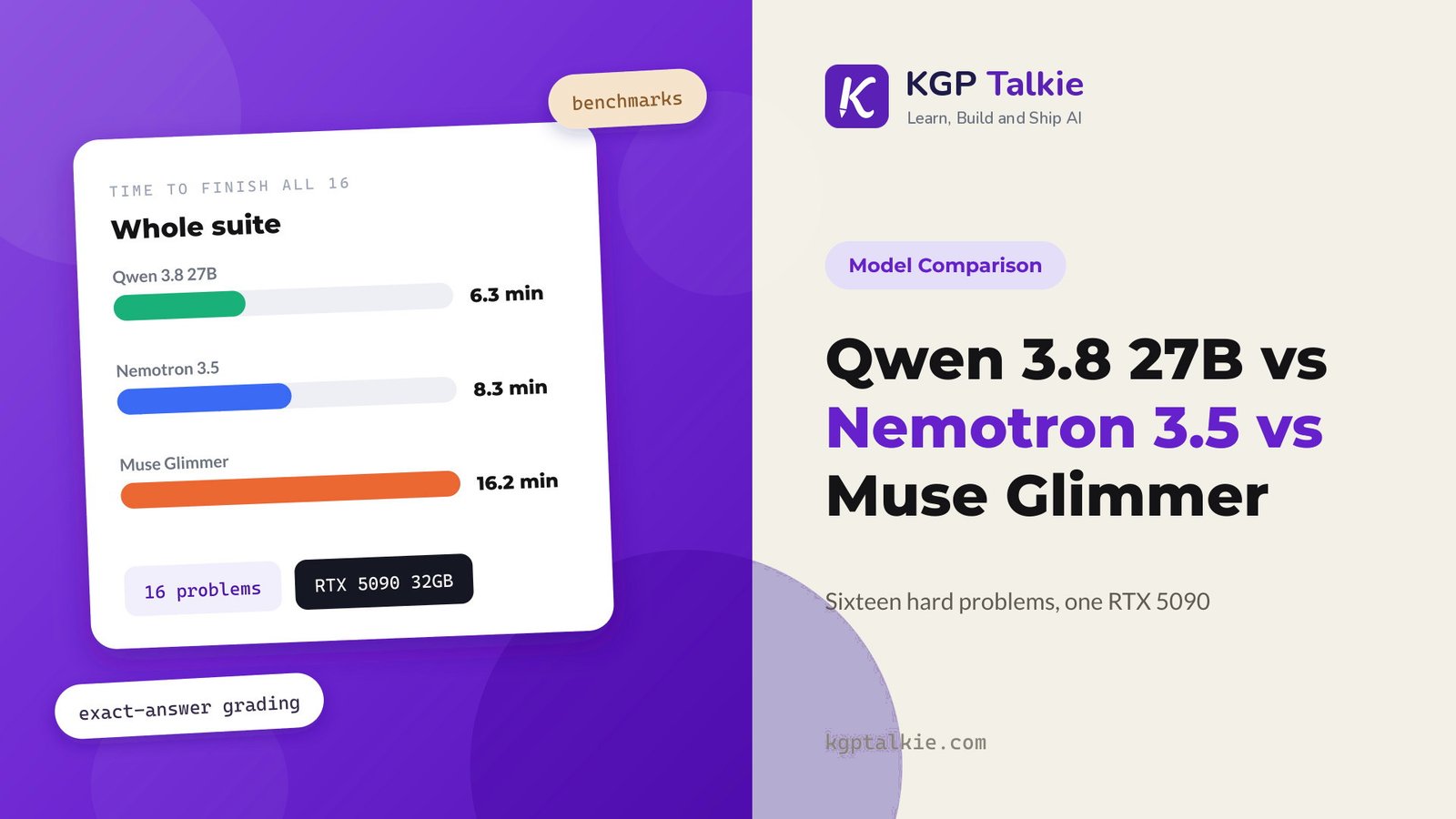
KGP Talkie ran three local models on sixteen hard problems on one RTX 5090, comparing accuracy, speed, VRAM and failure modes.
Resource · Benchmarks & research
Digital Spaceport reviews Muse Glimmer 30B on a 4x 3090 EPYC home server, calling it weaker than Qwen 3.6 27B overall but good at one specific thing.

Video · Local & open models· ♥ 550
Benchmark reports on Muse-Glimmer-30B on NVIDIA DGX Spark covering BF16 to Q4 to DFlash (a 10x speedup) and NVFP4 via SGLang, plus a head-to-head against Qwen3.6-27B.
GitHub · Benchmarks & research
I've had Qwen3.6:27b (and Qwen 3 coder next before it) running along side gpt-oss:20b for a while now as my two main models (qwen for coding, gpt-oss for agentic stuff). Qwen is pretty self-explanatory, while I had been using gpt-oss because of how good it was at producing json and instruction following, despite the size and age. https://preview.redd.it/lr61tb02lejh1.png?width=1920&format=png&auto=webp&s=cef1f0bbfb43c8462162ec675d52c5896d174118 The "upgrade" to 3.8 is pretty evident, especially because of the SWE bench score improvement, but I was more reticent with Muse-Glimmer as I had some trouble when I tried Gemma4, which was far too opinionated when given a task, but Muse-Glimmer seems great - low memory footprint at 128K context, fairly fast and seems to follow instructions well. What models are you using locally and for what? did you have a similar experience with these latest models?
Reddit post · Local & open models
Both local models implement two new features in an existing SuperAsteroids game; the winner's feature branch gets merged and the loser's is deleted.

Video · Benchmarks & research· ♥ 385
Ran the model with quants (Q4) by Unsloth with latest (build from master) llama.cpp server. It takes ~20GB ram running on M5 Pro with 48GB at about 17t/s. Didn't do any reasoning loops/overthinking. Overall, sits below Qwen3.6 27B, wasn't able to get good code (frontend and backend) results. On the positive side, it didn't fail any tool calls. Your opinions/findings? Watch more: https://www.youtube.com/watch?v=_5wKhkUT438
Reddit post · Local & open models
Disclaimer. This is the first time I've used Muse or VSCode as a harness. The reason I am using VSCode as a harness is this is a research project for my job, and we only have VSCode, Codex, and Claude Code approved for harnesses. I ran it in a folder with only one HTML file (800 lines) that is a Roblox-style COD game. I just gave it a prompt "Can you fix the bugs in the file". It read the file 3 times, found one bug, started to fix it, then got stuck reading the same 10 lines over and over. I imagine it's one of these three issues. • It's a prompt error, being way too vague/open ended for the capabilities of a smaller model. I tried again, with a specific prompt to fix a specific bug, and it still just ends up so confused, trying to grep/find the file despite already having read it, and trying to find the code inside of the file. • It's a limitation of small models running with a large harness/having way too much going on. I tried running it with Pi with its default prompt, and it just got stuck doing tool calls and never actually read the file. Tried running this just directly in the Unsloth Desktop UI with no harness but it failed to parse the file I inputted and tried to gen
Reddit post · Benchmarks & research
LM Studio launched Muse Glimmer support, reporting it completed 83.3% of tasks on its 18-task BionicBench v0.1 versus 77.7% for Gemma 4 31B and Qwen 3.6 27B.
Resource · Local & open models
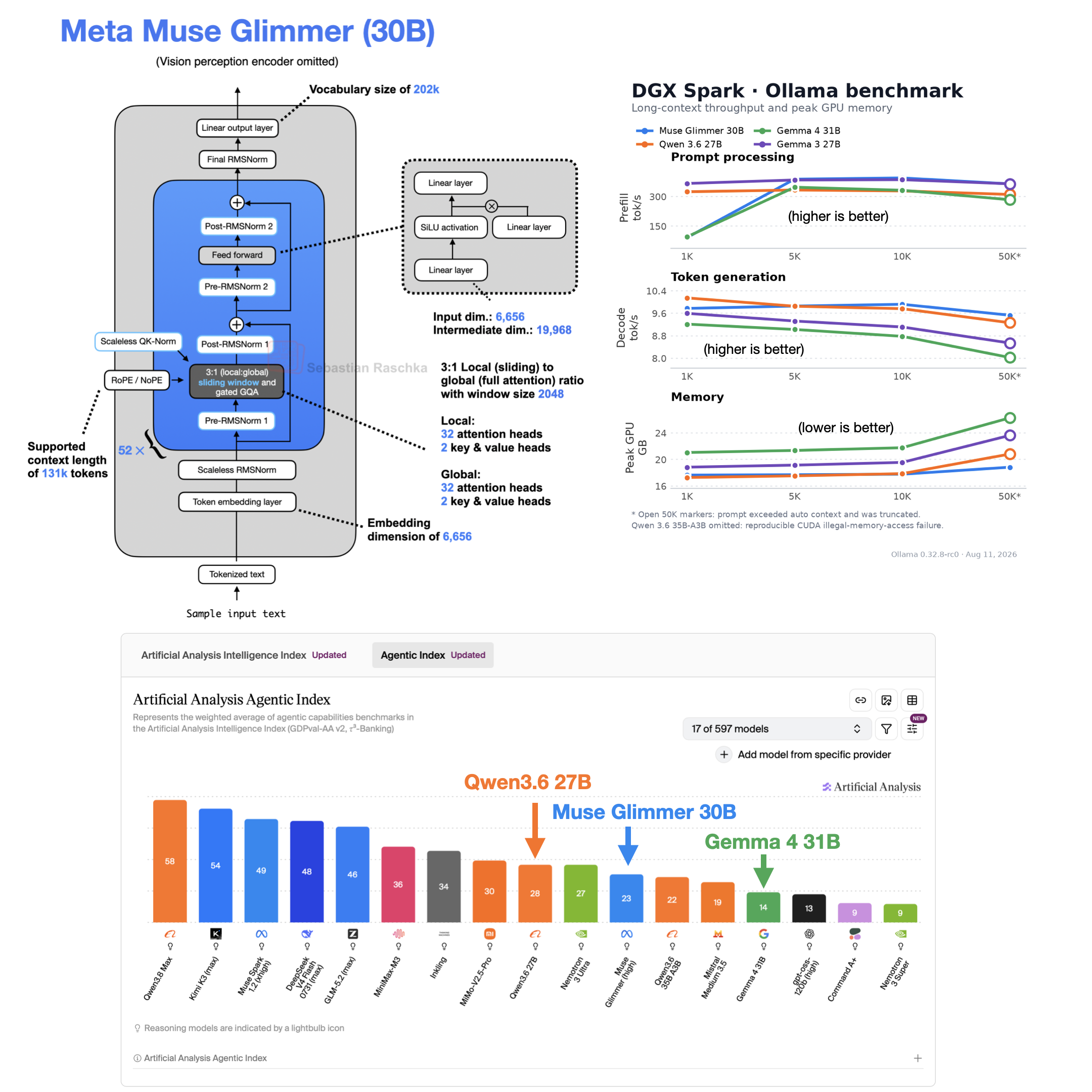
Sebastian Raschka breaks down Glimmer's dense architecture: 3:1 sliding-window to global attention, 32 query heads with only 2 KV heads, and ~52 KiB of KV cache per token.
Resource · Benchmarks & research
The vLLM recipe page for Muse Glimmer has this for speculative decoding: --speculative-config '{"method": "dflash", "model": "meta-models/Muse-Glimmer-30B-assistant", "num_speculative_tokens": 15}' This errors out on the current vllm/vllm-openai:muse-glimmer image, and each fix reveals the next error. Six separate issues in total, all in the DFlash path. The base model runs fine without the spec config. The source for the image isn't public yet (the recipe says "code will be released soon"), so I pulled the image layers through the registry API and read the code to figure out what was going on. Also checked tensor names by range-requesting the safetensors headers off HF instead of downloading the weights. What I found: • The drafter's config declares MuseGlimmerAssistantModel, which is in vLLM's registry. But the dflash code renames it to DFlashMuseGlimmerAssistantModel before the registry lookup, and that name isn't registered. Dies in config validation. • vLLM maps the drafter's config to Qwen3Config (there's a comment calling it "Qwen3-shaped"). The muse JSON omits vocab_size and use_sliding_window, so Qwen3Config fills in its own defaults: vocab becomes 151936 (the model i
Reddit post · Local & open models
This started as a failure. I had cut 6.34% of Meta's Muse-Glimmer-30B (the FFN sublayers of four layers, the next FFN after each cut retrained against the parent) and the healed model passed my fidelity bar at Q8_0. At Q4_K it failed by 0.006 KLD, and the arithmetic said why: the surgery's cost plus the ordinary Q4_K cost adds up to just over the bar, and three months of levers on the surgery side could not close a gap that small. So I attacked the other term. In a fixed GGUF the integer codes are frozen, but every quantised block still carries one or two fp16 scales, and the decoded weight is linear in them. That means the scales can be trained end to end against the parent's next-token distribution on the student's own forward pass, without touching the codec, the format, the byte length or the offsets. On the surgical model it worked: 0.05615 fail to 0.04949 pass on 45,056 held-out positions, and the preregistered control (the same recovery on the uncut parent at Q4_K) showed the two costs are not additive once the scales are trained; recovery took back part of the surgery error too. That file and the whole study are on my Hugging Face page. Then the obvious question: does it
Reddit post · Local & open models
Muse Glimmer 30B feels significantly more precise and reliable, it almost never drops the ball or breaks rules. However, its designs lack creative depth and richness. Qwen3.6 35B, on the other hand, is prone to more occasional blunders/hallucinations, but its creative output is superior. It generates far richer, more complex voxel worlds and offers higher design quality. LLama.ccp Build Provenance: • Base: llama.cpp upstream (merge 4445f8d, build 661) • CUDA Toolkit 13.1 + MSVC 19.44 + sm_120a-real (native Blackwell PTX) • Flags: GGML_CUDA=ON, GGML_CUDA_FA=ON, GGML_CUDA_FA_ALL_QUANTS=ON, GGML_CUDA_GRAPHS=ON, GGML_NATIVE=OFF • License: MIT (upstream llama.cpp) Do you think Qwen3.6 is still the undisputed king here?
Reddit post · Benchmarks & research
A test bed comparing Muse-Glimmer-30B against Qwen3.6-27B and Qwen3.8-27B under identical settings; with 32k-token budgets the three were about even (MMLU-Pro 82/82/80%).
GitHub · Benchmarks & research
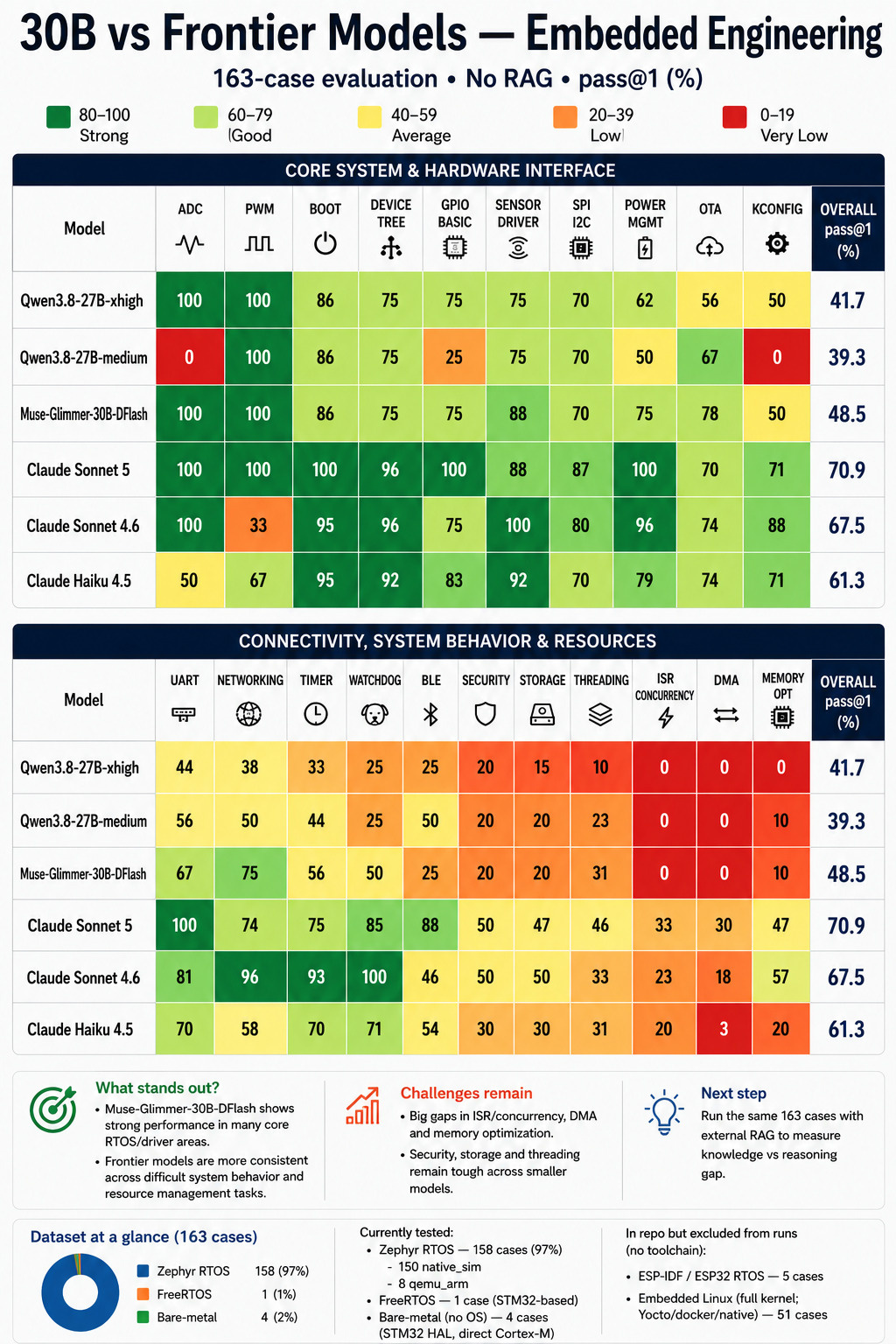
Benchmarked qwen3.8 xhigh, medium and muse glimmer. Xhigh effort mode with qwen3.8 took almost 30hrs. (And still failed on 16 cases because of the 32K output token limit) Medium effort mode and muse glimmer were 3-4 hours each. But I'm actually surprised by the muse glimmer results, they came better than the qwen. These benchmarks are on implicit knowledge of the model, which is a bit unfair to smaller models, but throw in a RAG and I'm sure they get on par with frontier models. I have taken the result of claude models directly from embedeval repo by ecro. I'm not pushing qwen down here, I like how qwen thinks and gives better results. I know with more context and RAG qwen will do better. I'm just appreciating muse here, cause i feel it is underrated. The advantage is efficient kv cache due to sliding window, which can give you more context window.
Reddit post · Benchmarks & research
WorldofAI benchmarks Muse Glimmer 30B on consumer hardware with a self-built test harness and compares it against Qwen 3.6 27B.

Video · Benchmarks & research
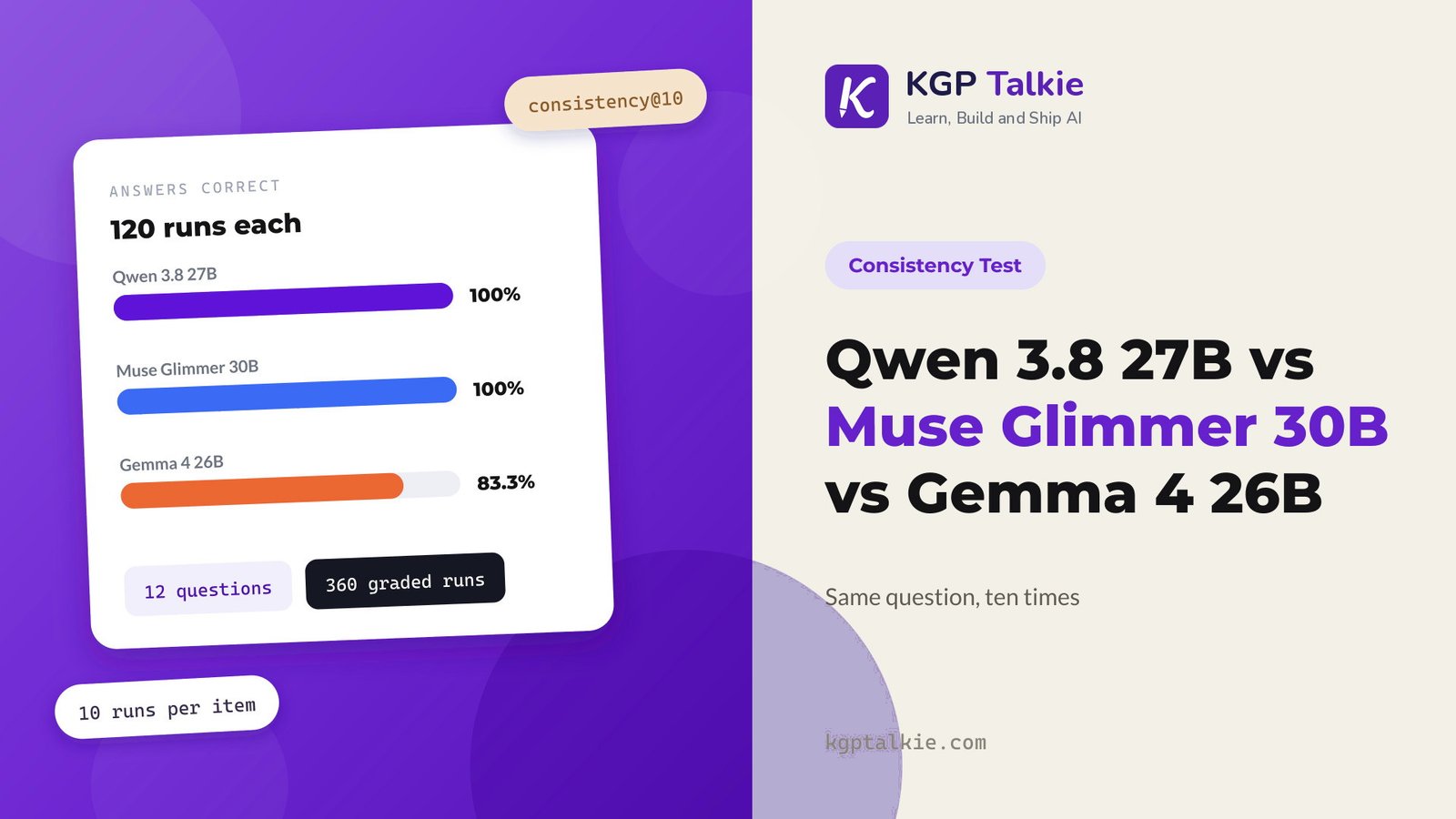
KGP Talkie asked Qwen 3.8 27B, Muse Glimmer 30B and Gemma 4 26B the same twelve questions ten times each to see which answers the same way twice.
Resource · Benchmarks & research
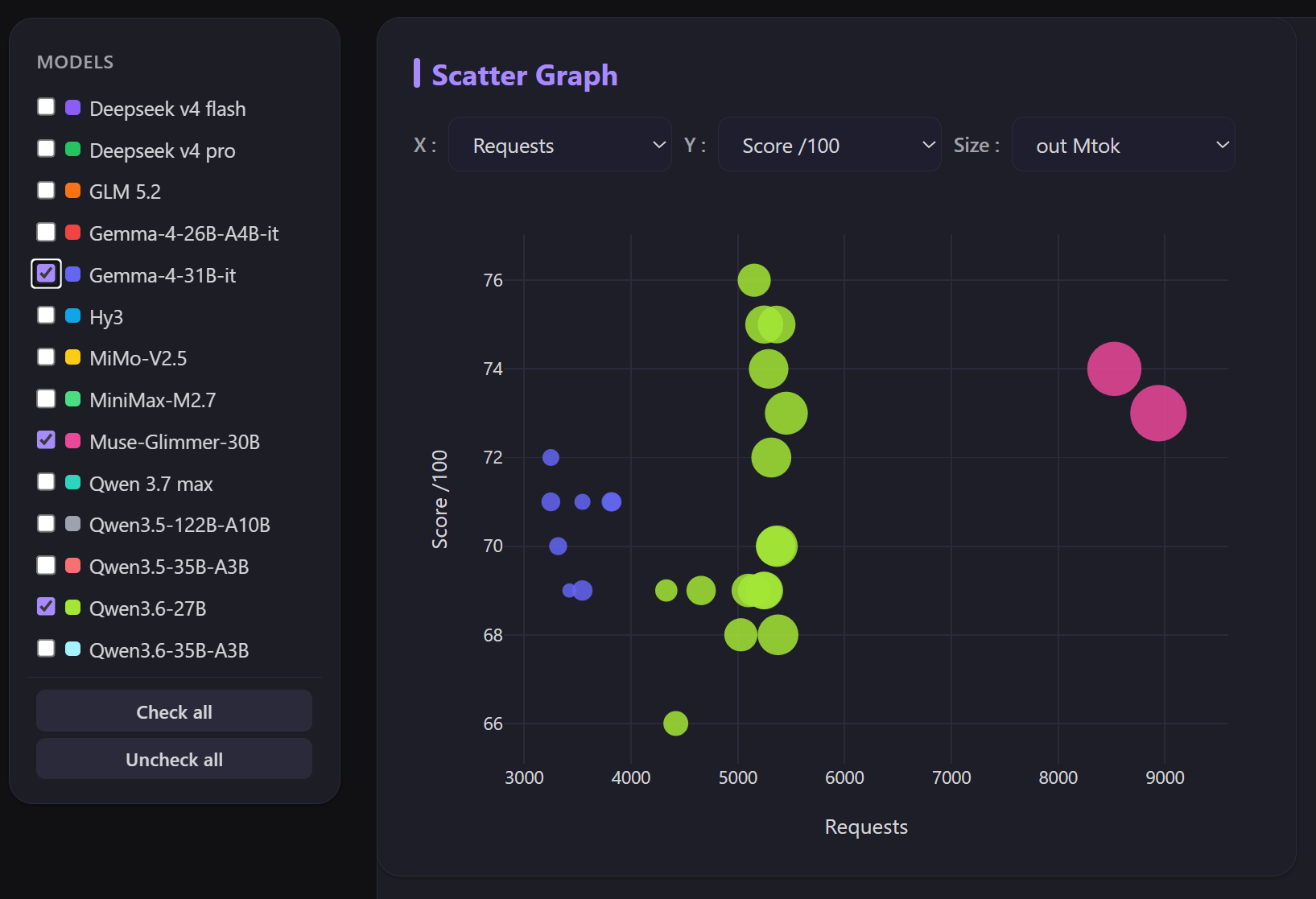
Needs a lot of requests compared to Qwen (almost twice) and Gemma (almost x3). Final score is fine, even though it is "not a coding model" https://wonderrico.github.io/local_llm_benchmark/benchmark-main.html more details on https://wonderrico.github.io/local_llm_benchmark/benchmark-detail.html let see Qwen 3.8 tomorrow...
Reddit post · Benchmarks & research
When-Agents-Rule drops Muse Glimmer 30B, Qwen 3.6 27B and Gemma 4 31B on one island to run an economy and fight for 90 minutes with no human input.
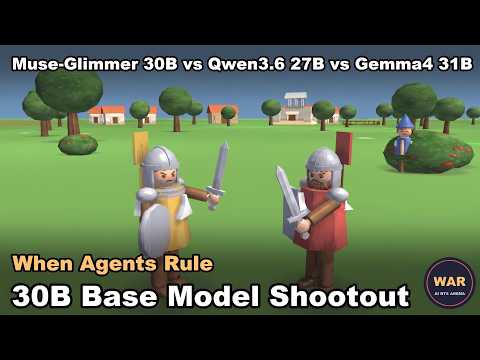
Video · Games & 3D· ♥ 3
Reddit post · Benchmarks & research
I'm like you guys and am constantly experimenting with new models, seeing what they're all good at, how I can make use of them for certain projects and goals. I've been using Qwen 3.8 27b for minor coding work and it has been impressive. But with just regular chatting I have been impressed with Muse Glimmer. It seems to be able to have the ability to follow and hold good, deep and meaningful conversations without coming off as a typical chatbot. No repeated statements like "I hear what you're saying", "that sounds really deep..." none of what sounds generic or like it's blowing smoke up your ass. I was impressed with how natural it comes across just in natural conversation. I think it's one of the best "chat" models you could get right now as it's one of the only local models that doesn't feel like you're chatting with an AI when having a conversation. I'm thinking of finding a way to run both Qwen3.8 and Muse at the same time. It's fun to play with these things.
Reddit post · Local & open models
Built a web-design benchmark for local models and ran Muse Glimmer 30B against Qwen 3.6 27B and DeepSeek V4 Flash 0731.
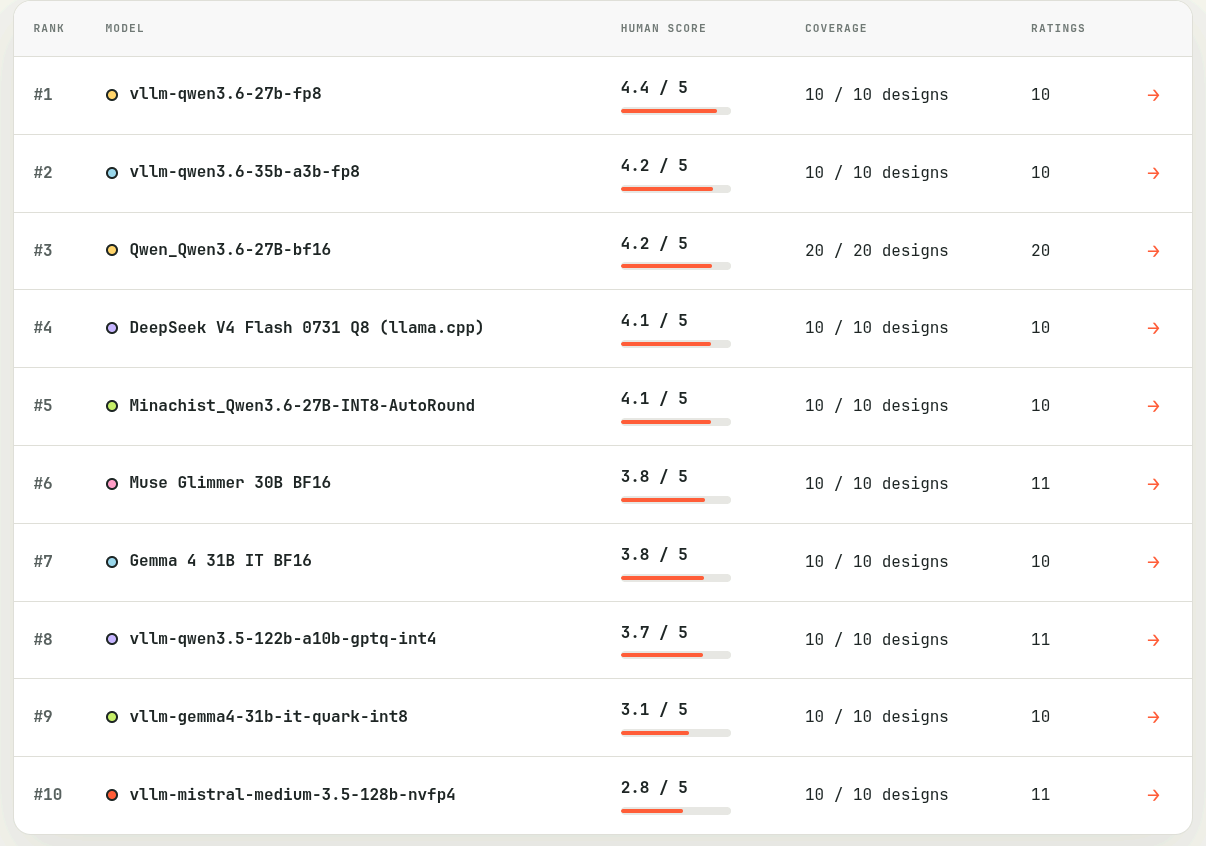
Reddit post · Benchmarks & research

Artificial Analysis
@ArtificialAnlys
Muse Glimmer's gaps against its class concentrate in agentic evaluations: 953 Elo on GDPval-AA v2 against 1141 for Qwen3.6 27B (Reasoning), 1141 for Gemini 3.5 Flash-Lite, and 1004 for Kimi K2.5 (Reasoning), with Terminal-Bench v2.1 (52%) also behind Qwen3.6 27B (61%). The
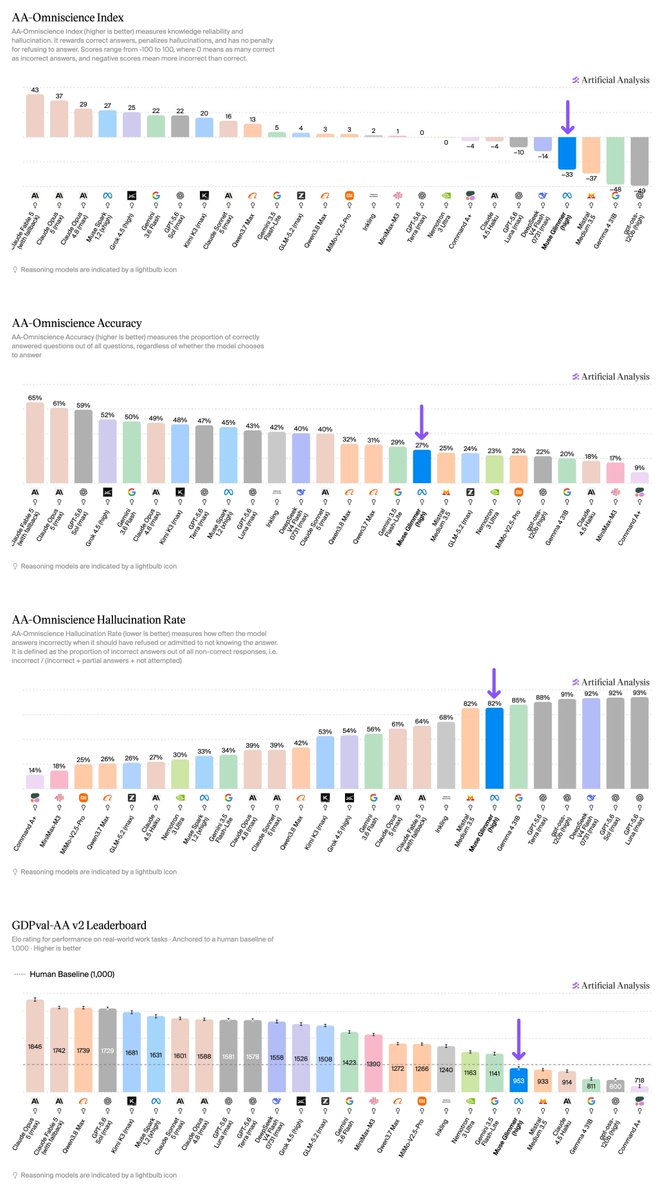
X post · Benchmarks & research· ♥ 34
I noticed on the same hardware that I can get 24 x 128k contexts with muse glimmer (30b q8_0 + mmproj+dflash) only gets me 3x 256k or 6x 128k with qwen. But a straight forward analysis of the architecture suggests to me that qwen's state per token is somewhat smaller than glimmers. So it seems llama.cpp is particularly memory inefficient for the qwen arch. I presume there is an existing issue for this, but I couldn't find one. What's the deal? The extra concurrency makes a big difference in batched performance.
Reddit post · Local & open models
I have a classic test for local LLM's. I asked for 8 ball pool game with only one HTML file and Muse Glimmer spend 21k Token(I m using full context so 128k) and only created a 220 lines of HTML and said its done. With my experience its not even close to Qwen 3.6 27B and we are waiting for Qwen 3.8 27B already. What is your toughts about this model. I was so hopeful until this test.
Reddit post · Benchmarks & research
Your product
Sponsored
Put your logo, a line of copy and an image right here, between the builds Muse developers come to read. Same size as a post.
Shown every 12 builds · on every catalog page
OK, for context, I have Claude Code desktop app driving the CLI and orchestrating the code and verification tasks to try to save tokens. So Claude runs things, a Deepseek 4.1 Flash (cloud) session does the planning, Qwen 3.8 27b Q8 does the boiler plate coding and Muse Glimmer sanity checks the code and pushes any issues back to Qwen. If there are issues Qwen and Glimmer can't agree on, Deepseek validates. If Deepseek can't sort it out, it goes back to Claude. This had been working fine, but then in the last few days token use spiked, tasks that used to take 10 minutes were taking an hour or more and Qwen started going into more and more reasoning loops. It seems that since I last checked (on 12th September) the CLI changed. I used to strip unnecessary tool calls from the prompt using --disallowedTools and enabledPlugins: false. It would seem that these no longer work. In the end I got Claude to build a request-dumping diagnostic server, that actually measured the payload bytes, and confirmed --tools (an allowlist) is the flag that works now: 55→7 tools, 161KB→24KB, byte-verified. It also caught something specific to my workflow running the wrapper from inside an already-active
Reddit post · Agents & automation
No place like localhost has Muse Glimmer implement a 7-stage development plan for a classic arcade game clone, the same challenge earlier run against three Qwen models.
Video · Games & 3D
After noticing that it is ranked among MUCH larger frontier models in the EQ-Bench Creative Writing benchmark and the Hemingway-bench, I decided to give it a try and was very impressed. I didn't do very formal testing, but I did ask it to emulate the style of several different writers, including Henry Miller, David Sedaris, and Stephen King, and it produced passable prose that actually made me laugh in a couple of cases. The paragraph below is the results of the prompt "produce a humorous paragraph in the style of David Sedaris." (first try, not cherry picked) I recently tried to be a better person and started composting, which mostly means I now have a small, damp science experiment in my kitchen that my mother calls “the smell of your future.” I bought a countertop bin with a charcoal filter, as if that would fool anyone, and I’ve taken to narrating my food scraps to myself — “Goodbye, avocado skin, you were a mistake” — while my husband watches from the doorway with the concerned expression of a man who has just realized he married a woman who talks to garbage. The city sent a pamphlet about proper composting, and I read it the way other people read horoscopes, underlining th
Reddit post · Content & creative
I wanted a quick calories counter for myself, using LLMs to evaluate the calories from pictures of meals + descriptions. I needed to pick a model so I made a quick benchmark. The setup was: - Nutrition5k photos for photo + calories: https://github.com/google-research-datasets/Nutrition5k - A tool with access to calories information from USDA FoodData Central + MEXT - I evaluated models based on how many of the meals they managed to have under 20% of error - All on the same randomly picked 25 meals. Models too big for my machine were run through OpenCode Go/OpenRouter. I've also included Spark 1.3 since it'll supposedly be open weights. Results Model % within 20% Mean bias Median Error Qwen 3.8 27b 16% +64 kcal 148 kcal GLM 5.3 Flash 28% +18 kcal 65 kcal Qwen 3.8 Max 32% -11 kcal 48 kcal Muse Glimmer 30b 32% +25 kcal 92 kcal Qwen 3.8 Flash 36% +2 kcal 91 kcal DeepSeek v4 Flash Vision 40% +52 kcal 65 kcal Muse Spark 1.3 48% -24 kcal 45kcal I know it's not the most scientific benchmark, but it's interesting to see that the order is not really linked to model size. The most interesting for me is how Muse Glimmer 30b trounces Qwen 3.8 27b here. I think it hig
Reddit post · Benchmarks & research
A benchmark that tests whether Muse Glimmer 30B on a single RTX 5090 works as an OpenCode backend, using the same tasks as earlier DeepSeek and Qwen runs; first results show 18/18 episodes with zero malformed tool calls.
GitHub · Benchmarks & research
Ornith does really well. TielCoder (https://llm-bench.io/benchmarks/cmt7kp2zj002r01lcmpchvlko) might be even a bit better in coding. Will give it a try soon. Details of the comparison see here: https://llm-bench.io/compare/runs?runs=cmt6ecf8g000001p45vwzux53%2Ccmt6ergk5000701p41hqdyy78%2Ccmt6f2oob000e01p49o9592cb%2Ccmt6fqddm000l01p4l1vm7skd
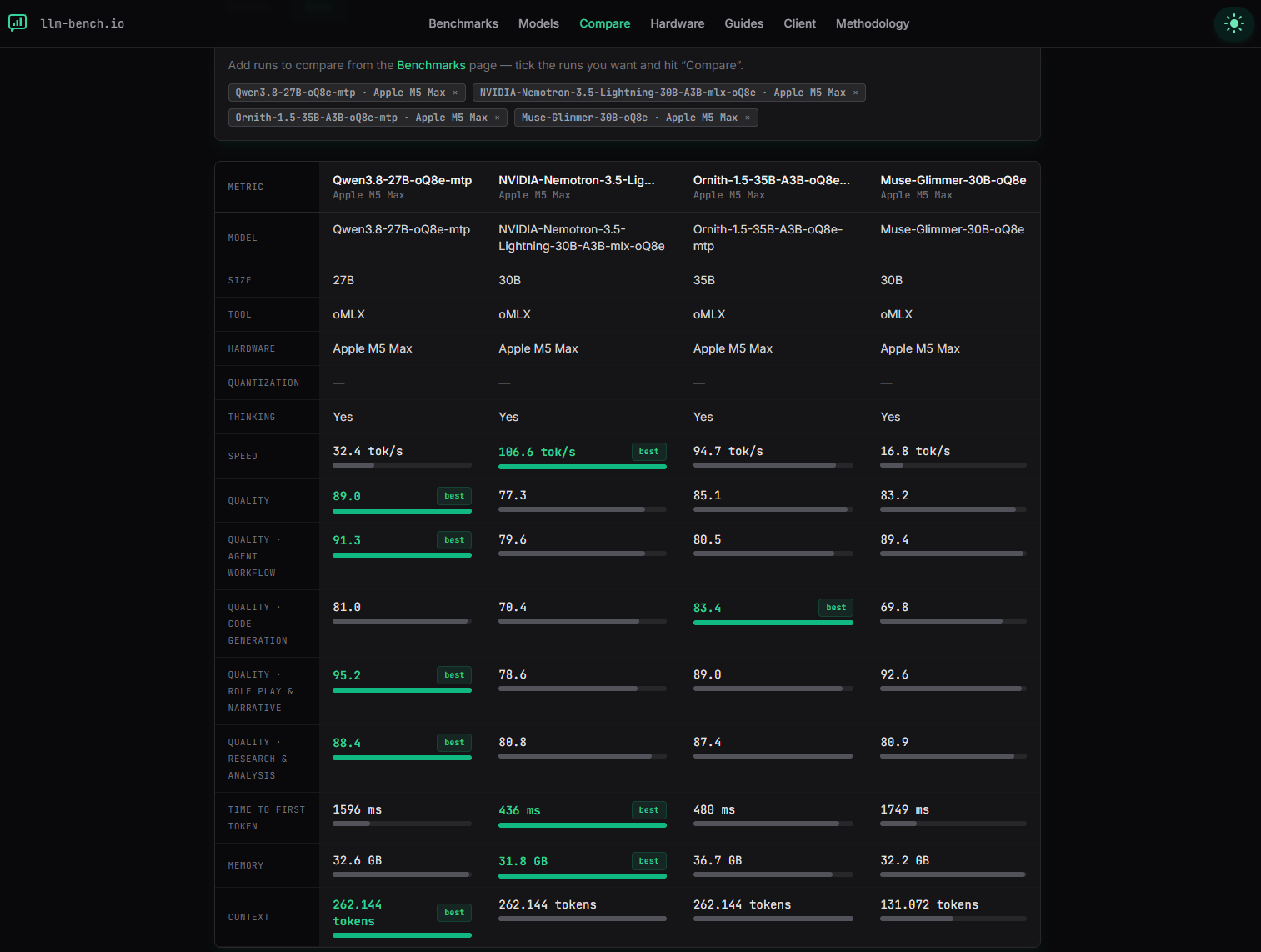
Reddit post · Benchmarks & research
Your product
Sponsored
Put your logo, a line of copy and an image right here, between the builds Muse developers come to read. Same size as a post.
Shown every 12 builds · on every catalog page
Meta's launch post for Muse Glimmer, an Apache 2.0 30B model for local agents that fits in ~20GB at 4-bit and runs on M4/M5 Max Macs, RTX 5090s or 24–32GB GPUs.

Resource · Local & open models



 ChatForm
 Tgmlabs