Independent benchmarks and analysis of Meta's open-weight Muse Glimmer.

Resource · Benchmarks & research
46 builds · page 1 of 1
Independent benchmarks and analysis of Meta's open-weight Muse Glimmer.
Resource · Benchmarks & research
Your product
Sponsored
Put your logo, a line of copy and an image right here, between the builds Muse developers come to read. Same size as a post.
Shown every 12 builds · on every catalog page
Built a web-design benchmark for local models and ran Muse Glimmer 30B against Qwen 3.6 27B and DeepSeek V4 Flash 0731.
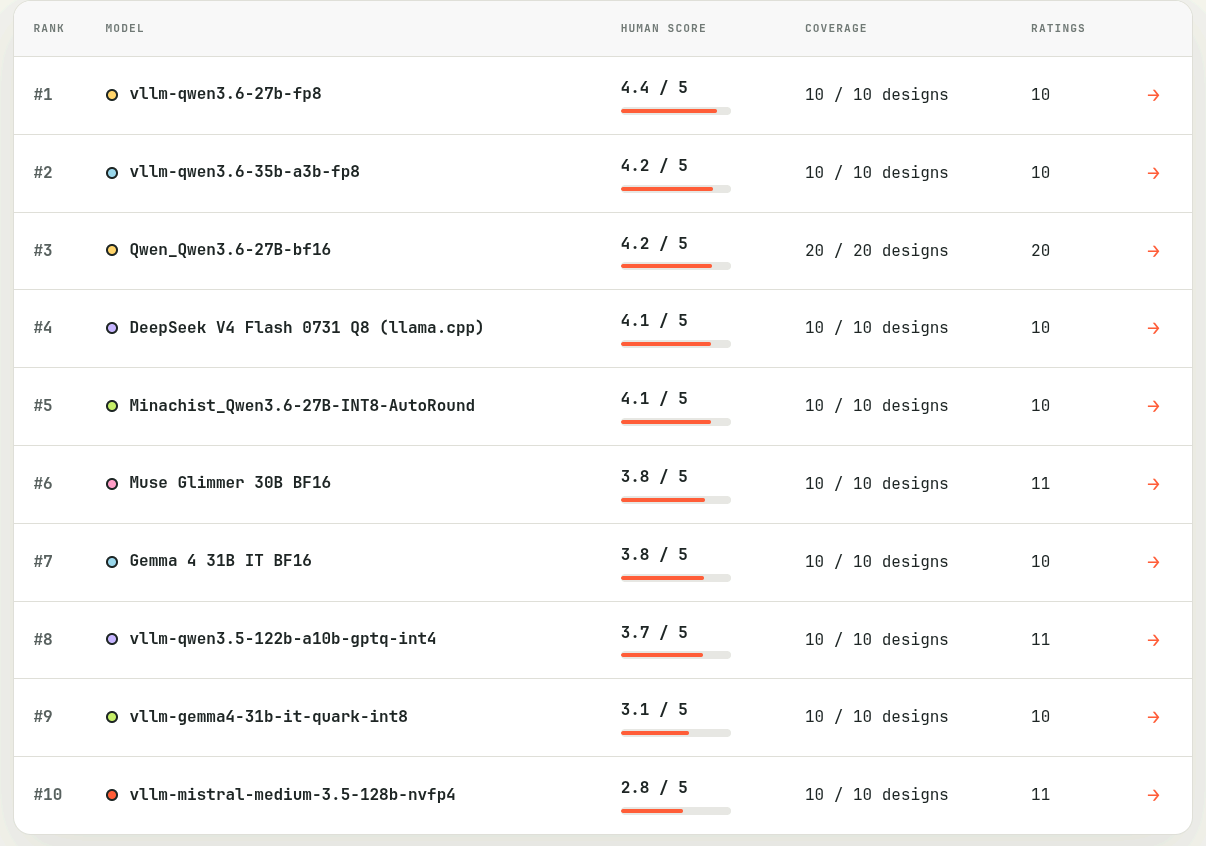
Reddit post · Benchmarks & research

Kilian Lieret
@KLieret
GPT 5.6 Sol numbers posted! You can check out the full trace and codebase for the two (!!) solved instances with the new trajectory viewer (actually built w/ the new Muse Code). Confirms that solutions are novel and not just regurgitated. Viewer link in 🧵
X post · Games & 3D· ♥ 7

khaled
@eltokh7
Muse Spark 1.1 seems like a very good model. I tested it on Stata Benchmark and it ranks 4th (!) beating Opus 4.7/4.8, tied with GPT 5.5. I like this benchmark because it often catches seemingly good model performing poorly on OOD tasks
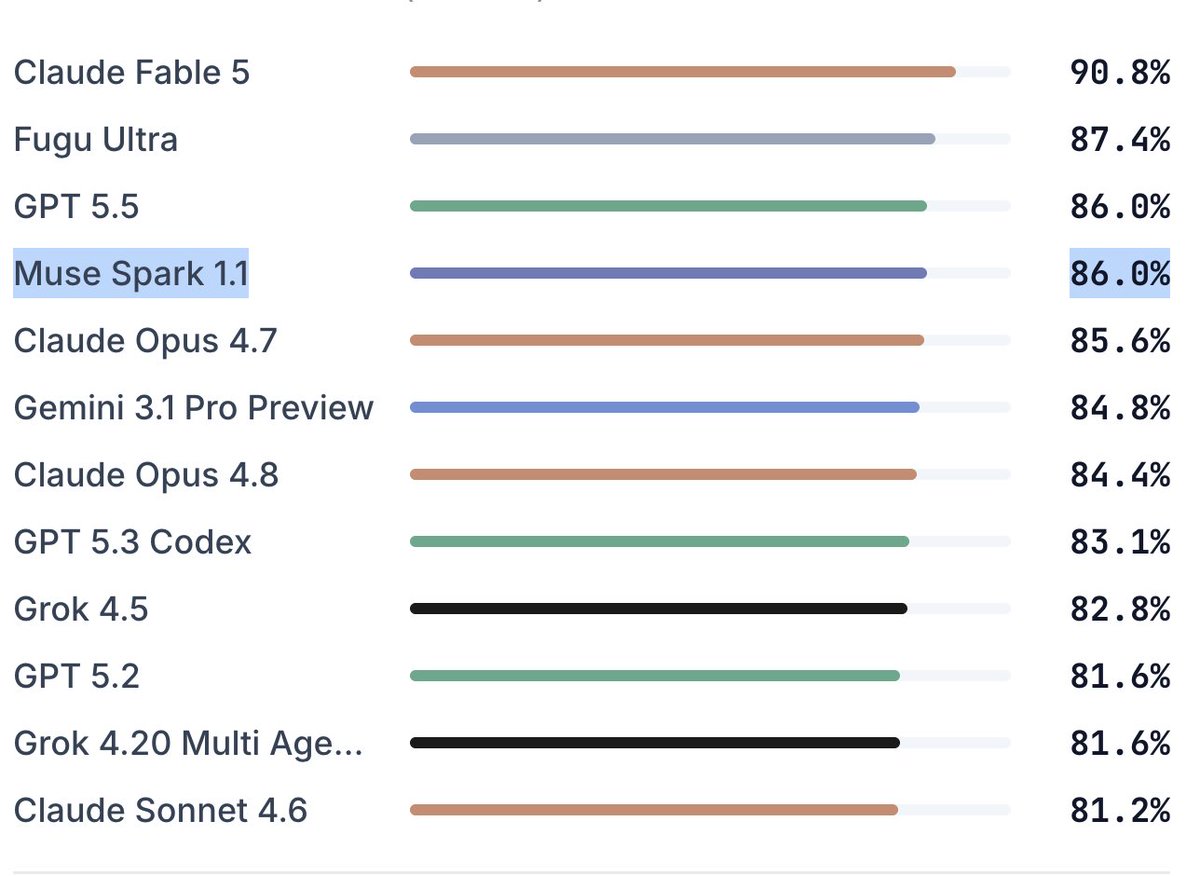
X post · Benchmarks & research· ♥ 17
IMPORTANT This post is meant to provide info regarding the best local models to run on CONSUMER HARDWARE. I am on an RTX 4060 with 8GB VRAM, 16GB of RAM and I am benchmarking models that can run on my computer. If you have sunk several thousands into graphics cards you won't find these statistics much useful. This post is for all the people who can't just install Qwen3.8 27B and call it a day. Additionally, I am not an LLM benchmarking expert. I am a hobbyist and occasional LLM user trying to extract useful information for both me and people on similar hardware. Context For the past few weeks I have been doing some benchmarks of some LLMs that can run on my laptop which only has 8GB VRAM and 16GB RAM. I was mostly toying around while trying to get some useful data about what the best model is for local inference on consumer hardware. This week I decided to make a "final" benchmark that would be way better with more questions, more question categories, newer models (a lot of people complained about the models I had benchmarked before being old but I didn't find most suggested models to be any good) and a better speed benchmark, this time using TTC (Time To Completion) as a pose to
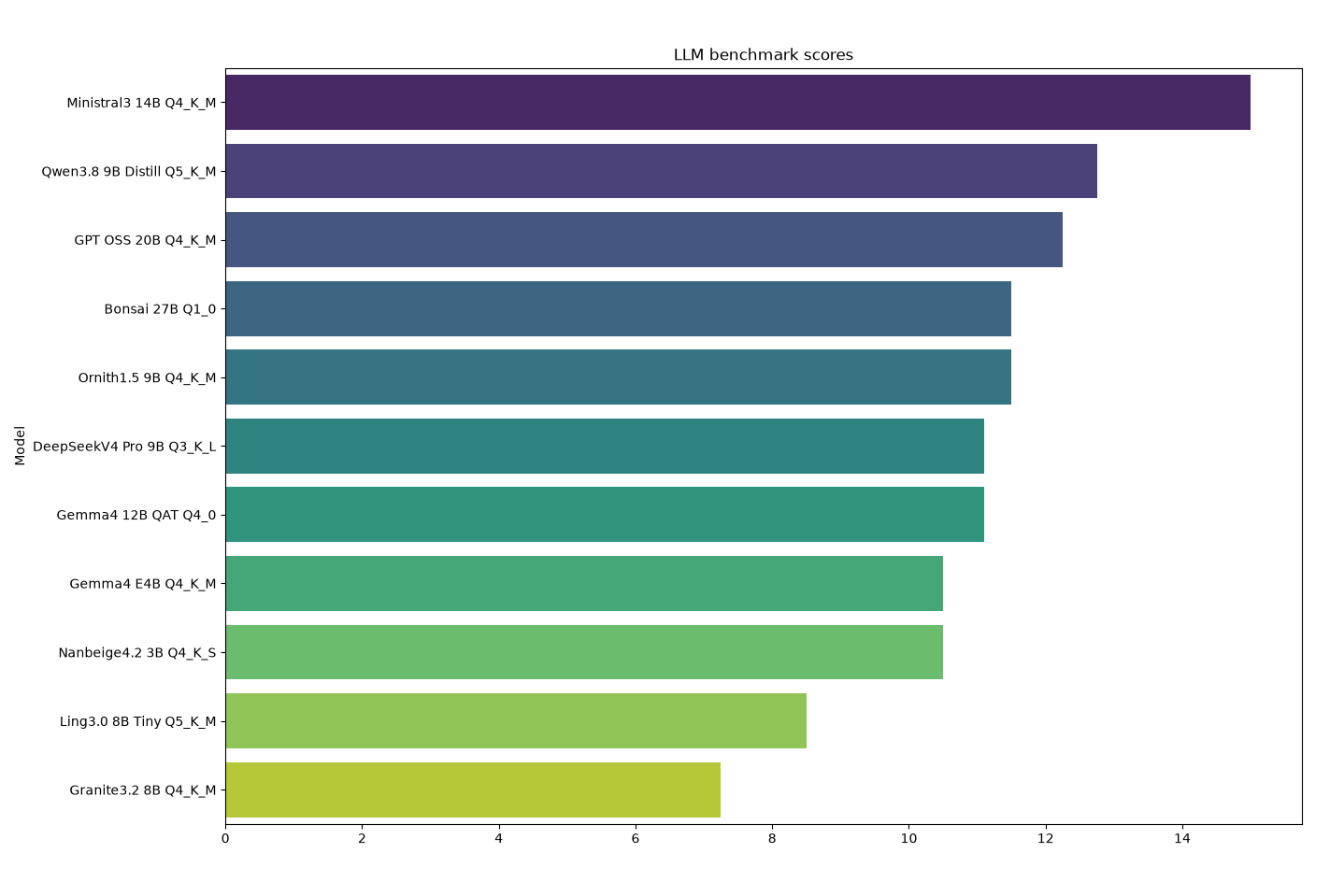
Reddit post · Local & open models
Needs a lot of requests compared to Qwen (almost twice) and Gemma (almost x3). Final score is fine, even though it is "not a coding model" https://wonderrico.github.io/local_llm_benchmark/benchmark-main.html more details on https://wonderrico.github.io/local_llm_benchmark/benchmark-detail.html let see Qwen 3.8 tomorrow...
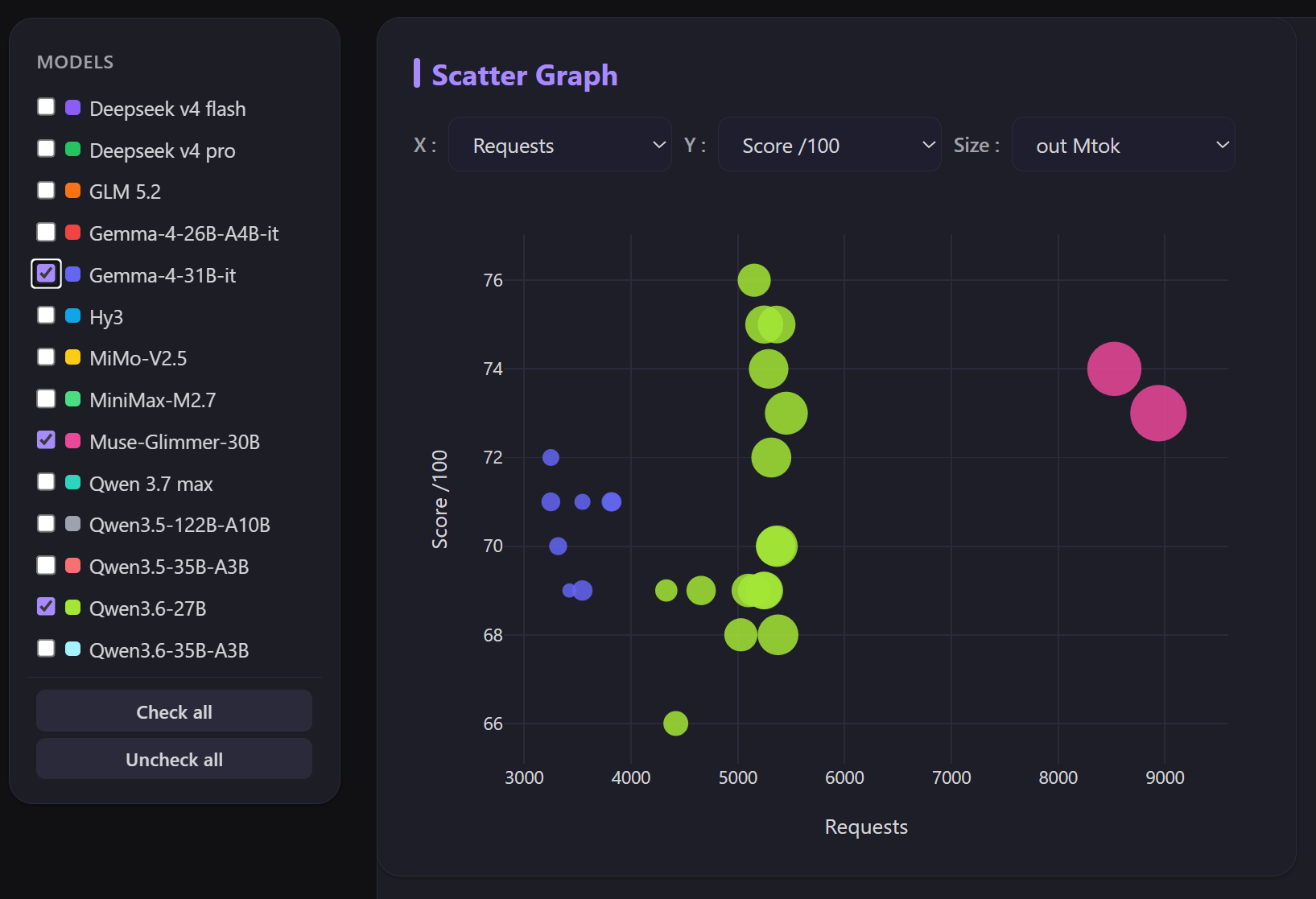
Reddit post · Benchmarks & research
A controlled local benchmark on an M1 Max comparing Muse Glimmer 30B with Qwen 3.6 35B and Qwen 3.8 27B on tool calling and data-science tasks; Glimmer passed 24/30 versus Qwen 3.8's 30/30.
GitHub · Benchmarks & research
Artificial Analysis' independent benchmark write-up of Muse Spark 1.3.
Resource · Benchmarks & research
MindStudio notes Muse Spark 1.3 topped DeepSWE at 75.4 and placed third on Artificial Analysis, yet in a hands-on game-clone test produced "a cube shooting at other cubes."

Resource · Benchmarks & research
KGP Talkie benchmarks generation speed, VRAM use and long-context behavior for both models on one RTX 5090.
Resource · Local & open models
WorldofAI benchmarks Muse Glimmer 30B on consumer hardware with a self-built test harness and compares it against Qwen 3.6 27B.

Video · Benchmarks & research

Mostly Borrowed Ideas
@borrowed_ideas
Just built a simple but pretty useful dashboard with Muse. It goes through my trade confirmation emails and then benchmarks all of my trades against SPY performance since the trade. Buys earn positive alpha when the stock beats SPY and sells earn positive alpha when SPY beats the
X post · Business & commerce· ♥ 286
ThursdAI hosts compare daily-driver assistants, then David Pawlan, who ran 273 tests across 23 assistants for Assistant Benchmark, walks through how Muse stacks up.

Video · Benchmarks & research· ♥ 18
Your product
Sponsored
Put your logo, a line of copy and an image right here, between the builds Muse developers come to read. Same size as a post.
Shown every 12 builds · on every catalog page

Morgan
@morganlinton
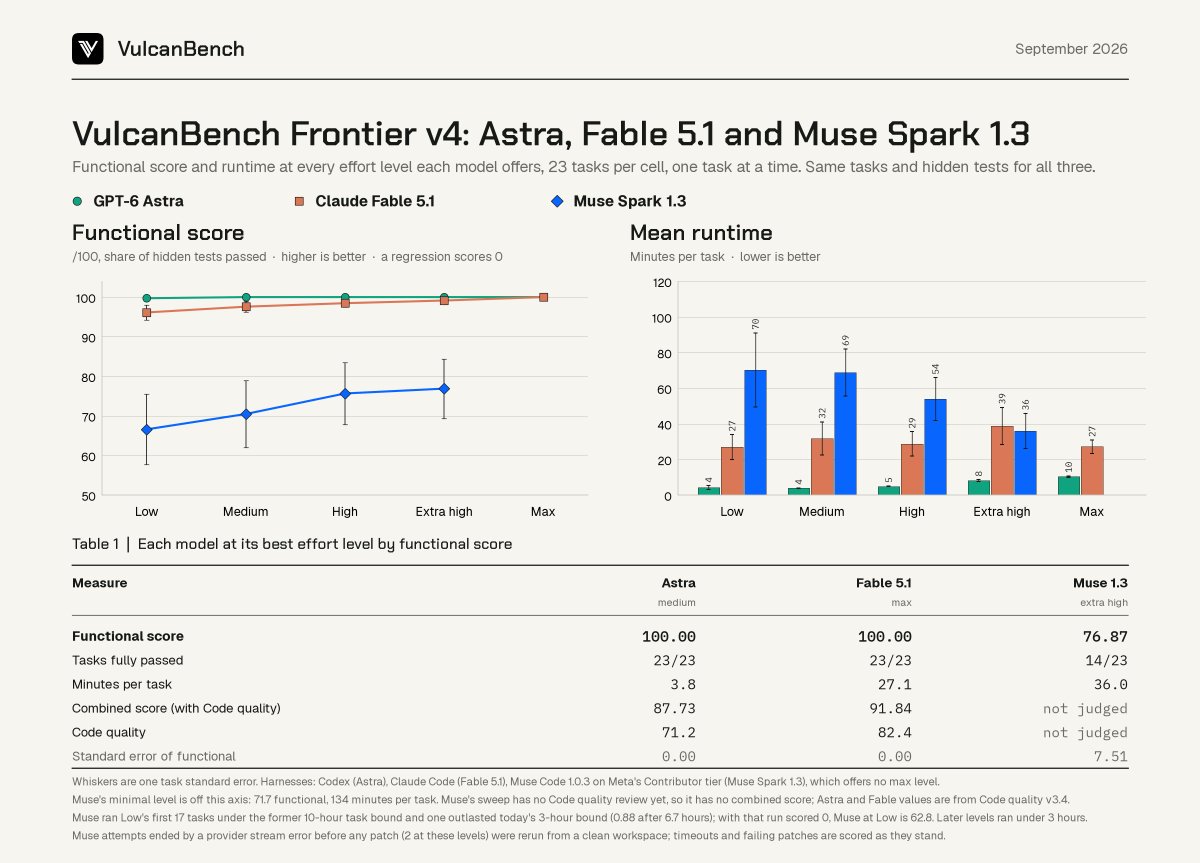
Okay, finally finished my Muse Spark 1.3 benchmark. This ended up being the longest-running benchmark I've ever done at @VulcanBench and it definitely looks like Muse has some serious issues at lower effort levels. I was able to run Astra through my v4 eval suite across every
X post · Benchmarks & research· ♥ 99
Setup. We run Qwen3.8-Flash-Next NVFP4 as our main agentic model (SGLang, RTX PRO 6000). Before its output reaches a human or gets merged, a second local model acts as judge: reviews the diff, flags real bugs only. Hosted on a 5090 32GB, so we're limited to ~30B NVFP4/GGUF class models. The metric that matters is NOT detection rate — it's false alarms on correct code. A judge that cries wolf gets ignored within a week, exactly like a flaky CI. We built our own battery: 20 injected bugs + 20 clean-but-suspicious snippets (intentional swallowed exceptions, deliberate mutability, weird-but-correct concurrency, short hashes, float patterns that look wrong). Ground-truth labeled, and a stronger model (GLM-5.2 API) arbitrates the judge's prose so scoring isn't vibes. Two passes minimum — single runs lie. Results (40 cases, temp 0, same baremo for everyone): Qwen3.8-27B NVFP4 (no-thinking) • Bugs found: 17/20 • False alarms: 3/20 • Verdict: only pass Nemotron Lightning 30B • Bugs found: 17/20 • False alarms: 0→9 across runs • Verdict: non-reproducible as judge Muse-Glimmer 30B GGUF • Bugs found: 19/20 • False alarms: 12/20 • Verdict: hypercritical Granite 4.1 30B (no-thinki
Reddit post · Benchmarks & research
IchBinFabian installs Muse Code, compares Muse Spark 1.3 pricing with Claude Code and Codex, reviews the benchmarks and builds two real projects in OpenCode for a combined 82 cents.

Video · Coding & dev tools
A test bed comparing Muse-Glimmer-30B against Qwen3.6-27B and Qwen3.8-27B under identical settings; with 32k-token budgets the three were about even (MMLU-Pro 82/82/80%).
GitHub · Benchmarks & research
This repo documents running Muse Glimmer 30B locally on an M4 Max MacBook via llama.cpp, benchmarking it with and without speculative decoding, and wiring it into Claude Code through LiteLLM for fully offline coding.
GitHub · Local & open models
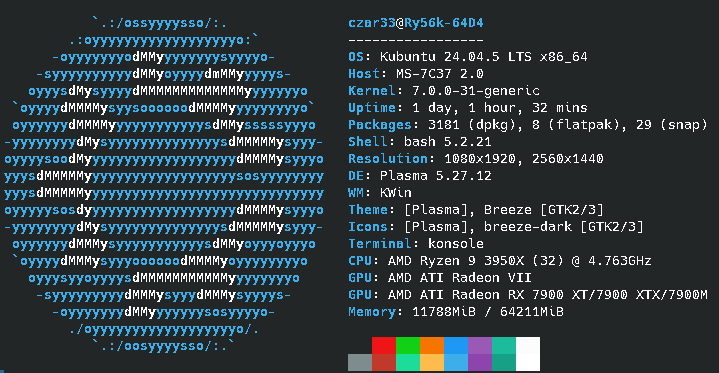
Picked up China version of the Mi50 (Radeon VII) 16GB VRAM GPU for about $135. Ran it using llama.cpp Ubuntu Vulkan prebuilt binary build: b29c606e2 (10964). Used a Power Limit or 220/190 watts on the GPUs. Dual Radeon 32GB Vram and 64GB DDR4 System Dual Radeon RX 7900 GRE and Radeon VII 32gb VRAM GGUF Models: • Qwen3.6-35B-A3B-UD-Q5_K_XL.gguf • Accio-Lab_occamy-1.0-Q5_K_S.gguf • Laguna-XS-2.1-APEX-I-Balanced.gguf • NVIDIA-Nemotron-3.5-Lightning-30B-A3B-Q5_K_M.gguf • Gemma-4-31B-it-Q6_K.gguf • Ateron_Gemma-4-MoonGem-31B-Q5_K_M.gguf • Qwen3-Coder-30B-A3B-Instruct-UD-Q6_K_XL.gguf • Qwen3-VL-30B-A3B-Thinking-UD-Q6_K_XL.gguf • Qwen3-Coder-30B-A3B-Instruct-UD-Q5_K_XL.gguf • North-Mini-Code-1.0-MXFP4_MOE.gguf • GLM-4.7-Flash-Uncen-Hrt-NEO-CODE-MAX-imat-D_AU-Q6_K.gguf • Muse-Glimmer-30B-UD-Q6_K_XL.gguf • Huihui-Qwen3.8-27B-abliterated-UD-Q6_K_XL.gguf • Qwen3.8-27B-Q6_K.gguf • Qwen3.8-27B-OBLITERATED-Q5_K_M.gguf • Medgemma-27b-it-UD-Q6_K_XL.gguf • Gemma-4-26B-A4B-it-UD-Q6_K_XL.gguf • Gemma4-26B-A4B-QAT-Uncensored-HauhauCS-Balanced-Q4_K_M.gguf • GPT-OSS-20b-abliterated.i1-Q6_K.gguf Sorted by params then size model size params pp512 tg128 qwen35moe 35B.A3B Q5_K - Medium 24.76 GiB 3
Reddit post · Local & open models
A benchmark that tests whether Muse Glimmer 30B on a single RTX 5090 works as an OpenCode backend, using the same tasks as earlier DeepSeek and Qwen runs; first results show 18/18 episodes with zero malformed tool calls.
GitHub · Benchmarks & research
Matt Johnston's live gauntlet puts Muse Spark 1.2 at 95 and #5 on his board, at $1.25/$4.25 per M tokens and 171 tok/s on OpenRouter; the full bench ran in 17 minutes.

Video · Benchmarks & research· ♥ 6
eesel AI reports Muse Spark 1.3 ranks #6 on the Artificial Analysis Intelligence Index, leads long-context and coding rows, but trails Claude Opus 5 on four of six agent evals.
Resource · Benchmarks & research
Benchmarked Muse Glimmer 30B on my RTX 5090 (32GB), 262k context, UD-Q5_K_M + dflash-kquant + mmproj. Workload Stock master + DFlash ngram-simple PR #26842 + DFlash Code patch 78 t/s 57 t/s 220-253 t/s Mixed agent turn 77 t/s 68 t/s 188-213 t/s Tool-call JSON 71 t/s 75 t/s 155-181 t/s Heavy reasoning 52 t/s 58 t/s 120-130 t/s PR #26842 moves the DFlash draft argmax from CPU to GPU, which was the bottleneck. I cherry-picked it onto master (it branched before the Muse merge, one conflict to resolve manually) and it builds clean. Code generation now matches Meta's published 233 t/s, which I could not reproduce on stock master. Notes: • ngram-simple loses to DFlash on every coding workload. • Server caps context at the model's metadata context_length, use --override-kv for 262k. • The reasoning budget flags do not work with this template. This is verified: with the budget set to 64, the model still burned 2000+ chars thinking and the budget message never appeared. Leave max_tokens headroom for the reasoning block. Flags: llama-server ^ --model Muse-Glimmer-30B-UD-Q5_K_M.gguf ^ --mmproj mmproj-kquant.gguf ^ -c 262144 --parallel 1 ^ --override-kv "muse-glimmer.context_le
Reddit post · Local & open models
Independent benchmarks and analysis of Muse Spark 1.2, released alongside Muse Code.
Resource · Benchmarks & research
Reddit post · Benchmarks & research
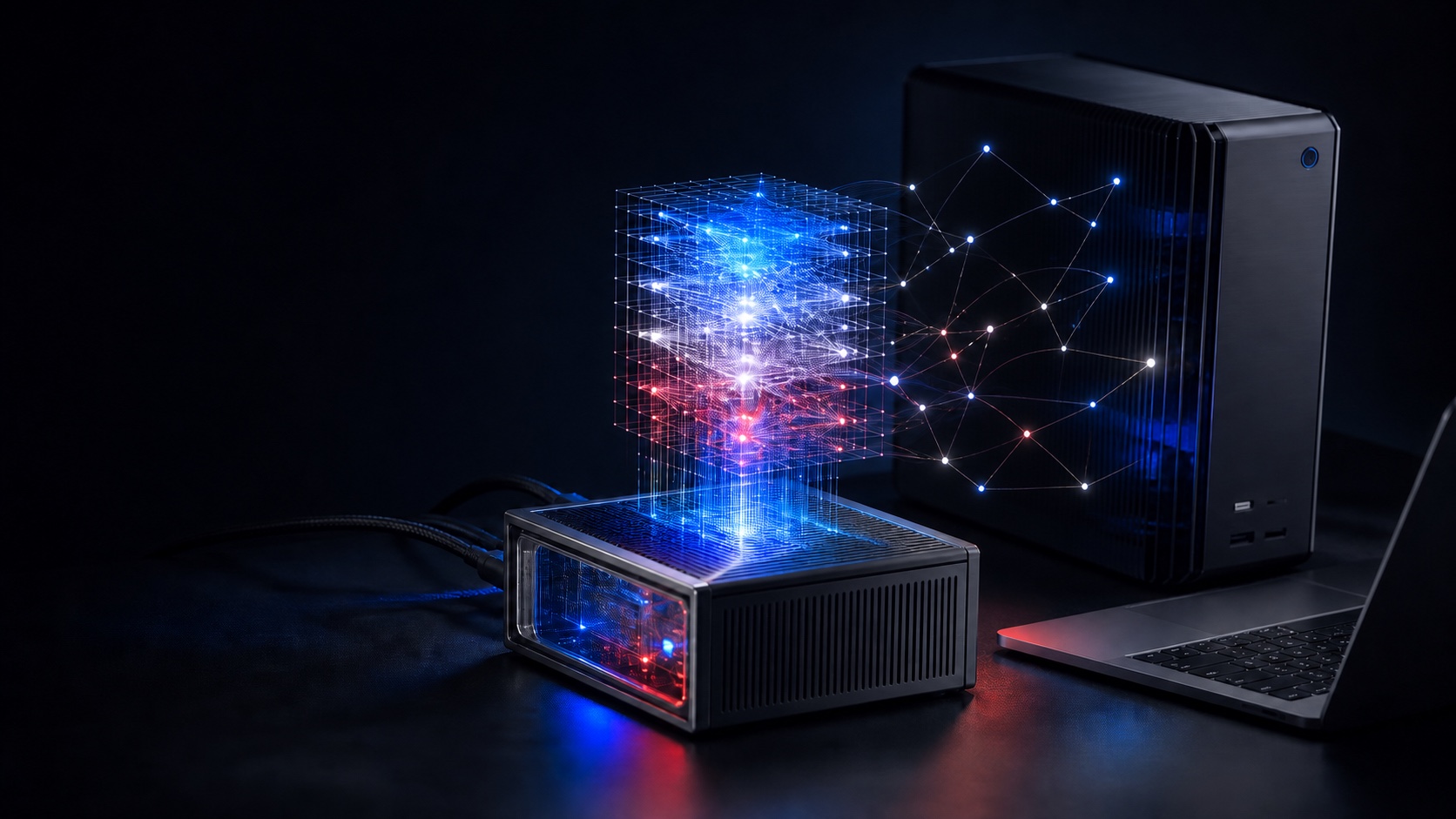
Kingy AI explains Muse Glimmer's benchmarks, 24-64 GB hardware needs, GGUF setup, pricing, runtimes and risks.
Resource · Local & open models
Codus reads the three benchmark charts Meta published for Muse Code and notes Claude Opus 5 wins all three, including Meta's own internal eval.
Resource · Benchmarks & research

Louis-François Bouchard 🎥🤖
@Whats_AI
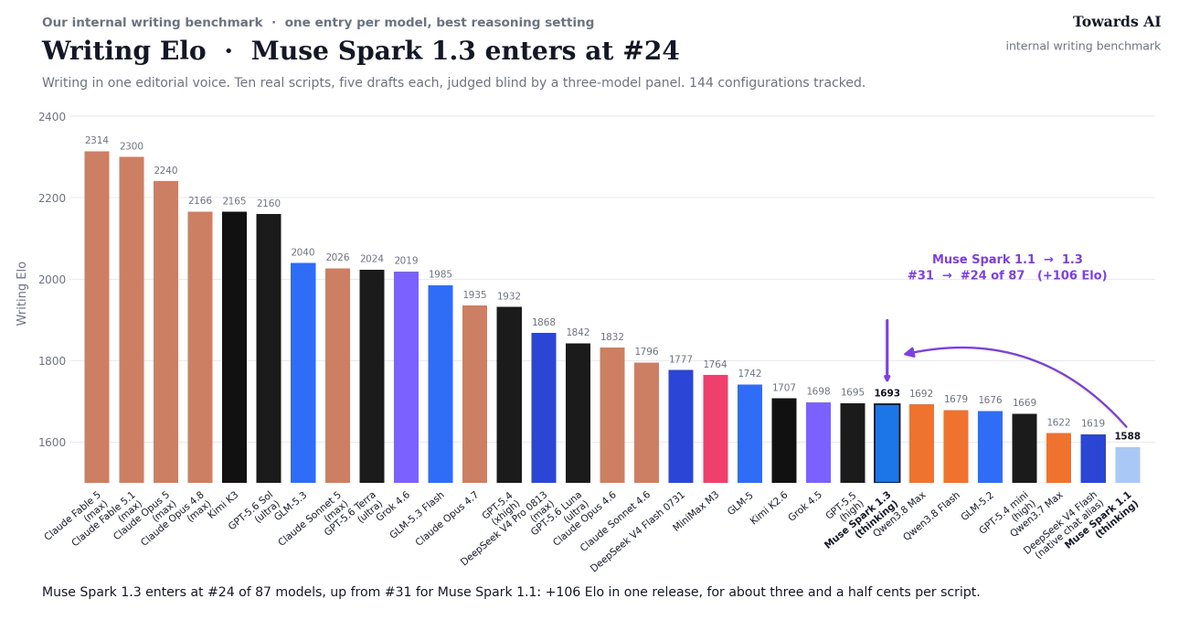
We just measured Meta Muse Spark 1.3 on our internal writing benchmark hoping for new SOTA. Unfortunately, it isn't... It enters at #24 of the 87 models we track, up from #31 for Muse Spark 1.1. As @alexandr_wang highlighted, it beats every Gemini configuration we have,
X post · Benchmarks & research· ♥ 9

AI at Meta
@AIatMeta
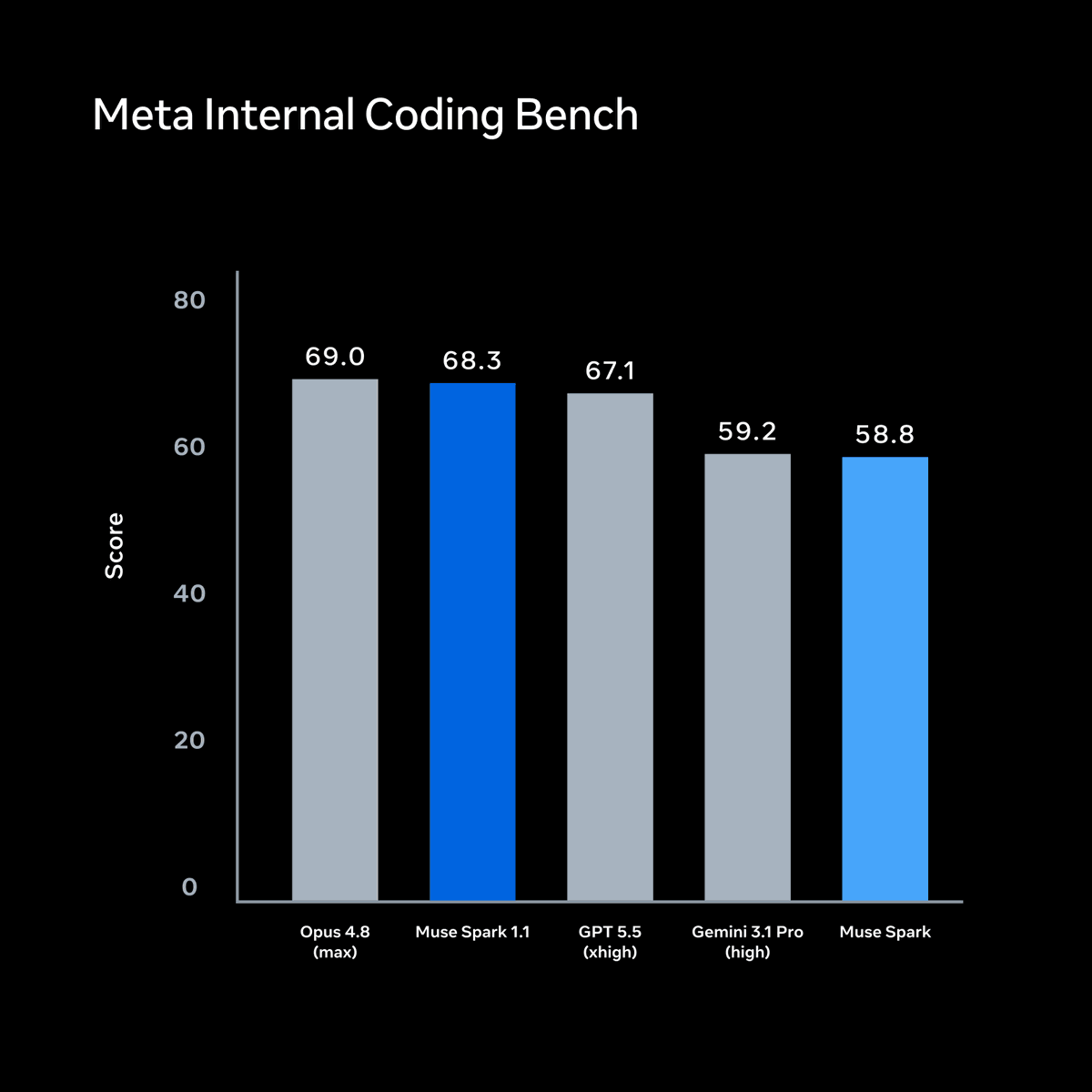
Muse Spark 1.1 is used across Meta in coding and research workflows, scoring competitively with leading models on Meta's internal coding benchmark. Our researchers are now automating model development and evaluation tasks by leveraging Muse Spark 1.1 in their workflows.
X post · Benchmarks & research· ♥ 167

pilvar (Philippe Dourassov)
@pilvar222
We ran Muse Spark 1.3 on our Cybersecurity benchmark, and it's actually not that good (yet) 😬 - At pass@1, it rediscovers an average of 19/32 CVEs. In comparison, Grok 4.6 scores 23.3/32 - When pooling the results of 3 runs (pass@3), Muse scores 24/32. DeepSeek V4 Pro gets
X post · Benchmarks & research· ♥ 116
Your product
Sponsored
Put your logo, a line of copy and an image right here, between the builds Muse developers come to read. Same size as a post.
Shown every 12 builds · on every catalog page
I wanted a quick calories counter for myself, using LLMs to evaluate the calories from pictures of meals + descriptions. I needed to pick a model so I made a quick benchmark. The setup was: - Nutrition5k photos for photo + calories: https://github.com/google-research-datasets/Nutrition5k - A tool with access to calories information from USDA FoodData Central + MEXT - I evaluated models based on how many of the meals they managed to have under 20% of error - All on the same randomly picked 25 meals. Models too big for my machine were run through OpenCode Go/OpenRouter. I've also included Spark 1.3 since it'll supposedly be open weights. Results Model % within 20% Mean bias Median Error Qwen 3.8 27b 16% +64 kcal 148 kcal GLM 5.3 Flash 28% +18 kcal 65 kcal Qwen 3.8 Max 32% -11 kcal 48 kcal Muse Glimmer 30b 32% +25 kcal 92 kcal Qwen 3.8 Flash 36% +2 kcal 91 kcal DeepSeek v4 Flash Vision 40% +52 kcal 65 kcal Muse Spark 1.3 48% -24 kcal 45kcal I know it's not the most scientific benchmark, but it's interesting to see that the order is not really linked to model size. The most interesting for me is how Muse Glimmer 30b trounces Qwen 3.8 27b here. I think it hig
Reddit post · Benchmarks & research
Composio looks at the three benchmark charts from Meta's Muse Code launch and whether developers should switch from Claude Code.
Resource · Coding & dev tools

Cline
@cline
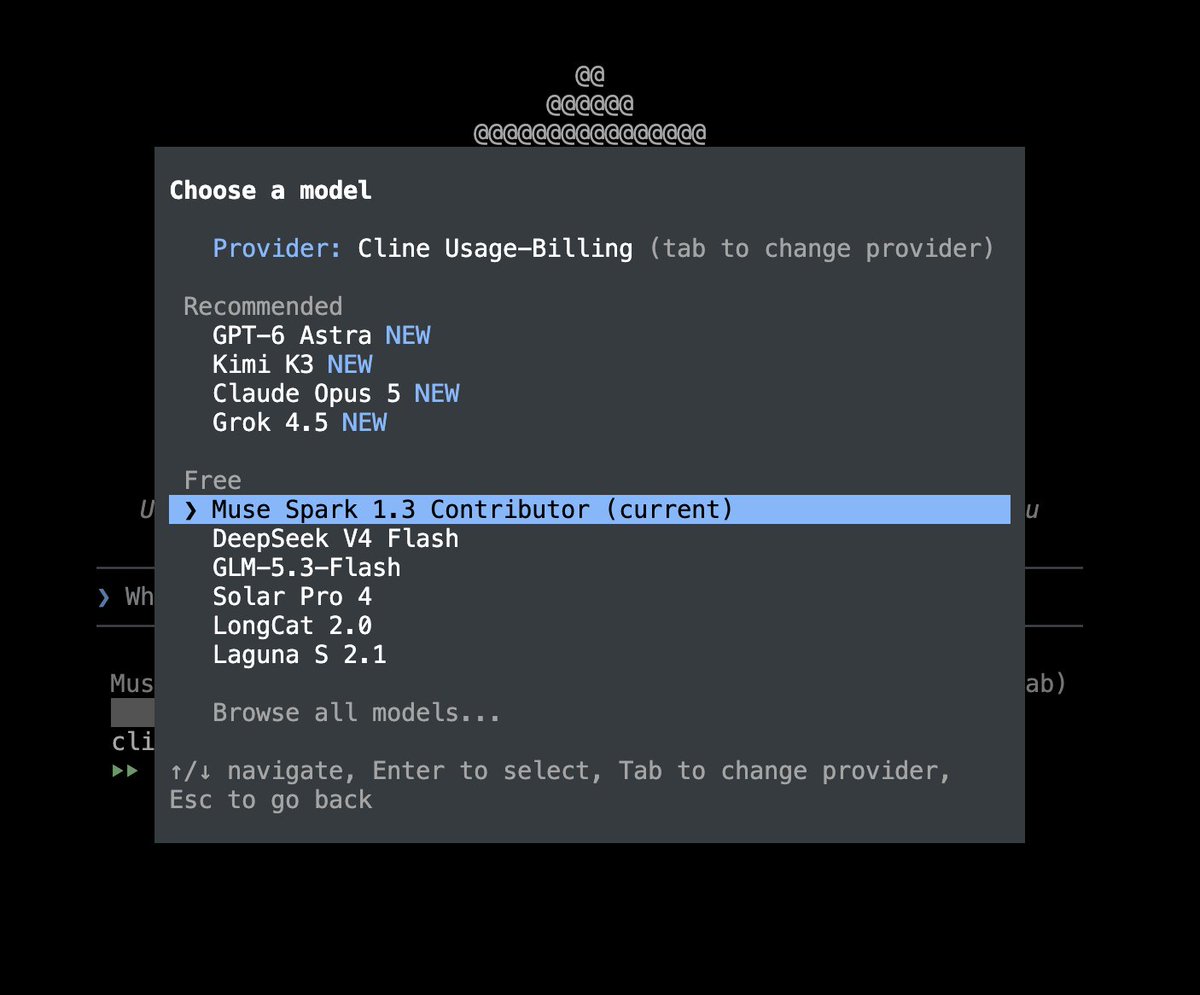
Meta’s Muse Spark 1.3 Contributor model is now available for free in Cline. Benchmarks show it’s similar in performance to Opus 5, but considerably more affordable.
X post · Coding & dev tools· ♥ 793
AICodeKing reviews Muse Glimmer for local agent setups, finding it strong at tool calling, multi-step tasks and failure recovery but weaker on general benchmarks.

Video · Local & open models
RepoChad examines Muse Spark 1.3's 1,048,576-token context, DeepSWE and TerminalBench results, and the Max vs x-high reasoning modes.

Video · Benchmarks & research· ♥ 75

Alok
@analogalok
Muse Glimmer, A 30B parameter dense model swallowing a 130,000 token context window using only 19.3 GB of VRAM (extreme efficiency). No KV cache quantization required. I just benched the new Muse Glimmer 30B (dense) on a single RTX 4090. We are pulling 3,100+ t/s prefill and 75
X post · Local & open models· ♥ 392
A reproducible Apple Silicon harness that runs six fixed quality tasks against MLX quantizations of Muse Glimmer 30B and records scores, tokens per second, peak memory and load time.
GitHub · Benchmarks & research
Cobus Greyling's companion repo for Muse Glimmer 30B pairs a long-form intro with an offline-first interactive lab for exploring agent loops, benchmarks and memory envelopes before downloading the weights.
GitHub · Local & open models
Benchmark reports on Muse-Glimmer-30B on NVIDIA DGX Spark covering BF16 to Q4 to DFlash (a 10x speedup) and NVFP4 via SGLang, plus a head-to-head against Qwen3.6-27B.
GitHub · Benchmarks & research
Matt Johnston runs Muse Spark 1.3 blind through his benchmark: a Halo build looked frontier, but XCOM, Diablo and the multi-turn agentic test broke.

Video · Benchmarks & research· ♥ 31
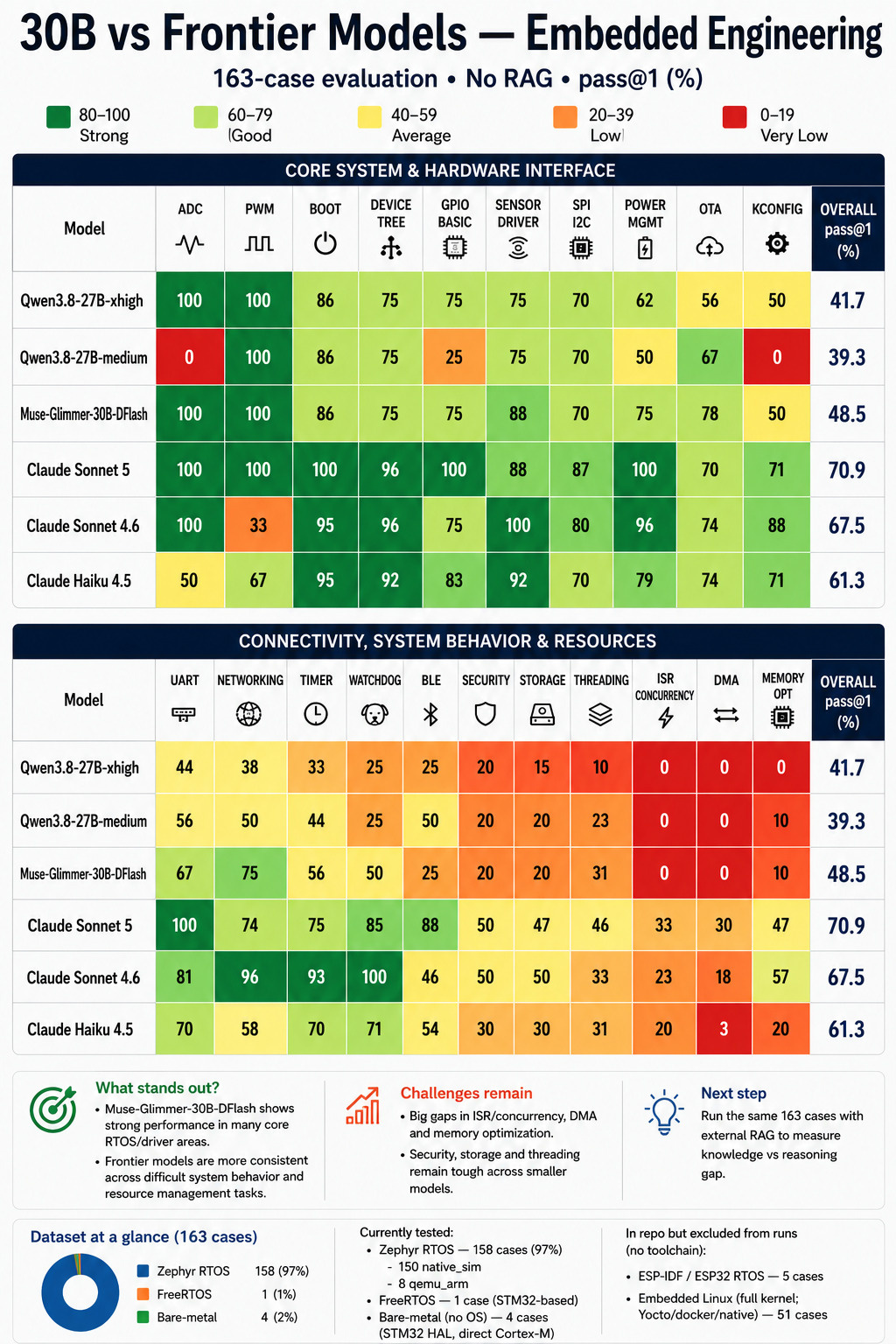
Benchmarked qwen3.8 xhigh, medium and muse glimmer. Xhigh effort mode with qwen3.8 took almost 30hrs. (And still failed on 16 cases because of the 32K output token limit) Medium effort mode and muse glimmer were 3-4 hours each. But I'm actually surprised by the muse glimmer results, they came better than the qwen. These benchmarks are on implicit knowledge of the model, which is a bit unfair to smaller models, but throw in a RAG and I'm sure they get on par with frontier models. I have taken the result of claude models directly from embedeval repo by ecro. I'm not pushing qwen down here, I like how qwen thinks and gives better results. I know with more context and RAG qwen will do better. I'm just appreciating muse here, cause i feel it is underrated. The advantage is efficient kv cache due to sliding window, which can give you more context window.
Reddit post · Benchmarks & research
freeCodeCamp's write-up of its three-hour Muse course by Andrew Brown, covering model benchmarks, API integrations, agent frameworks, the Muse Code harness, and a Go/SQLite/Docker full-stack build.

Resource · Coding & dev tools
Your product
Sponsored
Put your logo, a line of copy and an image right here, between the builds Muse developers come to read. Same size as a post.
Shown every 12 builds · on every catalog page
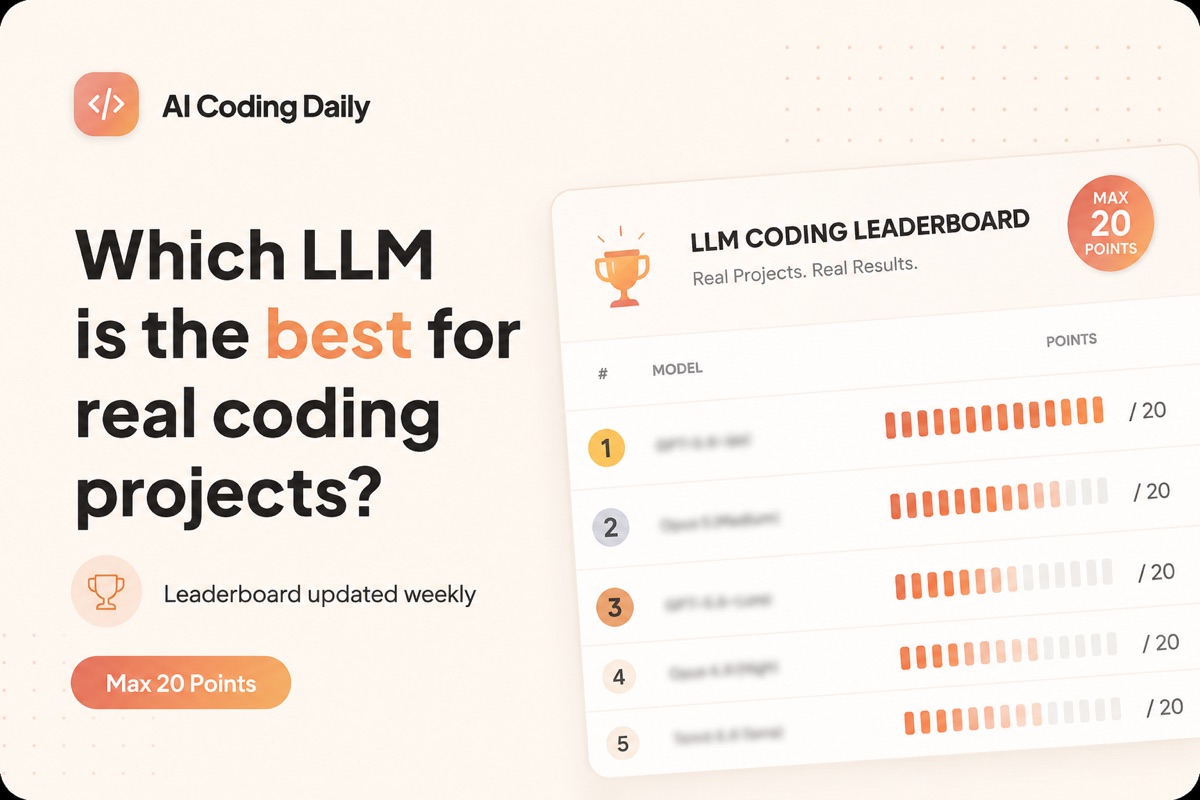
Povilas Korop scores Muse Spark 1.3 on six real coding projects (Laravel, React-TS, PHP, Flutter, Go): Max effort ranks #26 with 48.43/60 at about $0.01 per prompt and 3:42 per prompt.
Resource · Benchmarks & research
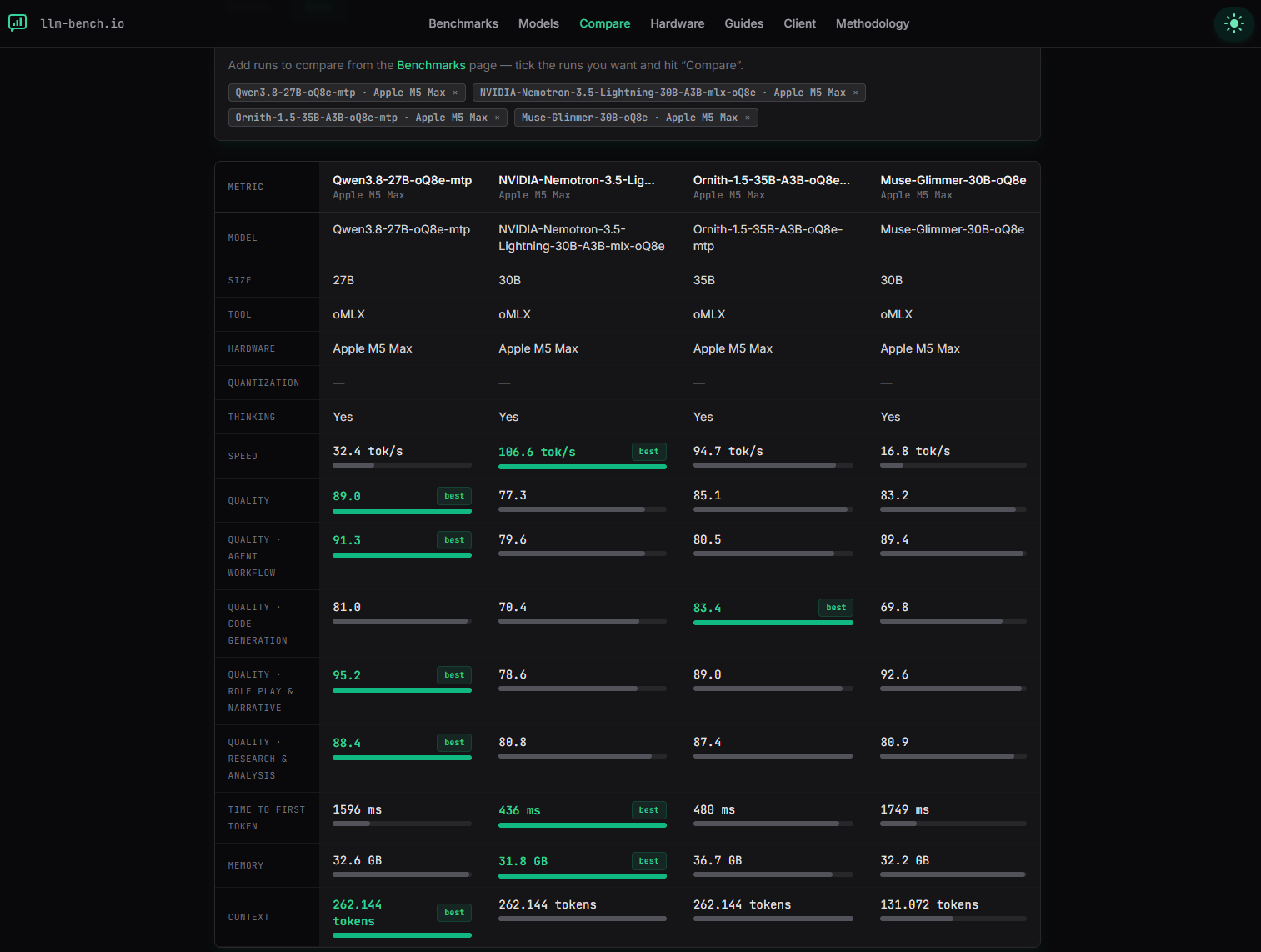
Ornith does really well. TielCoder (https://llm-bench.io/benchmarks/cmt7kp2zj002r01lcmpchvlko) might be even a bit better in coding. Will give it a try soon. Details of the comparison see here: https://llm-bench.io/compare/runs?runs=cmt6ecf8g000001p45vwzux53%2Ccmt6ergk5000701p41hqdyy78%2Ccmt6f2oob000e01p49o9592cb%2Ccmt6fqddm000l01p4l1vm7skd
Reddit post · Benchmarks & research
LLMs have become extremely good at coding, maths etc, but how well do they do at playing a simple dungeon/maze game that even a child can solve easily? The LLM has to navigate a 10x10 grid map, completing objectives in the right order (collect weapon > kill monster > head to exit) while navigating the dungeon and avoiding walls. Three illegal moves fail the run. All models are tested with reasoning enabled. The code and more info on my GitHub if you want try it yourself: https://github.com/shinomakoi/dungeon-bench Model leaderboard: Model Score DeepSeek-V4-Pro (high) 🥇12/12 Gemma-4-31B-it 🥈11/12 Qwen-3.8-27B (medium) 🥈11/12 GLM-5.3-Flash (high) 🥈11/12 Muse-Glimmer-30B (medium) 🥉10/12 DeepSeek-V4-Flash (high) 🥉10/12 Granite 4.2 (full) 8/12 KAT-Coder-V2.5-Dev 8/12 Nemotron-3.5-Lightning-30B-A3B 5/12 Model Illegal moves DeepSeek-V4-Pro (high) 🥇0 Gemma-4-31B-it 🥈1 Qwen-3.8-27B (medium) 🥈1 Muse-Glimmer-30B (medium) 🥉2 Granite 4.2 (full) 🥉2 Nemotron-3.5-Lightning-30B-A3B 7 GLM-5.3-Flash (high) 8 KAT-Coder-V2.5-Dev 10 DeepSeek-V4-Flash (high) 12 DeepSeek-V4-Pro: By far the best result. Basically perfect performance in all maps.
Reddit post · Benchmarks & research
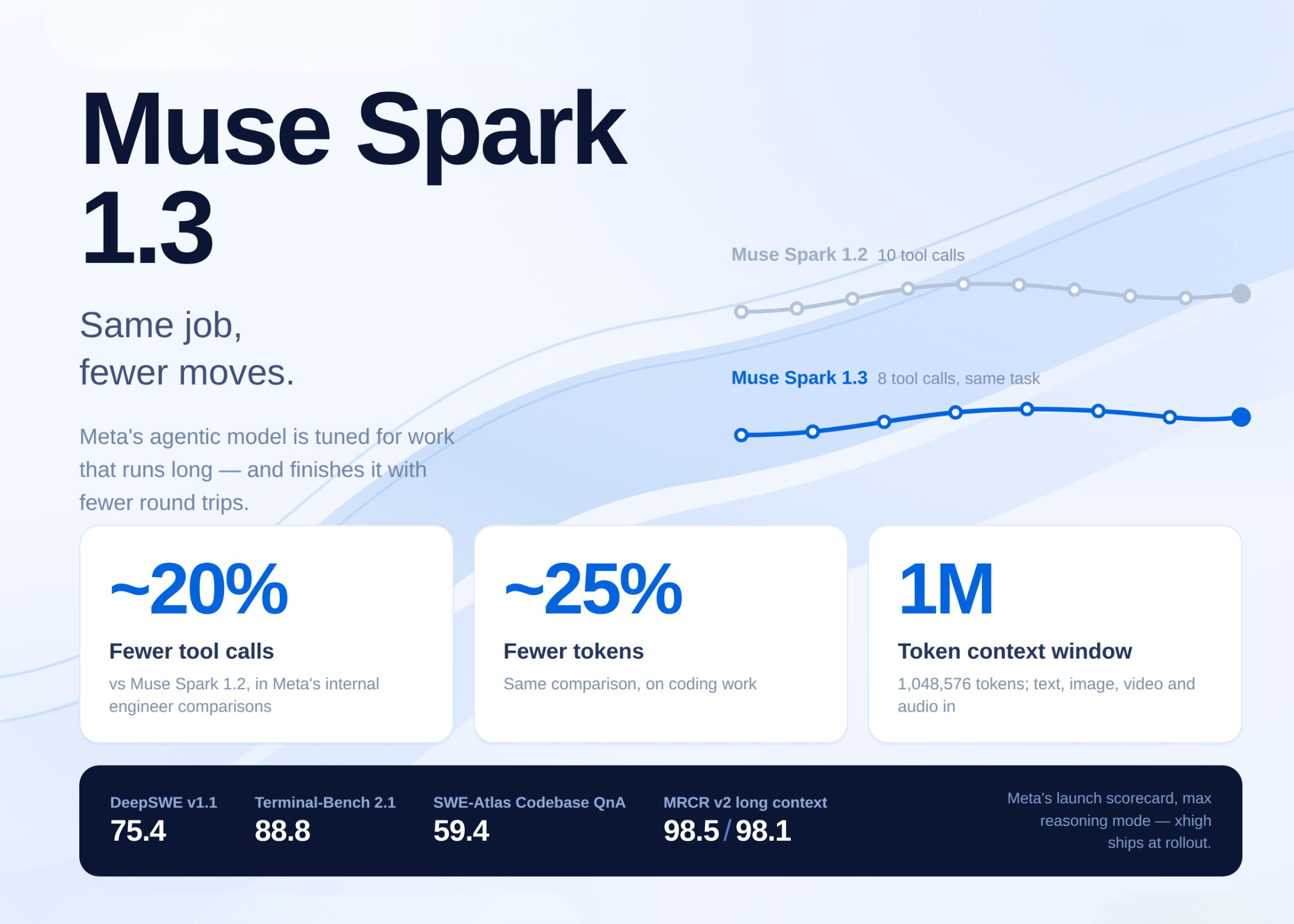
MarkTechPost summarizes Meta's numbers: 75.4 on DeepSWE v1.1 (Opus 5 74.0, GPT-5.6 Sol 72.7), 88.8 on Terminal-Bench 2.1, and 98.1 on MRCR v2 at 512K–1M context.
Resource · Benchmarks & research




 ChatForm
 Tgmlabs