shipwithmuse

№ 0465GitHub

Muse Glimmer 30B on RTX 5090

A llama.cpp container that serves Muse Glimmer 30B with vision and DFlash on an RTX 5090, reporting 98.8 tok/s single-stream and about 250 tok/s aggregate with 131k context.

Muse Glimmer 30B on RTX 5090 on github.com
n3xtgentechitalia/muse-glimmer-5090README ↗
# Muse Glimmer 30B on RTX 5090

[![ci](https://github.com/n3xtgentech/muse-glimmer-5090/actions/workflows/ci.yml/badge.svg)](https://github.com/n3xtgentech/muse-glimmer-5090/actions/workflows/ci.yml)
[![license: MIT](https://img.shields.io/badge/license-MIT-blue.svg)](LICENSE)

A **llama.cpp** container serving **Muse Glimmer 30B (K-Quant-Dynamic)** with
**vision** and **DFlash speculative decoding**, as an OpenAI-compatible endpoint.
Built from source, because the model's architecture landed in llama.cpp only in
build b10353.

**98.8 tok/s single-stream, ~250 tok/s aggregate ceiling**, 131k context split
across 2 slots. DFlash drafting is worth 1.5× despite only 18–31% acceptance.

🇮🇹 [Versione italiana](README.it.md)

## What this is

A `Dockerfile` that compiles llama.cpp for sm_120 with guardrails that fail the build
early if the checkout is too old, an `entrypoint.sh` that probes
`llama-server --help` and adapts to whichever CLI generation it finds, and a `.env`
holding every tunable.

```bash
git clone https://github.com/n3xtgentech/muse-glimmer-5090
cd muse-glimmer-5090
cp .env.example .env      # then read it: the comments are the documentation
make download             # three GGUFs, 22.7 GB total
make build && make up
make health
```

Requires an NVIDIA driver with CUDA 13 support, the NVIDIA Container Toolkit, and
Docker. `scripts/install-host.sh` sets those up on Ubuntu if needed.

## Status: the reference hardware is no longer in the machine

The RTX 5090 was replaced by a Radeon AI PRO R9700 on 18 August 2026, so this
configuration cannot be re-measured here. It is published because the measurements
are the reference point for the rest of the family, and because the configuration was
complete and working — every number below was taken on a healthy server on 13 August
2026.

Two caveats specific to this repo:

- **The image is not portable.** The Dockerfile builds with `-march=native`, so the
  resulting image runs only on the CPU that built it. Remove `GGML_NATIVE=ON` for a
  portable build.
- **`LLAMA_REF=master` is a moving target.** It was pinned to whatever `master` was
  in August 2026. The build guardrails will tell you if a future checkout regresses,
  but they cannot tell you if it changed behaviour.

## Why build llama.cpp from source

Muse Glimmer's architecture (`LLM_ARCH_MUSE_GLIMMER`) was merged on 10 August 2026,
in build **b103

Also filed under Local & open models

See all →
  1. 0805

    Muse drives a rover with a custom connector★

    Took your custom-connector idea to the physical world: the "service with an API" was my robot. Muse wrote the connector for my rover's API, then installed PyTorch & Depth Anything V2 in the VM because the camera is 2D, drove to the black ball and stopped a few inches short.

    @hrhraj

    X post

    Local & open models

  2. 0490

    Muse Glimmer on one Arc Pro B70★

    A vLLM-XPU and DFlash recipe for Muse Glimmer 30B on a single Intel Arc Pro B70, reporting 278 aggregate tok/s across eight clients and an 840.8 tok/s burst peak at concurrency 96.

    @mgaruccio

    GitHub

    Local & open models

  3. 0458

    Muse Glimmer 30B stretched to 512K context★

    My fun weekend project was to try to make the new Muse Glimmer 30B work with a longer context, deciding to go for 512k first. I had expected the usual YaRN shenanigans and maybe a LoRA. I couldn't have been wrong more. Upon closer look, Glimmer turned out to be rather unusual architecturally. The thing that make long-context adaptations painful in other models, full attention layers with token position encoding, it simply not there. Instead, only 2048 tokens-wide SWA layers have RoPE, and full GQA attention layers have no position encoding at all. It appears the model is trained to work with long-distance token relationships inferred from the context and SWA layers. It's a rather bold architecture bet, but it seems Meta managed to pull it off. As a result, the model architecture appears to be uniquely suited for context extension by simple mechanical means. To change model context length from stock 128k to, say, 512k, you need only to change “max_position_embeddings” config setting from 131072 to 524288. What confuses other models, like Qwen3.5 family, Glimmer just takes into its stride. I spent close to 70h of compute on DGX Spark to test stock model with extended context on a

    u/mr_il

    Reddit post

    Local & open models

  4. 0435

    Local credit card statement analysis with Glimmer★

    Using @AIatMeta's Muse Glimmer all locally to process personal monthly credit card statements. Your data belongs to you! Try different agent tasks using your favorite apps / harnesses with Ollama.

    @ollama

    X post

    Local & open models

More GitHub

See all →
  1. 1074

    Ziggy, a 24/7 voice assistant on Muse Spark

    An always-on laptop voice companion: local Porcupine wake word, local Whisper speech-to-text in Hindi and English, Muse Spark via the Meta Model API as the brain, offline TTS and local conversation memory.

    @TanayYadavDev

    GitHub

    Agents & automation

  2. 1066

    Muse remote-control bridge for Intel Macs

    Since Muse for Mac ships only for Apple silicon, this small service lets Muse's cloud VM screenshot, click and type on an Intel Mac, compressing each 5K frame to about 150 KB and handling Retina coordinate scaling.

    @LilMuh

    GitHub

    Errands & personal agent

  3. 1040

    CursorBench 4.0 score-vs-cost report

    A self-contained visual report comparing CursorBench 4.0 score against cost per task for Opus 5.5, Fable 5.1, Grok 4.7 and Muse Spark 1.3, where Muse Spark 1.3 Max scores 41.6% at $2.64 per task. GPT-6 points are clearly marked as estimates.

    @dominicletz

    GitHub

    Benchmarks & research

  4. 0995

    BitNet Gateway: cheap CPU triage, Muse Spark decides

    A hybrid FastAPI gateway where a 1-bit BitNet layer on CPU filters routine traffic and Muse Spark 1.3 is called only for sales, urgency, money or low-confidence cases; the author estimates the local filter handles about 60-70% of volume.

    @rafaelnovaes22

    GitHub

    Agents & automation

Curator picks

  1. 1046

    Medical bills audited line by line, $4,000 saved★

    Got Muse logged in to my medical provider’s portal, he pulled the itemized bills, and questioned every line. So far he’s found several times I’d been double billed, asked for some discounts and has saved me over $4,000. If your moat is bureaucracy, you’re cooked.

    @Ryan_Holdaway

    X post

    Errands & personal agent

  2. 1013

    Shop Pay agentic checkout on every Shopify store★

    We are excited to announce we are partnering deeply with Muse to enable agentic checkout with Shop Pay on all Shopify stores, offering people an easy and delightful way to shop and check out with Muse.

    @tobi

    X post

    Business & commerce

  3. 1009

    Private e-book library app from Google Drive★

    Muse built me a private library for the e-books and articles in my Google Drive. Everything is organized by topic, and each section opens onto its own subcategorized shelves. Each book opens like a real book and is readable in-app

    @chiasmus_cap

    X post

    Apps & websites

  4. 1007

    Plumbing company run by a Muse agent★

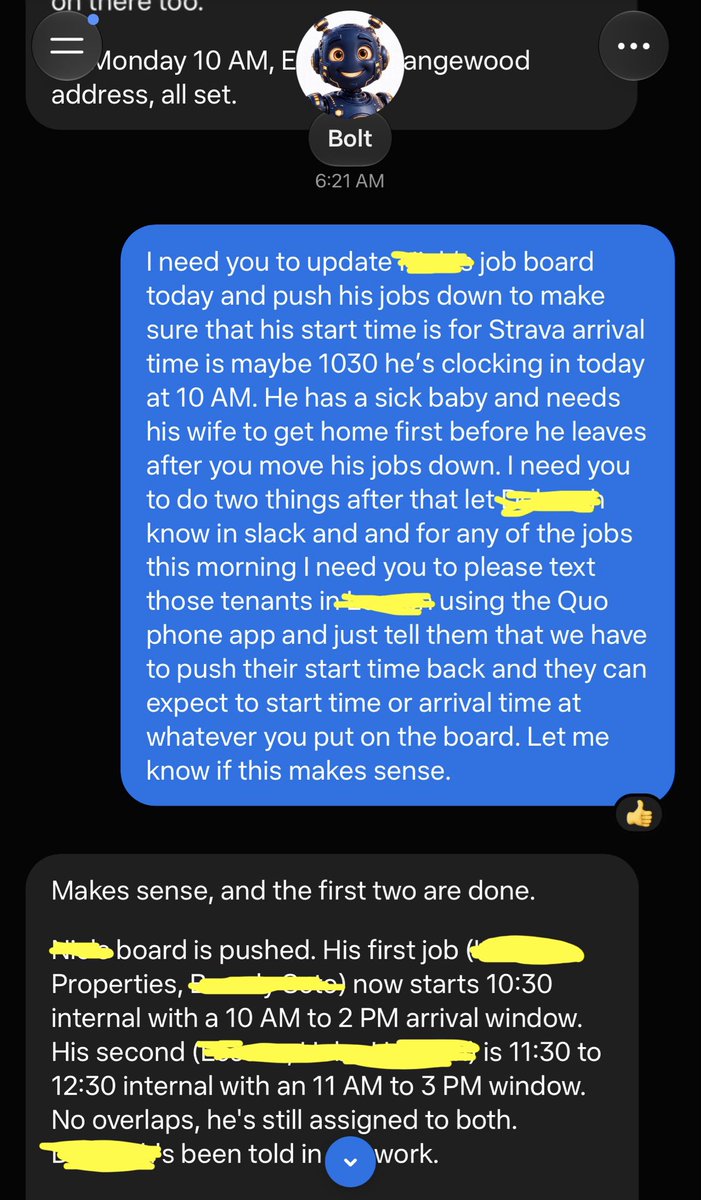
    I still can’t believe I can run my plumbing company with an agent so easily. I send this message to my Muse agent while in bed at 6am. And it: updates my job board, texts customer, updates office manager who arrives at 8am in slack Notifies technician

    @HouseHackerJon

    X post

    Agents & automation