shipwithmuse

№ 0552GitHub

Muse Metal

An experimental Rust and Metal inference runtime for Muse models on Apple Silicon, currently supporting Muse Glimmer, using llama.cpp as the correctness and speed baseline.

Muse Metal on github.com
brad-richardson/muse-metalREADME ↗

Muse Metal

An experimental Rust + Metal inference runtime for Muse models on Apple Silicon, currently supporting Muse Glimmer. The near-term goal is a text-only path that borrows Lily's specialization philosophy while preserving each model's architecture and GGUF quantization layout.

The package and CLI are muse-metal; the Rust crate is muse_metal. Glimmer remains the name of the supported model architecture.

This is a learning project, not a production server. llama.cpp is the correctness and performance oracle while the custom path grows one component at a time.

The latest paired measurements with FP16 prefill and F32 decode/KV ran both
backend orders under the decorrelated schedule on 2026-09-06. Native decode
reached 93.7% / 90.3% / 88.7% of standard llama.cpp after 128 / 1024 /
2048-token prompts in the steady-state order, and 84.6% / 83.2% / 80.9% in
the other, so the 90% decode target is not met: no length clears it in both
orders and 2,048 fails in both. Token sequences, captured logits and response
scores are identical between the engines, so the deficit is throughput only.
See the acceptance results.
F32 prefill remains the default; FP16 prefill is opt-in.

Current state

  • The 9.58 GB IQ2_XS model is downloaded to the external SSD and SHA-256 verified.
  • A pinned Apple-Clang/Metal llama.cpp build runs the complete 52-layer text model.
  • Baseline on this 16 GB M4: ~48 tok/s prefill and ~6.17 tok/s decode.
  • Milestone 1 is complete: a strict Rust GGUF loader validates and memory-maps all 731 tensors without copying.
  • Scalar IQ2_XS, Q2_K, Q4_K, Q5_K, and Q6_K dequantizers match the pinned llama.cpp oracle bit-for-bit across five original blocks plus 5,120 varied blocks. This is not end-to-end response parity.
  • The M4 Metal lab now has F32/BF16 vector and RMSNorm kernels plus direct packed GEMV for every quant format in the checkpoint, validated against real model weights.
  • Scale-aware GPU tests cover 480 combinations; a bounded streaming check covers all 202,048 output-head rows at about 41 MiB peak process RSS.
  • Tiny F32 end-to-end parity now passes against pinned llama.cpp: every layer,
    logits, bounded local/global KV, reset/chunking, and a 16-token greedy continuation.
    The fixture is 5.52 MiB; the recorded sweep reported 78.28 MiB peak process RSS.
  • A

Also filed under Local & open models

See all →
  1. 0805

    Muse drives a rover with a custom connector★

    Took your custom-connector idea to the physical world: the "service with an API" was my robot. Muse wrote the connector for my rover's API, then installed PyTorch & Depth Anything V2 in the VM because the camera is 2D, drove to the black ball and stopped a few inches short.

    @hrhraj

    X post

    Local & open models

  2. 0490

    Muse Glimmer on one Arc Pro B70★

    A vLLM-XPU and DFlash recipe for Muse Glimmer 30B on a single Intel Arc Pro B70, reporting 278 aggregate tok/s across eight clients and an 840.8 tok/s burst peak at concurrency 96.

    @mgaruccio

    GitHub

    Local & open models

  3. 0458

    Muse Glimmer 30B stretched to 512K context★

    My fun weekend project was to try to make the new Muse Glimmer 30B work with a longer context, deciding to go for 512k first. I had expected the usual YaRN shenanigans and maybe a LoRA. I couldn't have been wrong more. Upon closer look, Glimmer turned out to be rather unusual architecturally. The thing that make long-context adaptations painful in other models, full attention layers with token position encoding, it simply not there. Instead, only 2048 tokens-wide SWA layers have RoPE, and full GQA attention layers have no position encoding at all. It appears the model is trained to work with long-distance token relationships inferred from the context and SWA layers. It's a rather bold architecture bet, but it seems Meta managed to pull it off. As a result, the model architecture appears to be uniquely suited for context extension by simple mechanical means. To change model context length from stock 128k to, say, 512k, you need only to change “max_position_embeddings” config setting from 131072 to 524288. What confuses other models, like Qwen3.5 family, Glimmer just takes into its stride. I spent close to 70h of compute on DGX Spark to test stock model with extended context on a

    u/mr_il

    Reddit post

    Local & open models

  4. 0435

    Local credit card statement analysis with Glimmer★

    Using @AIatMeta's Muse Glimmer all locally to process personal monthly credit card statements. Your data belongs to you! Try different agent tasks using your favorite apps / harnesses with Ollama.

    @ollama

    X post

    Local & open models

More GitHub

See all →
  1. 1077

    BlindPilot

    It is a frontend and a chat client for AI providers, supporting 7 backends including muse code

    mastodon: serrebiradio.com/@serrebi

    GitHub

    Agents & automation

  2. 1074

    Ziggy, a 24/7 voice assistant on Muse Spark

    An always-on laptop voice companion: local Porcupine wake word, local Whisper speech-to-text in Hindi and English, Muse Spark via the Meta Model API as the brain, offline TTS and local conversation memory.

    @TanayYadavDev

    GitHub

    Agents & automation

  3. 1066

    Muse remote-control bridge for Intel Macs

    Since Muse for Mac ships only for Apple silicon, this small service lets Muse's cloud VM screenshot, click and type on an Intel Mac, compressing each 5K frame to about 150 KB and handling Retina coordinate scaling.

    @LilMuh

    GitHub

    Errands & personal agent

  4. 1040

    CursorBench 4.0 score-vs-cost report

    A self-contained visual report comparing CursorBench 4.0 score against cost per task for Opus 5.5, Fable 5.1, Grok 4.7 and Muse Spark 1.3, where Muse Spark 1.3 Max scores 41.6% at $2.64 per task. GPT-6 points are clearly marked as estimates.

    @dominicletz

    GitHub

    Benchmarks & research

Curator picks

  1. 1046

    Medical bills audited line by line, $4,000 saved★

    Got Muse logged in to my medical provider’s portal, he pulled the itemized bills, and questioned every line. So far he’s found several times I’d been double billed, asked for some discounts and has saved me over $4,000. If your moat is bureaucracy, you’re cooked.

    @Ryan_Holdaway

    X post

    Errands & personal agent

  2. 1013

    Shop Pay agentic checkout on every Shopify store★

    We are excited to announce we are partnering deeply with Muse to enable agentic checkout with Shop Pay on all Shopify stores, offering people an easy and delightful way to shop and check out with Muse.

    @tobi

    X post

    Business & commerce

  3. 1009

    Private e-book library app from Google Drive★

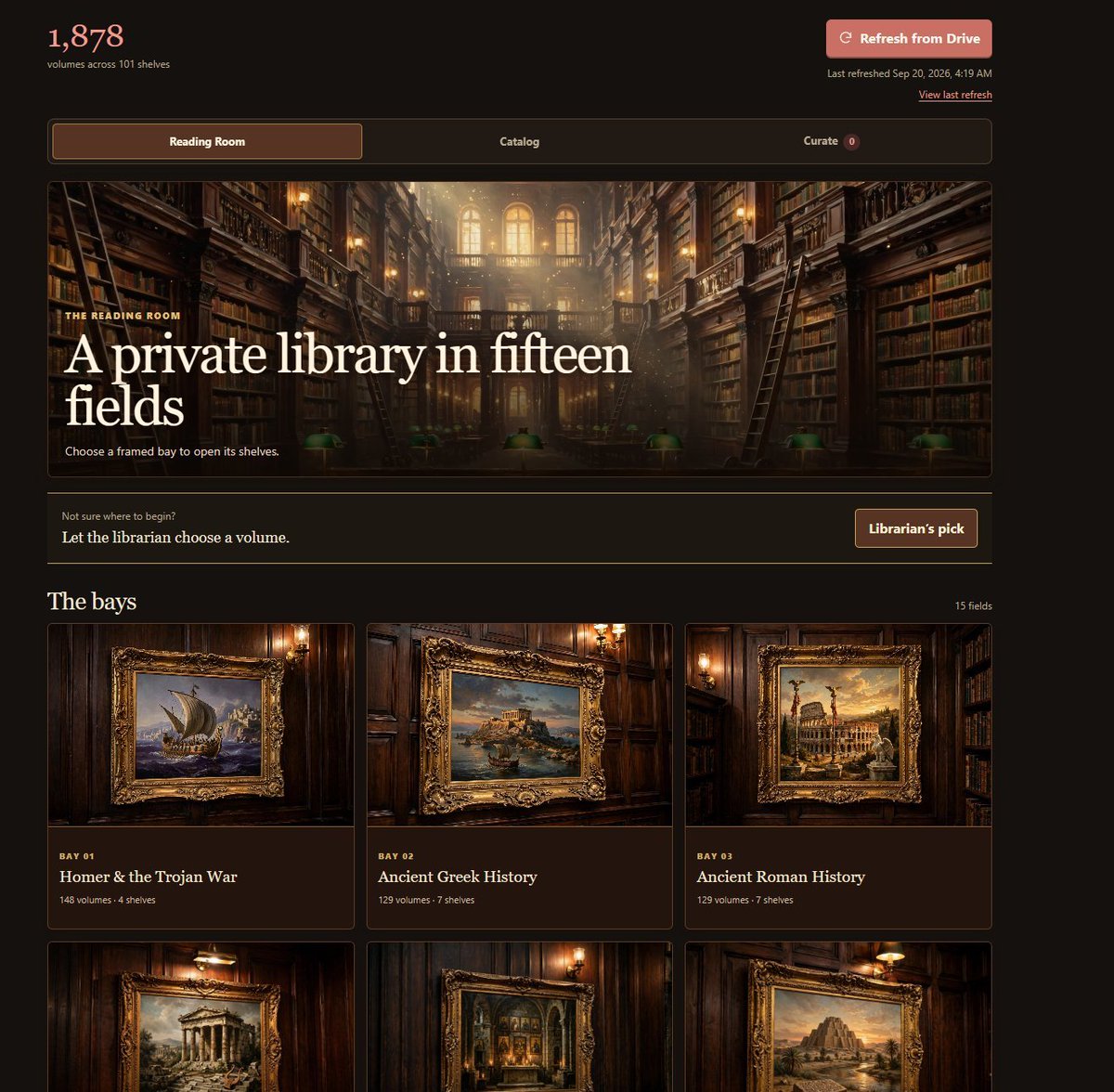
    Muse built me a private library for the e-books and articles in my Google Drive. Everything is organized by topic, and each section opens onto its own subcategorized shelves. Each book opens like a real book and is readable in-app

    @chiasmus_cap

    X post

    Apps & websites

  4. 1007

    Plumbing company run by a Muse agent★

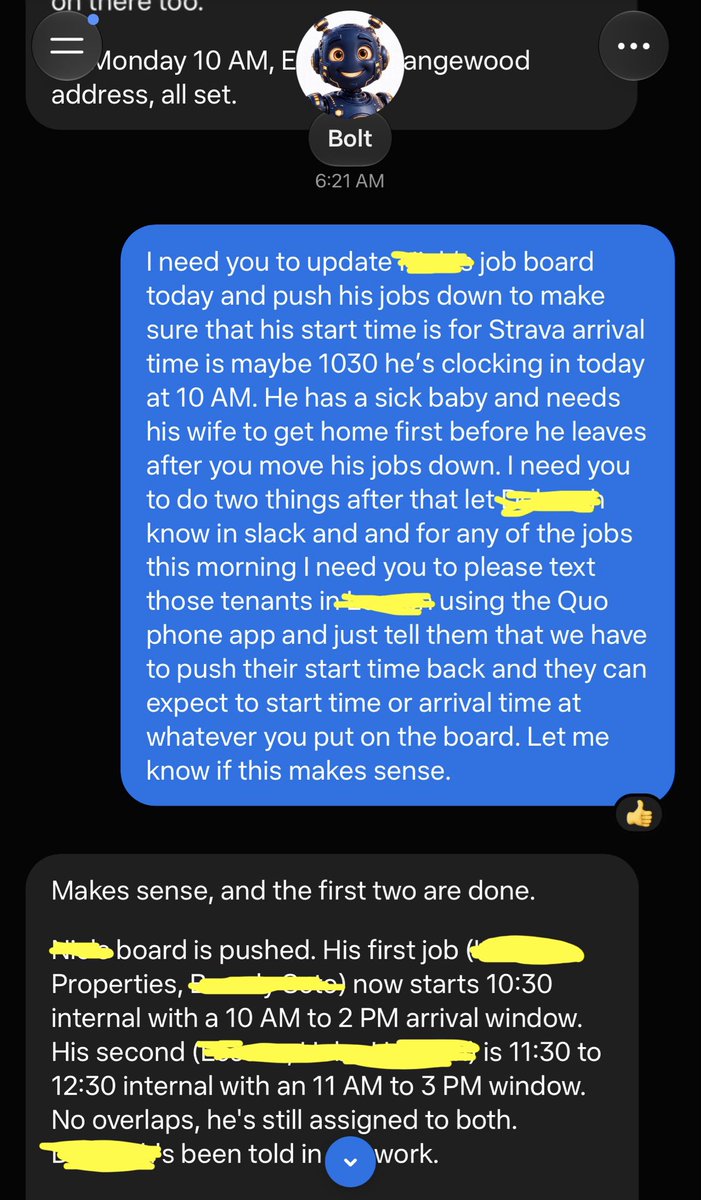
    I still can’t believe I can run my plumbing company with an agent so easily. I send this message to my Muse agent while in bed at 6am. And it: updates my job board, texts customer, updates office manager who arrives at 8am in slack Notifies technician

    @HouseHackerJon

    X post

    Agents & automation