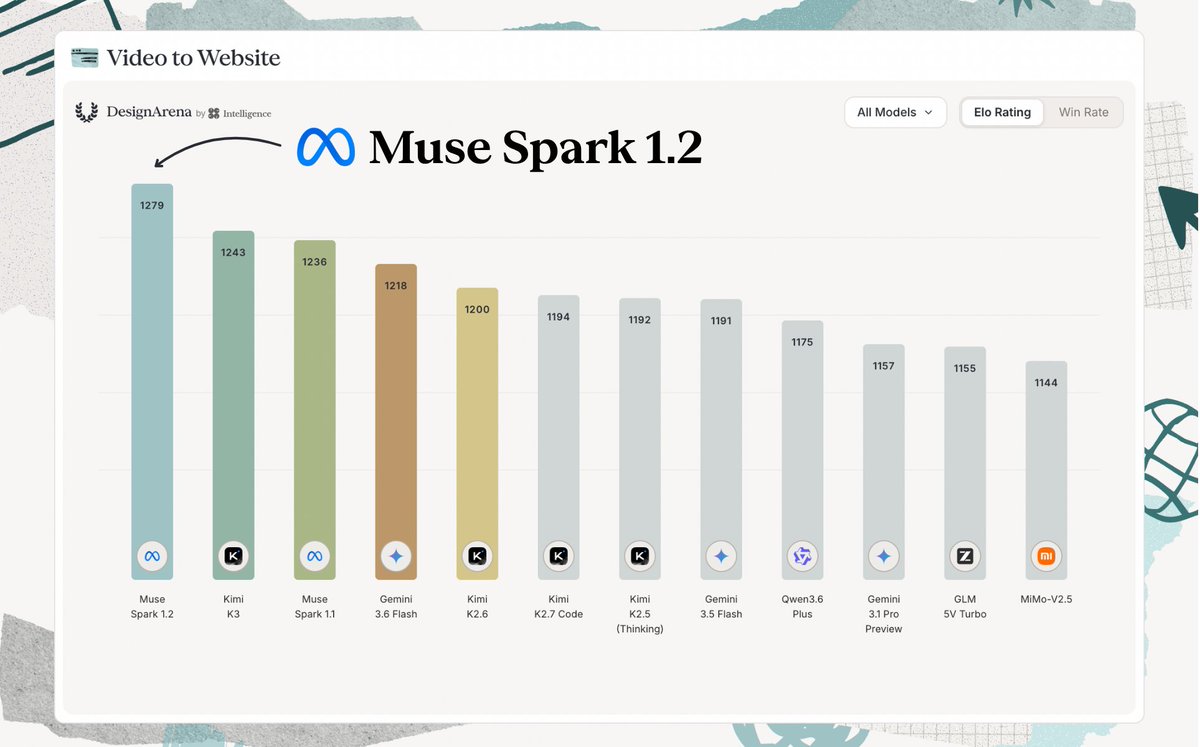
BREAKING: Muse Spark 1.2 by @AIatMeta takes 1st for Video-to-Website with an Elo rating of 1279 and impressive scores across all of our multimodal code categories.
Muse Spark 1.2 also takes 2nd for Image-to-HTML with an Elo rating of 1252 and 3rd for Image-to-Frontend with Elo
DesignRush argued Muse inserts itself into product discovery and ranks on structured data like specs and reviews rather than ad spend, and told brands to map the agent shopping journey, measure agent referrals separately, and audit who can access their product data.
An unofficial native macOS client for the Muse Code CLI in Meta AI's design language, sharing sessions with the terminal so work can resume in either place.
A Muse skill that lets you prod friends' Muse agents with a designed speech pattern, like a Facebook poke: the imprint shows in their next replies, then fades.
A single-file Three.js superhero platformer designed, coded and play-tested by Muse Spark 1.3 at xhigh effort in one autonomous session, passing 25/25 automated browser checks.
It's all about the tiny details!
I asked muse.ai to create its own profile pic, it did so, and renamed itself to Wolfred. But then I noticed that they also created a cute animated gif of wolfred working and they are showing it when it... does stuff! very cute
Stackademic covers the architecture of Muse connectors, how to design connector actions, prompt-injection risk, and whether building one is worth it now that the platform is open.
Bijan Bowen's first look at Meta's Muse Code terminal agent and Muse Spark 1.2, testing a browser OS, C++ skate game, CAD design, flight sim and subway FPS.
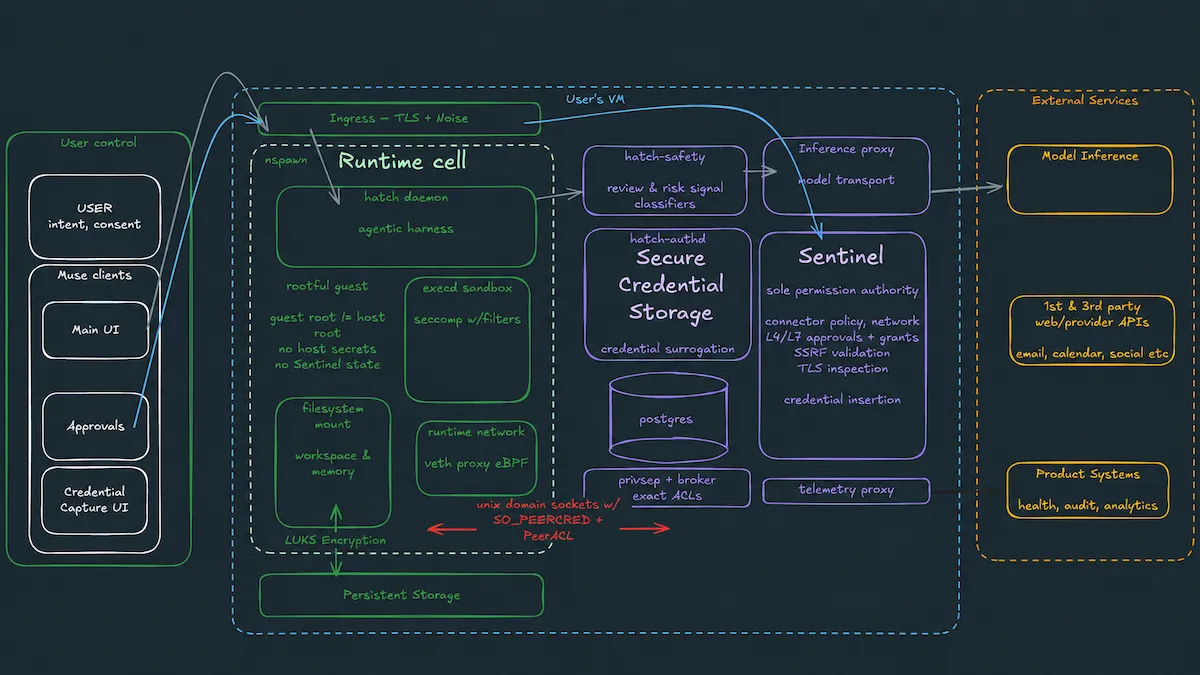
DeepLearning.AI's The Batch covers Muse's security design (isolated VMs, the Sentinel credential layer, prompt-injection classifiers) and its free tier of up to 100M tokens a week.
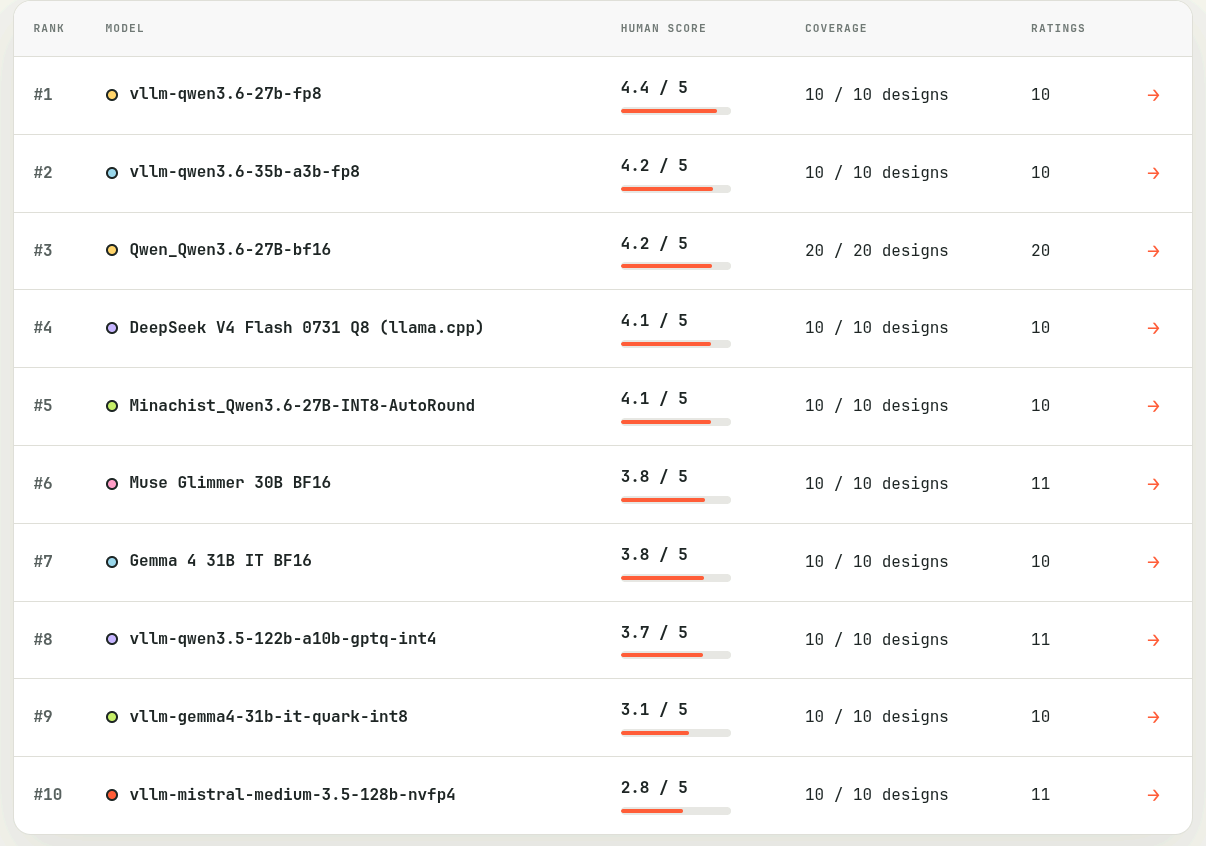
Some people told me that the difference in richness and layout between Glimmer and Qwen wasn't clear to them.
This example makes it super clear.
I'm aware that comparing Glimmer 30B (a dense model) with Qwen 3.6 (a MoE) isn't entirely fair, but if we compare it to the dense Qwen 27B, the gap will likely be even bigger. If you want, I can add the 27B version later. For now, I'm waiting for Qwen 3.8 27B to see how close it gets to the blueprint.
As for the technical details:
Both were run on a custom llama.cpp build optimized for the RTX 5080, with a temperature of 0.5 and a 125k context window.
Regarding the music: I created it myself without using AI I specifically wanted it to sound that weird.
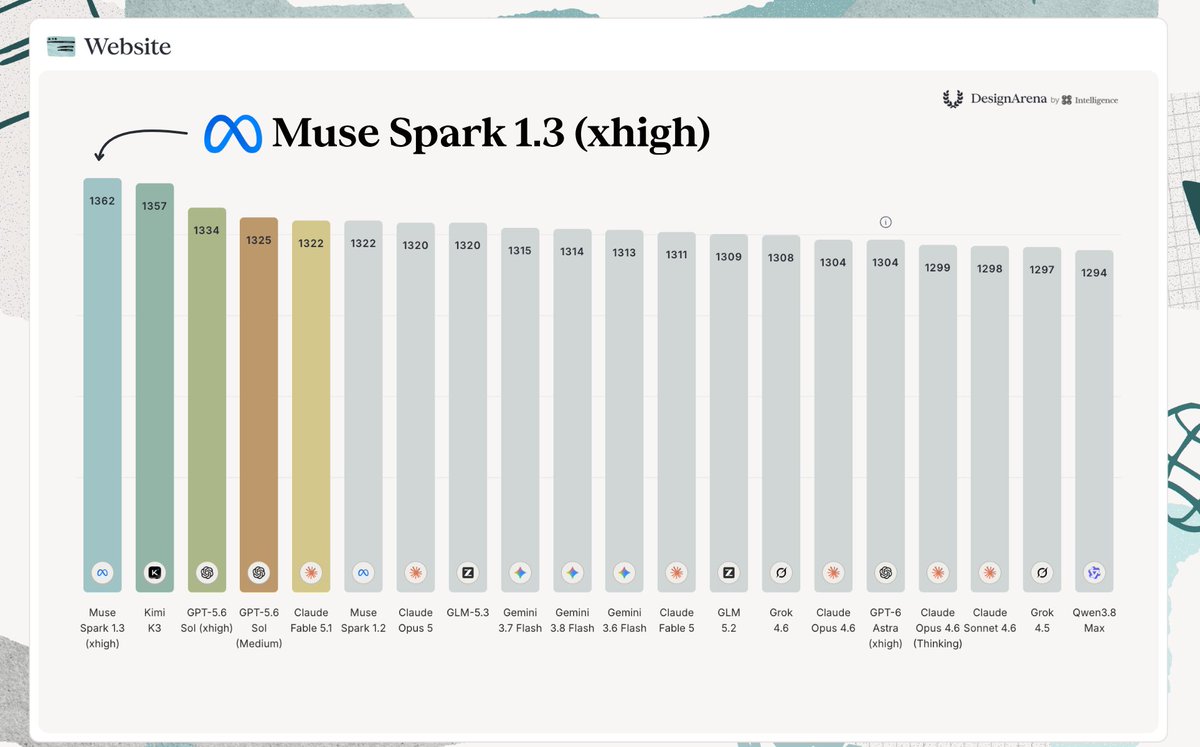
BREAKING: Muse Spark 1.3 (xhigh) takes 1st overall on Website Arena with an Elo of 1362!
This is a jump of 5 positions from Muse Spark 1.2, establishing a new Pareto frontier for Speed and Price.
Only a month after the release of Muse Spark 1.2, @AIatMeta has topped this
I've been running my work in Codex as project folders, and recently tried to properly understand how Muse Goals work under the hood. Made it a goal — good way to watch the machinery operate on itself.
The structural problem is worth naming: the current design is a halfway house between two coherent designs, and it gets the costs of both.
Design A is Codex: the project is a container. Everything — chat, state, artifacts, scheduled work — lives in one place. My course project has one tracker file, explicit resume rules for new chats, and the curriculum never holds status. Legible, but you have to go to it.
Design B is full ambient: no containers at all. The goal is just context that wakes up wherever you mention it, and there's no Goals tab pretending otherwise.
Muse picked ambient for activation — talk about the goal anywhere, it wakes up, you never "open" it. But then it built half of containment: a Goals tab showing summary, artifacts, activity, without the other half. Conversations, check-ins, and briefings still leak into whatever chat they happened in. So you get the scattering of ambient with the implied promise of a container. That's the worst combination.
The fix is to
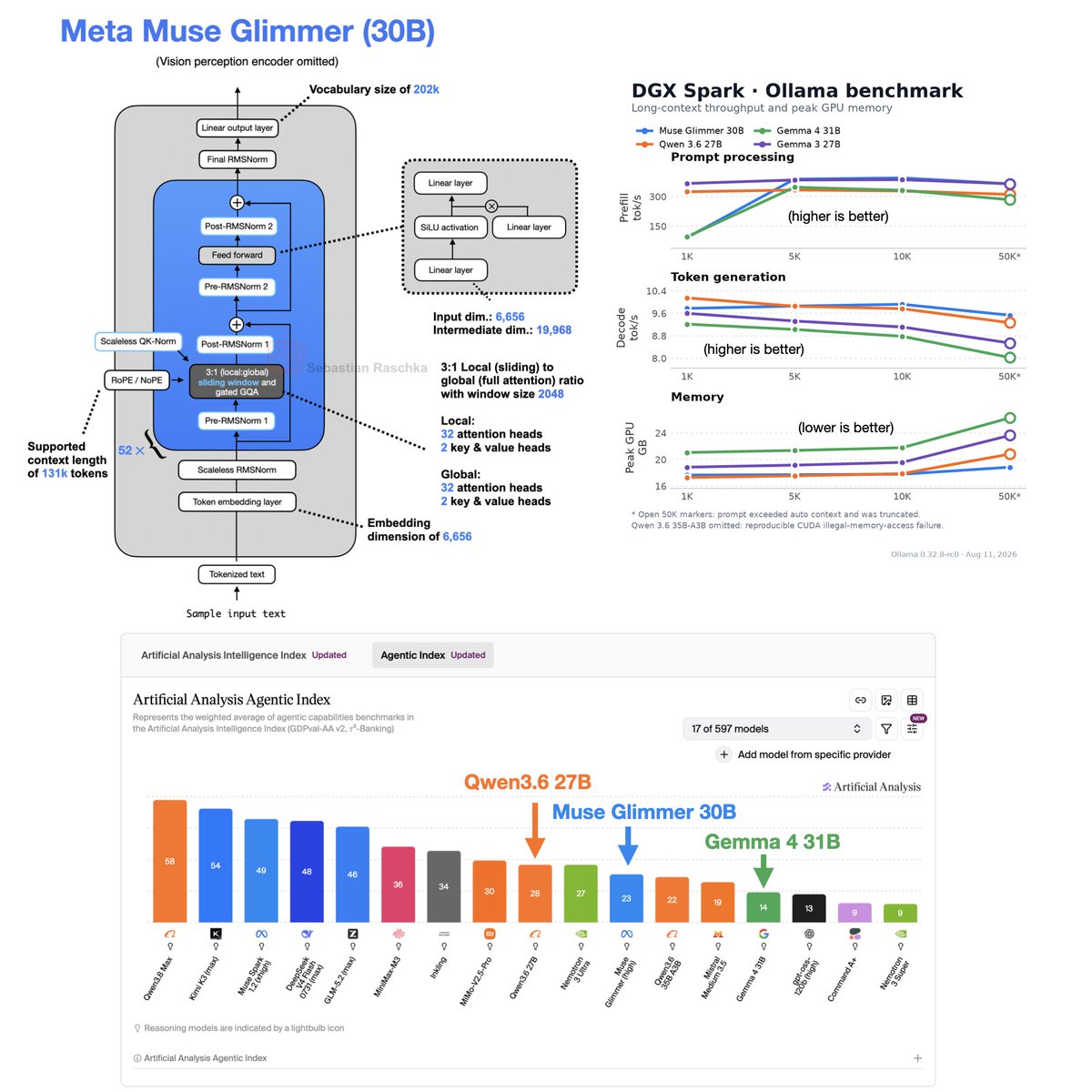
Whoa, Meta released a new open-weight LLM yesterday, something that hasn't happened since the good old Llama days.
Their Meta Muse Glimmer model is a 30B multimodal reasoning model with a Gemma-like architecture design. (“Glimmer” is probably a wordplay on “Spark,” the more
Portuguese-language repository of versioned agent skills for OpenCode and Muse, each a lean SKILL.md with references and templates (ticketing, conventional commits, skill authoring, frontend design).
A YouTube tutorial companion repo where Muse Glimmer 30B (a 2-bit GGUF, run offline) looks at screenshots of badly designed web pages and generates and self-repairs modern replacement code.
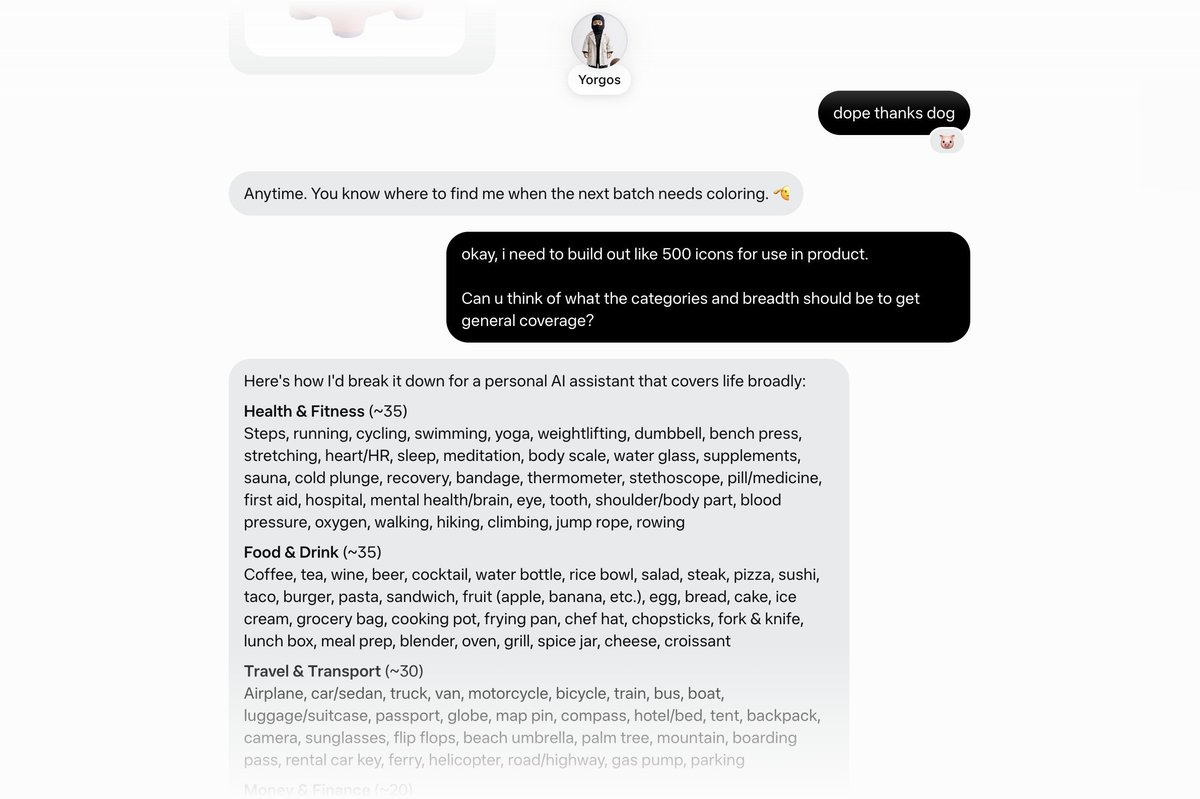
For the icons, we discussed it at length in a sidechat and my Muse made me the initial list, helped with prompts, and the approach for expansion.
We rendered them right there in chat with Muse Image, and he made me a catalog Artifact to manage them and add notes for re-runs.
WEBdoze pairs Muse Spark 1.3 and Gemini 3.8 Flash with the Impeccable design skill and browser testing to turn plain AI-generated pages into polished frontends.
I’ve seen a couple of posts about this so wanted to demystify. Today, every Muse user gets a free computer in the cloud. It's a real computer, and we’ve designed the security architecture of the Muse Secure VM carefully so you and your Muse can do almost anything you could with a










 ChatForm
 Tgmlabs