shipwithmuse

№ 0954GitHub

Muse Slack Bridge

A shared Socket Mode transport between Slack and Muse bots: one listener daemon appends Slack events to a JSONL log, a CLI posts replies back, and each bot runs its own consumer with no public HTTP endpoint.

Muse Slack Bridge on github.com
bentedesco/muse-slack-bridgeREADME ↗
# Muse Slack Bridge

Shared, bot-agnostic transport between Slack and Muse AI bots.

One listener daemon (`slackd.py`) receives Slack events over Socket Mode and appends them to `events.jsonl`. One post CLI (`slack-post.py`) sends text back, verbatim. Bots never talk to Slack or a browser. Each bot runs its own consumer over the shared log, with its own offset file and its own rules.

The bridge knows nothing about any particular bot's prefixes, reply policy, or conventions.

There is no public HTTP endpoint. Socket Mode does not need one.

## Layout

```
slackd.py              # shared listener → events.jsonl
slack-post.py          # shared post CLI
example_consumer.py    # reference per-bot loop (~offset + rules)
manifest.json          # Slack app manifest
contrib/               # systemd user unit + cron healthcheck
muse_slack_bridge/     # library used by the scripts
```

## One-time Slack app setup

1. Open [api.slack.com/apps](https://api.slack.com/apps) → **Create New App** → **From an app manifest**.
2. Paste `manifest.json` from this repo and create the app.
3. **Basic Information** → **App-Level Tokens** → generate a token with the `connections:write` scope. Copy the `xapp-` value.
4. **OAuth & Permissions** → **Install to Workspace**. Copy the bot token (`xoxb-`).
5. Invite the app to every channel it should see (`/invite @Muse Bridge`). Private channels are invisible until invited.

The committed manifest enables Socket Mode and subscribes to `message.groups` only (`chat:write`, `groups:history`, `groups:read`, `users:read`). Invite the app into each private channel it should see. It does not include a request URL or interactivity.

## Configure

Tokens live in the process environment **or** in chmod-600 files. Never commit them. Never paste them into chat.

Default config directory: `~/.config/muse-slack-bridge/`  
Override with `MUSE_SLACK_BRIDGE_HOME` or `--config-dir`.

```bash
mkdir -p ~/.config/muse-slack-bridge
chmod 700 ~/.config/muse-slack-bridge

# Option A — environment
export SLACK_APP_TOKEN="xapp-..."
export SLACK_BOT_TOKEN="xoxb-..."
export WATCH_CHANNELS="C0123456789,C9876543210"

# Option B — files (must be chmod 600 or the listener refuses to start)
printf '%s\n' "$SLACK_APP_TOKEN" > ~/.config/muse-slack-bridge/app_token
printf '%s\n' "$SLACK_BOT_TOKEN" > ~/.config/muse-slack-bridge/bot_token
printf '%s\n' "$WATCH_CHANNELS" > ~/.

Also filed under Connectors & MCP

See all →
  1. 0842

    Muse in iMessage via BlueBubbles★

    https://github.com/mvrius/bluebubbles-muse BlueBubbles server on my Mac, Muse hook polling it every ~5s. How it works: the poll driver (bash shim + Python filter) checks for new messages and filters on an allowlist of senders, 1:1 chats, and group GUIDs. A new message from an allowlisted sender wakes Muse into a side chat with the message as context. Replies go back out as normal iMessages through the Mac. Why this instead of a messaging connector: connectors need an approval tap on every send, otherwise similar could be acheived via Messenger connector. Setup: BlueBubbles on the Mac, Tailscale so the agent VM can reach it, run the installer. Repo has the hook scripts, installer, architecture doc, and skill definition. Known issues: I am noticing that sometimes Tailscale connection drops on the Mac. I found that I need to bring down/up tailscale every hour for connection to stay up. A fun example from earlier today, I updated my calendar, moved dinner with my wife by 30 minutes - Muse mesaged the Family chat and informed my wife of the change. Cool findings: - Muse has a Tailscale option, you can connect the VM it runs on in Client model with other machines running Tailscal

    u/Gold-Entry9142

    Reddit post

    Connectors & MCP

  2. 0707

    Todo-app sync built without an official API★

    Still really enjoying @muse. I use Things.app for all of my todos, and though it has cloud sync they (still) haven’t added an official API. I told muse to build it and a minute or two later I have ongoing todo sync from my LLM across all my Apple devices. Wild.

    @holman

    X post

    Connectors & MCP

  3. 0161

    Muse connector platform portal★

    Meta's developer portal for Muse connectors: describe a connector, submit it for functional, security and legal review plus end-to-end testing, and get listed in the Muse directory.

    muse.ai

    Site

    Connectors & MCP

  4. 0152

    Muse Connectors: 150 one-paste skills★

    An open-source collection of 150 auditable connector skills for Muse that install with one pasted prompt, declare their allowed hosts and keep credentials in the user's Muse vault.

    @bluman1

    Skill

    Connectors & MCP

More GitHub

See all →
  1. 1074

    Ziggy, a 24/7 voice assistant on Muse Spark

    An always-on laptop voice companion: local Porcupine wake word, local Whisper speech-to-text in Hindi and English, Muse Spark via the Meta Model API as the brain, offline TTS and local conversation memory.

    @TanayYadavDev

    GitHub

    Agents & automation

  2. 1066

    Muse remote-control bridge for Intel Macs

    Since Muse for Mac ships only for Apple silicon, this small service lets Muse's cloud VM screenshot, click and type on an Intel Mac, compressing each 5K frame to about 150 KB and handling Retina coordinate scaling.

    @LilMuh

    GitHub

    Errands & personal agent

  3. 1040

    CursorBench 4.0 score-vs-cost report

    A self-contained visual report comparing CursorBench 4.0 score against cost per task for Opus 5.5, Fable 5.1, Grok 4.7 and Muse Spark 1.3, where Muse Spark 1.3 Max scores 41.6% at $2.64 per task. GPT-6 points are clearly marked as estimates.

    @dominicletz

    GitHub

    Benchmarks & research

  4. 0995

    BitNet Gateway: cheap CPU triage, Muse Spark decides

    A hybrid FastAPI gateway where a 1-bit BitNet layer on CPU filters routine traffic and Muse Spark 1.3 is called only for sales, urgency, money or low-confidence cases; the author estimates the local filter handles about 60-70% of volume.

    @rafaelnovaes22

    GitHub

    Agents & automation

Curator picks

  1. 1046

    Medical bills audited line by line, $4,000 saved★

    Got Muse logged in to my medical provider’s portal, he pulled the itemized bills, and questioned every line. So far he’s found several times I’d been double billed, asked for some discounts and has saved me over $4,000. If your moat is bureaucracy, you’re cooked.

    @Ryan_Holdaway

    X post

    Errands & personal agent

  2. 1013

    Shop Pay agentic checkout on every Shopify store★

    We are excited to announce we are partnering deeply with Muse to enable agentic checkout with Shop Pay on all Shopify stores, offering people an easy and delightful way to shop and check out with Muse.

    @tobi

    X post

    Business & commerce

  3. 1009

    Private e-book library app from Google Drive★

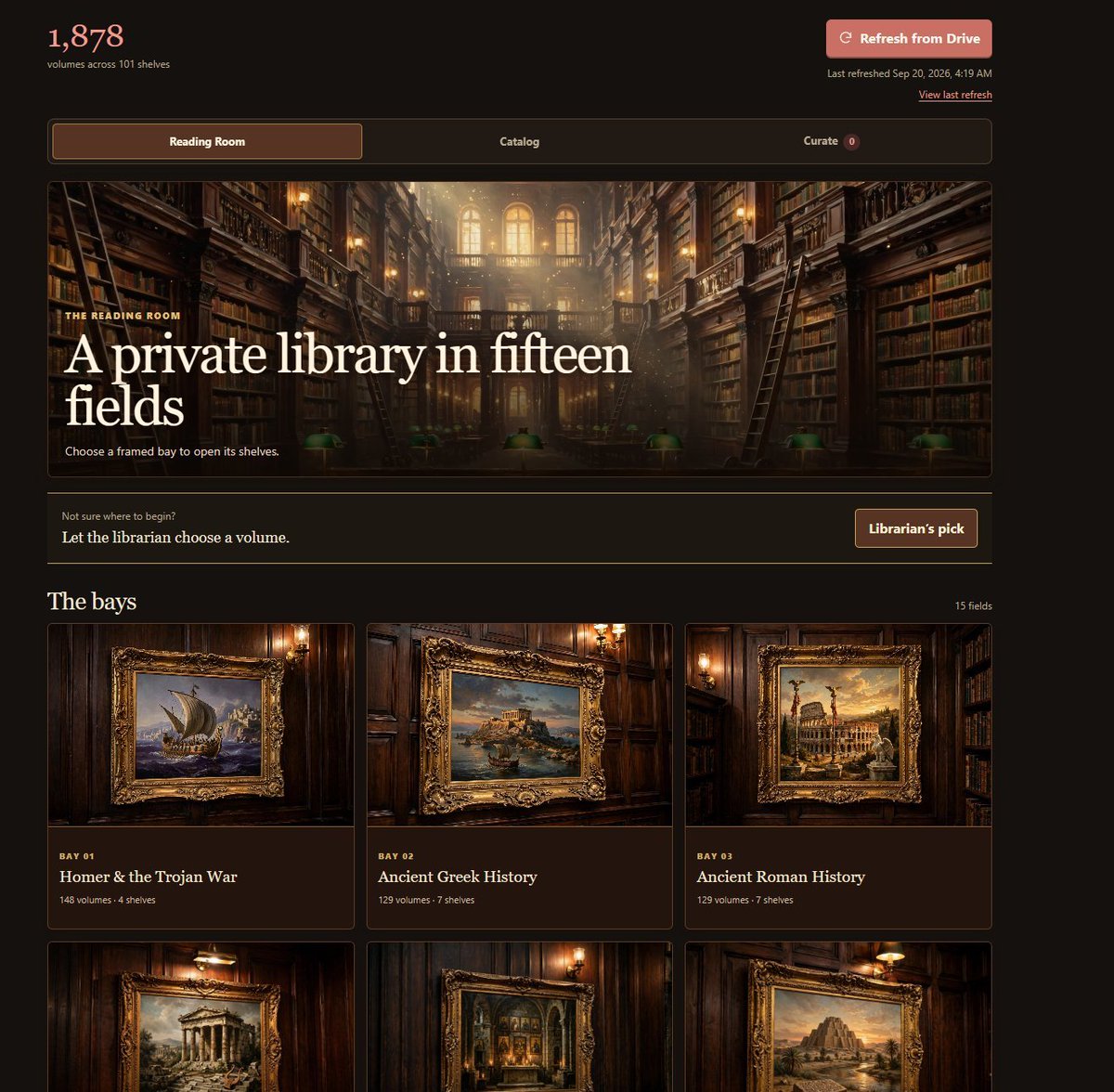
    Muse built me a private library for the e-books and articles in my Google Drive. Everything is organized by topic, and each section opens onto its own subcategorized shelves. Each book opens like a real book and is readable in-app

    @chiasmus_cap

    X post

    Apps & websites

  4. 1007

    Plumbing company run by a Muse agent★

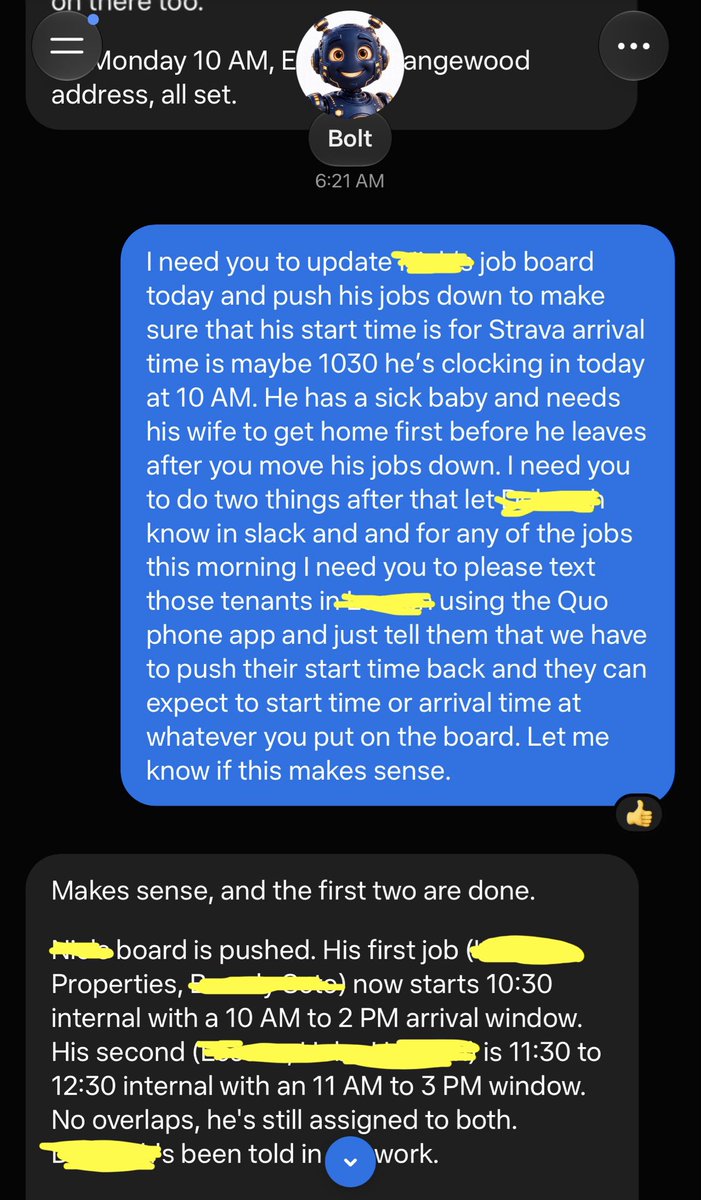
    I still can’t believe I can run my plumbing company with an agent so easily. I send this message to my Muse agent while in bed at 6am. And it: updates my job board, texts customer, updates office manager who arrives at 8am in slack Notifies technician

    @HouseHackerJon

    X post

    Agents & automation