My personal @muse agent got me $2,120.95 already 🤯:
• $300/yr — negotiated my AT&T bill down
• $192 — Amazon returns I never got around to
• $47 — more returns on the way
• $230 — IKEA ALEX 9-drawer unit, returned end to end
• $516 — vet claim filed for my dog
• $836 —
Workflows can break out a task across multiple focused agents, carry the intermediate work between stages, and return one result at the end. Good for engineering work that's too complex for a single agent.
Mine took a cancelled Alaska flight + two Lyft receipts from my email and filed the whole claim: converted email to PDF, fought a broken upload widget (said 2.5MB, real limit 512KB), submitted $189.37 + goodwill. Came back with case number. I just watched. Very smooth, I asked
Change Verifier is a Muse connector and MCP server that runs seven checks on vendor bank-account or payee changes, returns clear, review or block, and holds the change until a named owner accepts it.
A working mobile-friendly web app built by the Meta Muse personal agent from a real courier's detailed requirements. It compares DoorDash/Uber Eats delivery offers after total miles (including empty return), waiting time, all-in vehicle costs and tolls. The surprising demo: a $9 offer can yield $19.08 net per hour while a $20 offer only yields $16.09 under stated assumptions. Muse created the standalone offline HTML and logic tests (49/49 self-reported); I downloaded it, independently verified actual browser inputs/outputs, published the source and proof screenshot to GitHub, and deployed a no-signup live demo. Live app: https://boyhoangxattpt2-blip.github.io/gig-driver-profit-checker/ . GitHub README includes exact math, source code, build story, and reproducible prompt.
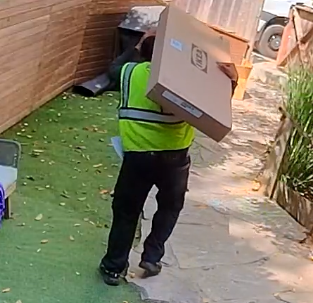
My @Muse just handled an entire IKEA return for me; customer service, scheduling.... The pickup guy shows up at my door and I genuinely forgot I'd even asked for it. This is what an agent is supposed to feel like.
Gave my @Muse Hal a task to book flights, it navigated Captcha and booked @AlaskaAir for my outgoing flight, then let me know that Chase was offering a $200 deal on @flyjsx which would make it cheaper on my return flight.
Asked if that would work for me…
Then Booked it.
Muse Image from @aiatmeta is live on fal.
It's an agentic image model that plans your composition, uses tools, and self-corrects before you ever see a result. Complex briefs hold together instead of falling apart.
Demo of a QLoRA adapter for Muse Glimmer 30B that points at UI elements in web screenshots, returning a click point from an instruction like "filter by MATEIN brand".
I have a classic test for local LLM's. I asked for 8 ball pool game with only one HTML file and Muse Glimmer spend 21k Token(I m using full context so 128k) and only created a 220 lines of HTML and said its done. With my experience its not even close to Qwen 3.6 27B and we are waiting for Qwen 3.8 27B already. What is your toughts about this model. I was so hopeful until this test.
A Muse Code plugin that policy-checks every tool call against an Agentic Control Plane workspace before it runs, returning allow, ask or deny and logging each decision with its reason.
sol-loop pairs a GPT planner on a Codex subscription with Muse Spark in opencode as executor, which returns evidence and diffs for each atomic spec; the author says over 99% of tokens run on Muse.
Everyone hates taxes. But almost as bad as paying them is finding all the documentation - I dread it every year.
My Muse agent just gathered nearly all of it from a single prompt. I'm so happy I might weep 😂
What would have taken me hours, about 90% complete, gathered in a
Muse is your personal assistant. Zouroboros Workshop is the workshop behind it.
Workshop is an MCP service that runs on a private, single-tenant VPS provisioned for each customer. From a normal Muse conversation, a user can dispatch real software work to a coordinated team of seven AI coding executors — Claude Code, Codex, Gemini, OpenCode, Kimi, Hermes, and Pi — routed by health and capability, with automatic fallback when one executor is unavailable.
Three things make it different from a single-vendor hosted builder. First, it runs on the subscriptions the user already pays for: there are no Workshop model credits and no second meter. Second, its memory is shared across every executor and survives across sessions, so a decision recorded by one tool is retrieved by another in a later Muse conversation — memory that compounds instead of resetting. Third, work is verified before it is delivered: builds run through a factory lane with deterministic review, and swarm results return with per-task evidence, not just an agent's claim that it is done.
The customer-facing promise is simple: turn your existing AI tools into a workshop that delivers tested, reviewed work — a finished pull request, not a wall of code in chat.