Meta's engineering write-up on Muse security: isolated VMs, a separate Sentinel permission authority, credential surrogation and layered prompt-injection defenses, with bug bounties up to $300,000.

Resource · Benchmarks & research★ Pick
9 builds · page 1 of 1
Meta's engineering write-up on Muse security: isolated VMs, a separate Sentinel permission authority, credential surrogation and layered prompt-injection defenses, with bug bounties up to $300,000.
Resource · Benchmarks & research★ Pick
Your product
Sponsored
Put your logo, a line of copy and an image right here, between the builds Muse developers come to read. Same size as a post.
Shown every 12 builds · on every catalog page

PR7
@prithvirey
Had it plan me a day trip & it built me a little interactive quest log with maps, swim spots and everything cool little artificact🌲 @adamludwin bronze-beacon-d7dj.here.now
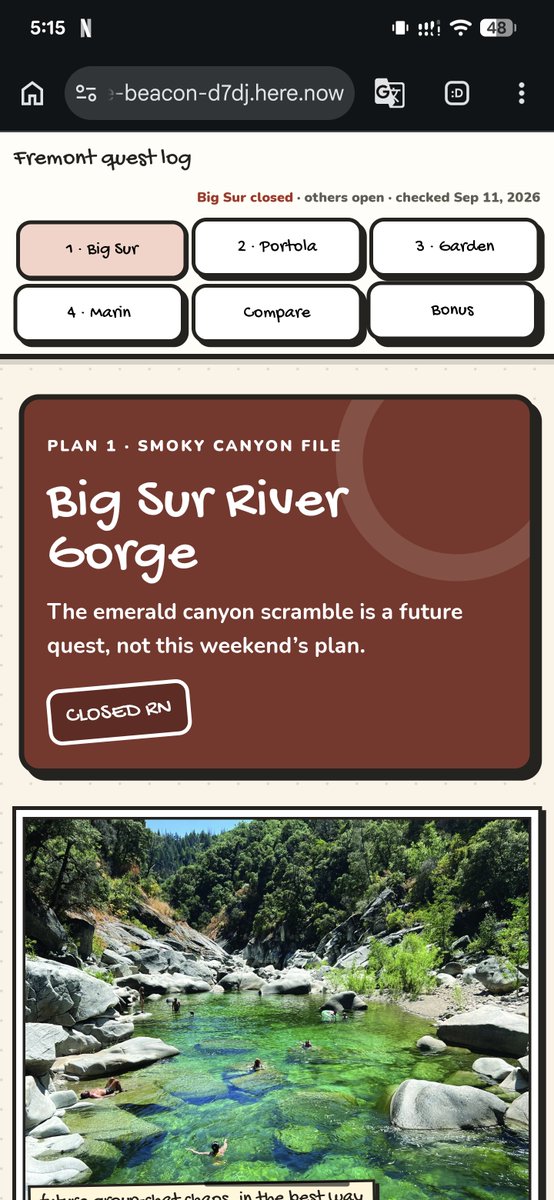
X post · Errands & personal agent· ♥ 3
I've been migrating my workflow from ChatGPT Work / Codex over to Meta's Muse, and I've been auditing the harness as I go — reading cron files, checking diffs, mapping what the system actually does versus what it claims to do. It's a documentation gap. What the docs describe Meta's documentation is written for a normal user. It talks about the Ideas tab, the Goals tab, the Feed, and "background jobs that help Muse improve over time." Everything is described in terms of what it does for you. There is no architectural documentation. Nothing about how any of it is built. What is actually on disk Meanwhile, the home directory contains a fully legible agent architecture, just sitting there(these are just SOME examples, the system file structure is HUGE): • ~/dreams/alignment/ — a nightly job that regenerates an alignment synthesis: a written portrait of the user, how to handle them, current frictions, relationship guidance. • ~/workspace/objectives/goals/STUDYING.md — a daily learning-state projection with mastery bands, next-review dates, and retrieval prompts, plus a file of inferred goal leads the system guessed from behavior (with confidence levels and what would confirm or re
Reddit post · Benchmarks & research

boymanrobshit
@boymanrobshit
Getting a ton of utility out of Muse. This may take a minute to catch on because it’s truly a modality shift but here is what I used it for so far. - optimized my credit card rewards. No less than 1000 bucks saved so far. I have five expensive credit cards. I have no idea
X post · Errands & personal agent· ♥ 113
A local Muse Glimmer 30B vision-and-reasoning chat app for high-memory Apple Silicon Macs, running inference through ExecuTorch, MLX/Metal and DFlash with nothing persisted to disk.
GitHub · Local & open models

KBrew
@kbrewFL
This is very interesting. I asked Muse to add an interactive map to the page and not only did it do it, but it even wrote and executed its own test script!
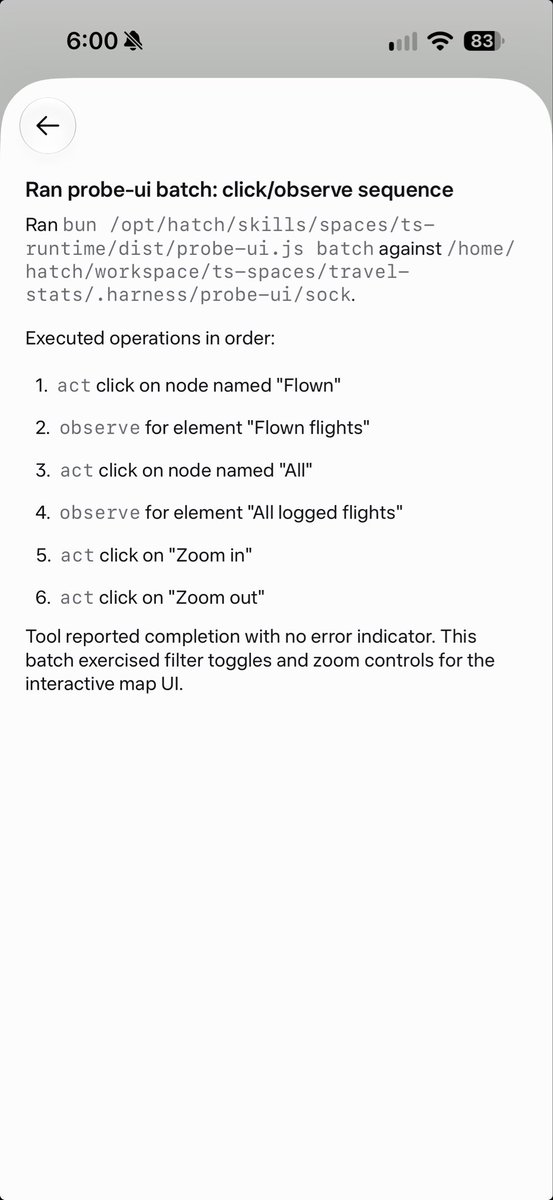
X post · Apps & websites
Muse Glimmer 30B abliterated with Heretic v1.4.0 using self-organizing maps and magnitude-preserving orthogonal ablation.

Resource · Local & open models· ♥ 11

Fei Xia
@xf1280
Fun visually-grounded 3d visualization with Muse Spark - by asking the model to generate a 3d visualization of how much each component cost on a xbox 360 motherboard (and put the bar on the component).
X post · Games & 3D· ♥ 258
DesignRush argued Muse inserts itself into product discovery and ranks on structured data like specs and reviews rather than ad spend, and told brands to map the agent shopping journey, measure agent referrals separately, and audit who can access their product data.
Resource · Business & commerce

 ChatForm
 Tgmlabs