Common Thread Collective's playbook for brands selling through Muse via Shopify: audit product data for agent readability, optimize Shop Pay conversion, build first-party lists, and upgrade attribution for agent-driven traffic.
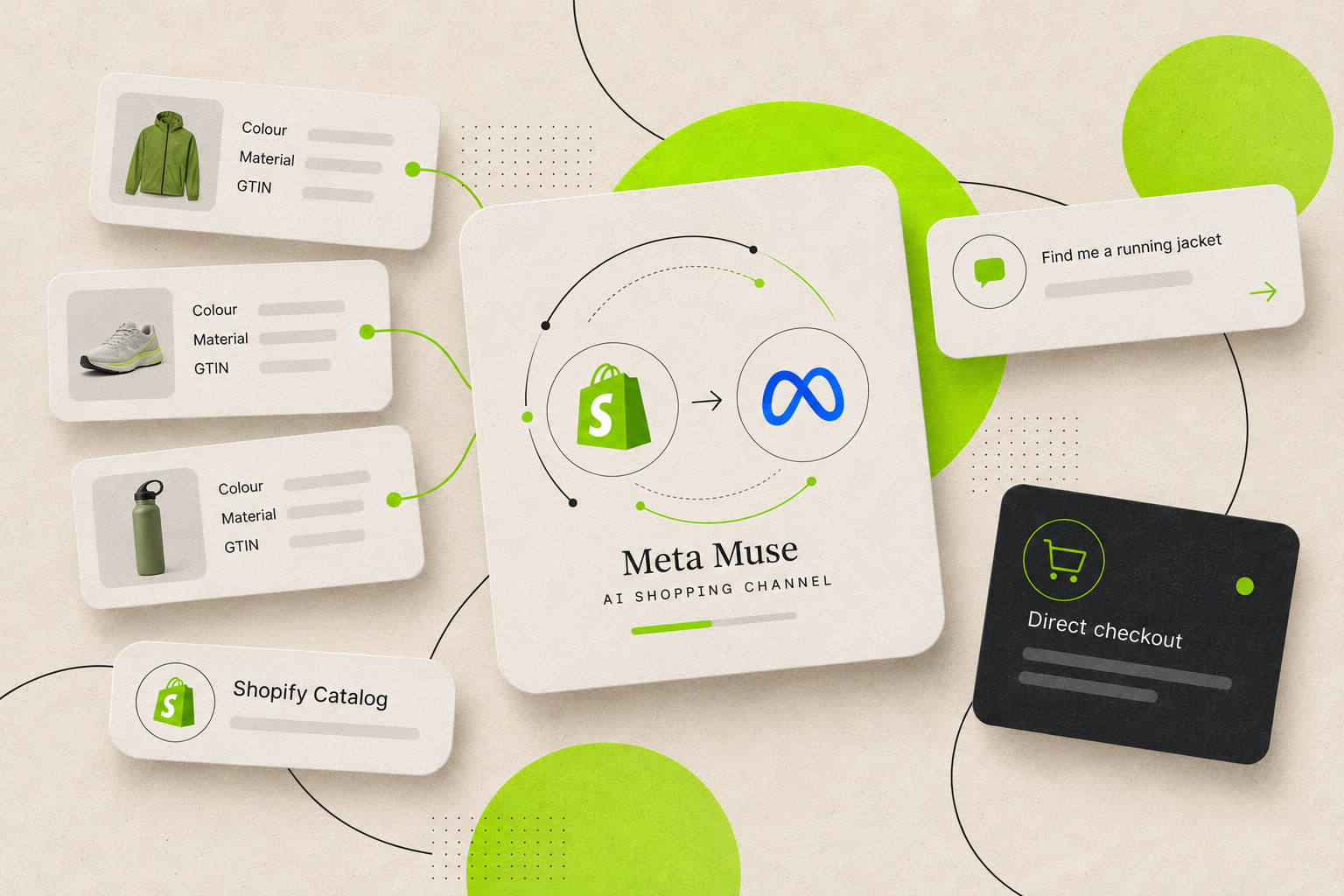
Matt Naughton's merchant guide to Muse as a Shopify AI channel: where the Agentic toggles live, what direct checkout does, and why browser pixels don't fire on Meta-side checkout, so only server-to-server events count.
Eleven matched on/off pairs across Gemma 4 and Qwen3.6, holding model, quant, card, corpus and concurrency fixed inside each pair. Speed: 1.65x to 2.54x, every pair. Accuracy: nothing the paired intervals could separate from ordinary run-to-run movement.
Muse Glimmer is the one that lost. Meta's matching DFlash drafter made the same 7900 XTX 9% slower, keeping 24.55% of drafted tokens against roughly four in five for the Gemma and Qwen heads. Acceptance fell across the run instead of warming up. Meta's model card reports 3.1x on an RTX 5090, and there are open llama.cpp issues for DFlash on AMD and under Vulkan, so I read it as the backend rather than the model.
Acceptance turned out to be a poor predictor of speed. It moved under four points across five models while the multiple nearly doubled. What tracks the multiple is how bandwidth-bound the target is: a heavier quant gains more, and the two mixture-of-experts pairs gained least.
Worth knowing before you benchmark anything: -md mtp-head.gguf silently disables speculation. Use -hf REPO:QUANT -hfd REPO, then read speculative from /slots and confirm it is true.
Per-pair table, intervals, acceptance counters and the raw predic
Compared diarization models on 15 mock doctor-patient consultations (~2.4 h): Meta Muse Voice Transcribe scored 13.04% DER at ~92 s per request via API, behind Pyannote (2.89%) and Nemotron 3 (4.80%).

 ChatForm
 Tgmlabs