№ 0356GitHub
Muse Monitor
A read-only visual companion that reads Muse Code session event logs and rebuilds multi-agent sessions (a primary agent and its workers) as a live tree.
Muse Monitor
Under development: A read-only visual companion for Muse Code sessions.
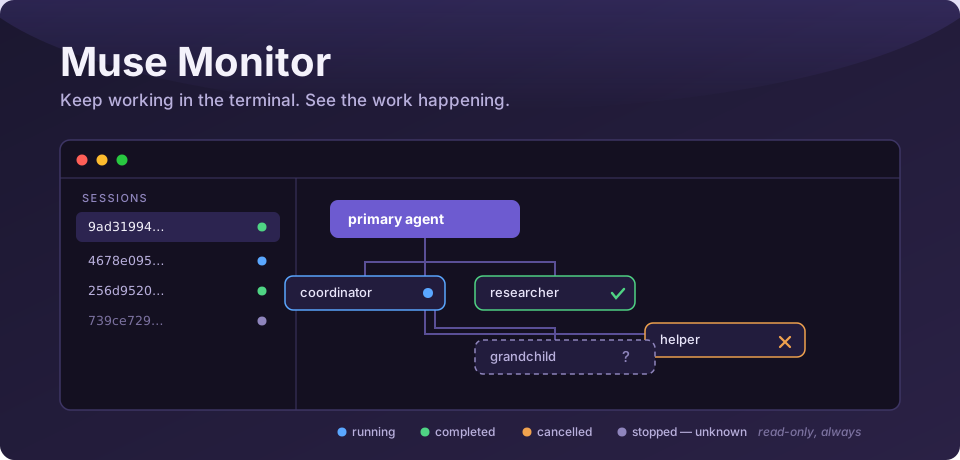
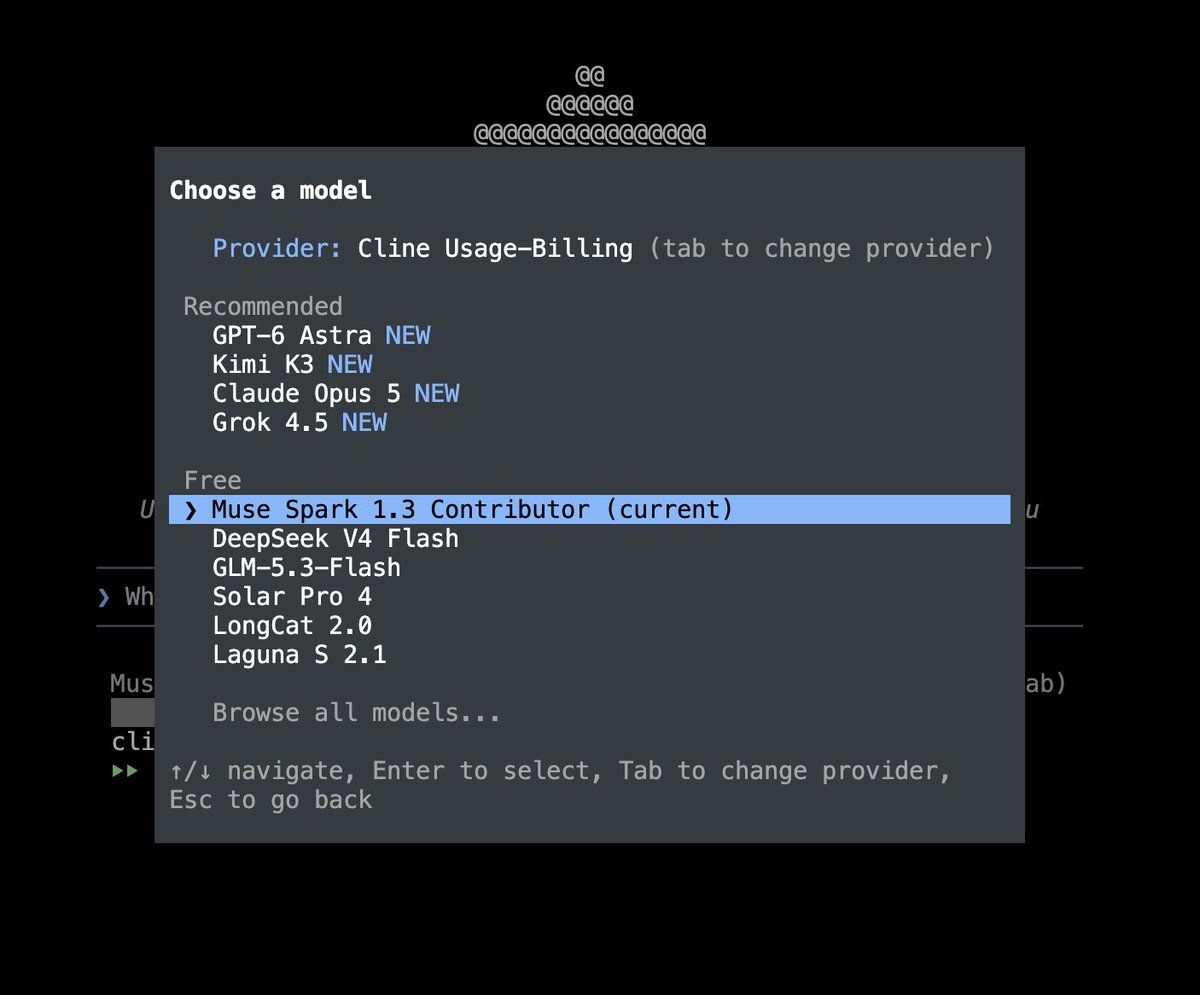
Use Muse Code in the terminal. Use Muse Monitor to see the work happening.
Why
Muse Code runs real multi-agent sessions — a primary agent spawning workers, workers reporting back — but all you see is one terminal pane. The activity is recorded faithfully in session event logs; nothing shows it to you. Muse Monitor reads those logs (and only reads — see below) and reconstructs the session as a living tree.
New to the codebase?
AMS/DOC/muse-monitor-map.md has four diagrams — architecture, data flow, current progress, and the worker-status precedence rule — written for readers coming from PHP/Java/JS with little Go background.
Status
- Sprint 0 — Gating experiments against real Muse logs; schema ground truth established
- Sprint 1 — Session discovery +
muse-monitor tree: correct worker trees from any session log - Sprint 2 — Full state projector with golden replay tests
- Sprint 3 — Live tailing (
tree --watch) - Sprint 4 — Local HTTP API + SSE
- Sprint 5 — Browser UI (the point of the whole thing)
- Sprint 6 — Raw event inspector
- Sprint 7 — Timeline view
- Sprint 8 — Hardening + release binaries
What works today
make build
bin/muse-monitor tree <session-id|path>   # compact worker tree for any session
How it's built
This project is developed by a small team of AI agents working under human direction, using the Agent Management System — Scrum-style sprints, defined personas (a senior and junior engineer, QA, a librarian, a scrum master), structured handoffs, and per-story sessions scoped to the cheapest model that can do the job well.
The process is part of the product: the AMS/ directory holds the sprint records, decision log, experiment records, and session handoffs, and every commit's Co-Authored-By trailer names the model that wrote it. git log --reverse reads as the project's chronological story.
License
MIT — use it however you want.