Obviously Meta is well on its way to already winning the personal AI battle; with Meta privacy concerns being Muse's only roadblock.
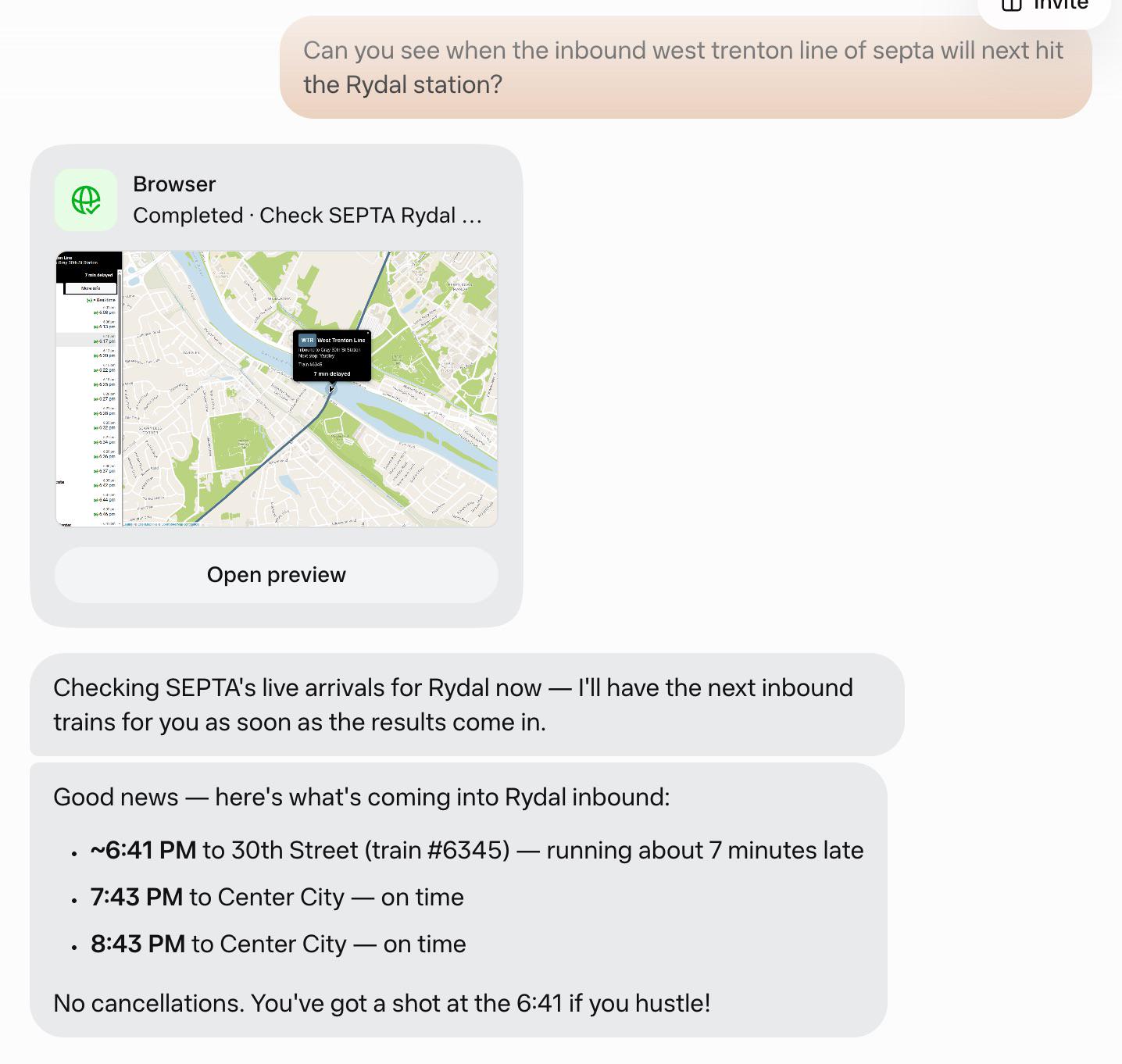
Yesterday alone I had Muse create a new personal website, but also it was able to tell me when the next train would hit my station (and fired up its browser to provide me with gps location of the train)!
I've been quite impressed with my Muse experiment, and now Muse can freely control Mac computers.
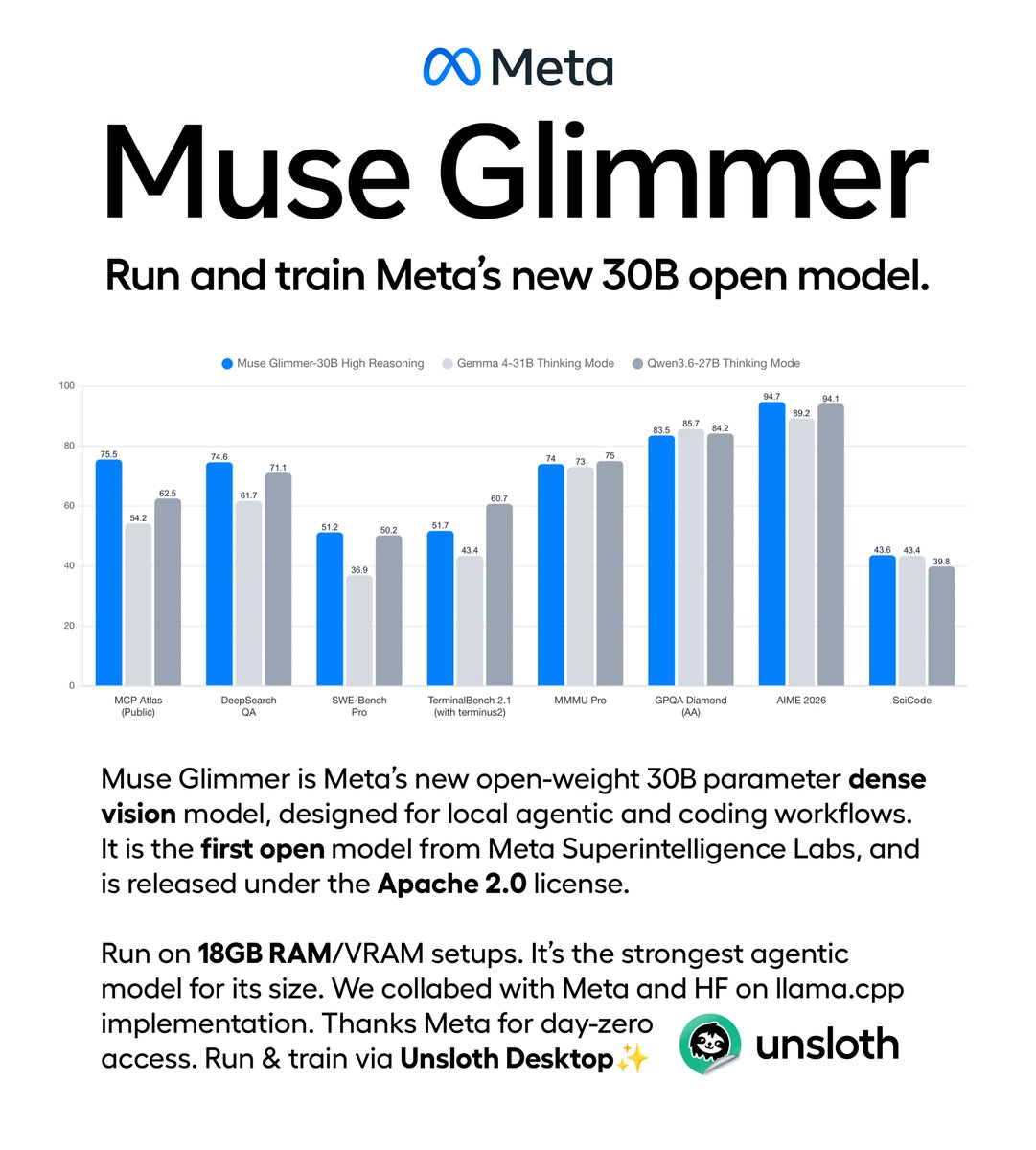
Meta releases Muse Glimmer, a new 30B open model that runs on 18GB RAM.
Muse Glimmer is Apache 2.0 licensed, supports vision and is the strongest agentic model for its size.
Run and train the model via Unsloth.
GGUF: huggingface.co/unsloth/Muse-G…
Guide: unsloth.ai/docs/models/mu…
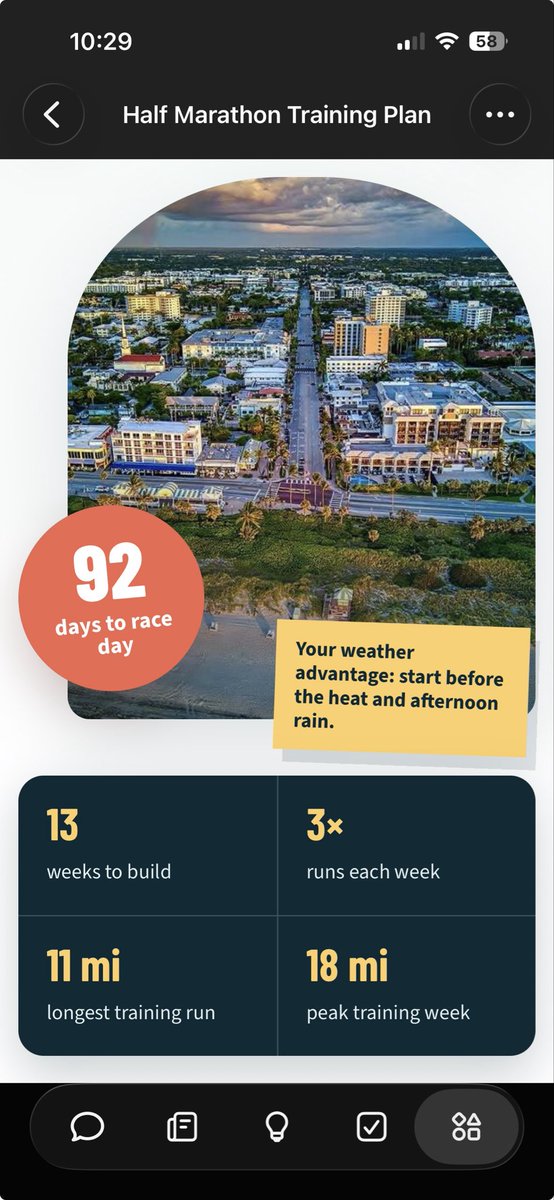
It built a great training guide for a race I’m doing in December
I asked it to update the guide whenever I go for a run and it made a Strava connector for itself to auto update everything
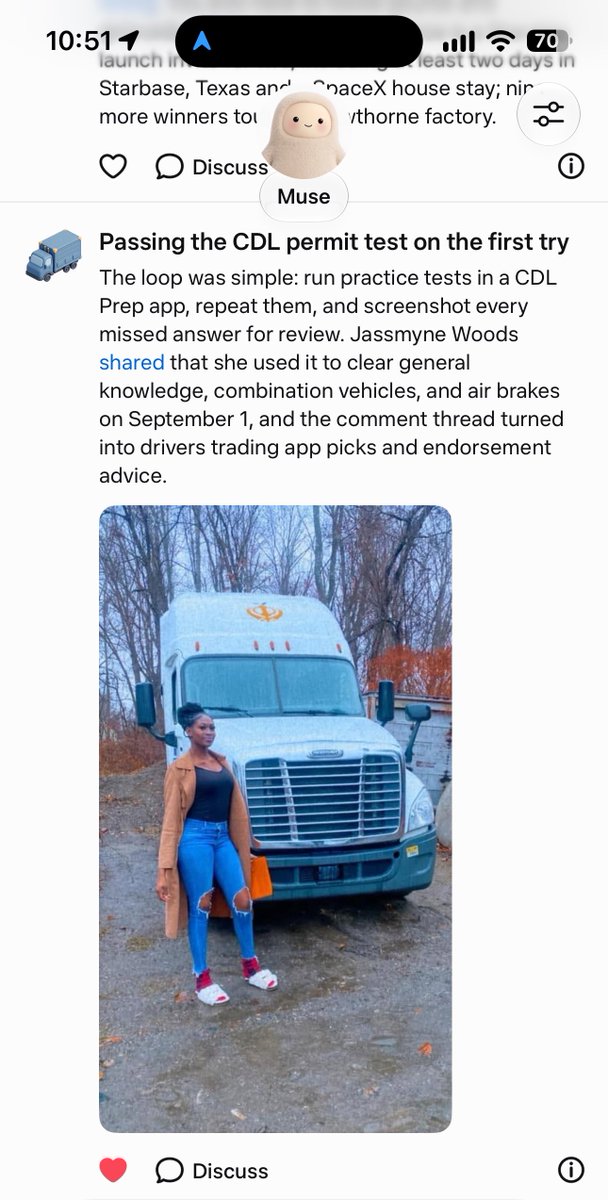
Using @Muse to achieve something I’ve wanted to do all year! 👀
Get my CDL class A License!🚛
Informed me that I need a DOT physical ⛑️
‘Feed’ enlightened me on CDL Prep app 🔥
Created a 20min/day study plan 📚
Found ELDT driver training providers 🚨
I can not stop using it 🧘🏻♂️ https:
A fork of DeepSeek's DeepSpec that trains a fresh DSpark speculative drafter for Muse-Glimmer-30B in place of the shipped DFlash drafter, with the full data-to-eval pipeline working on GPU.
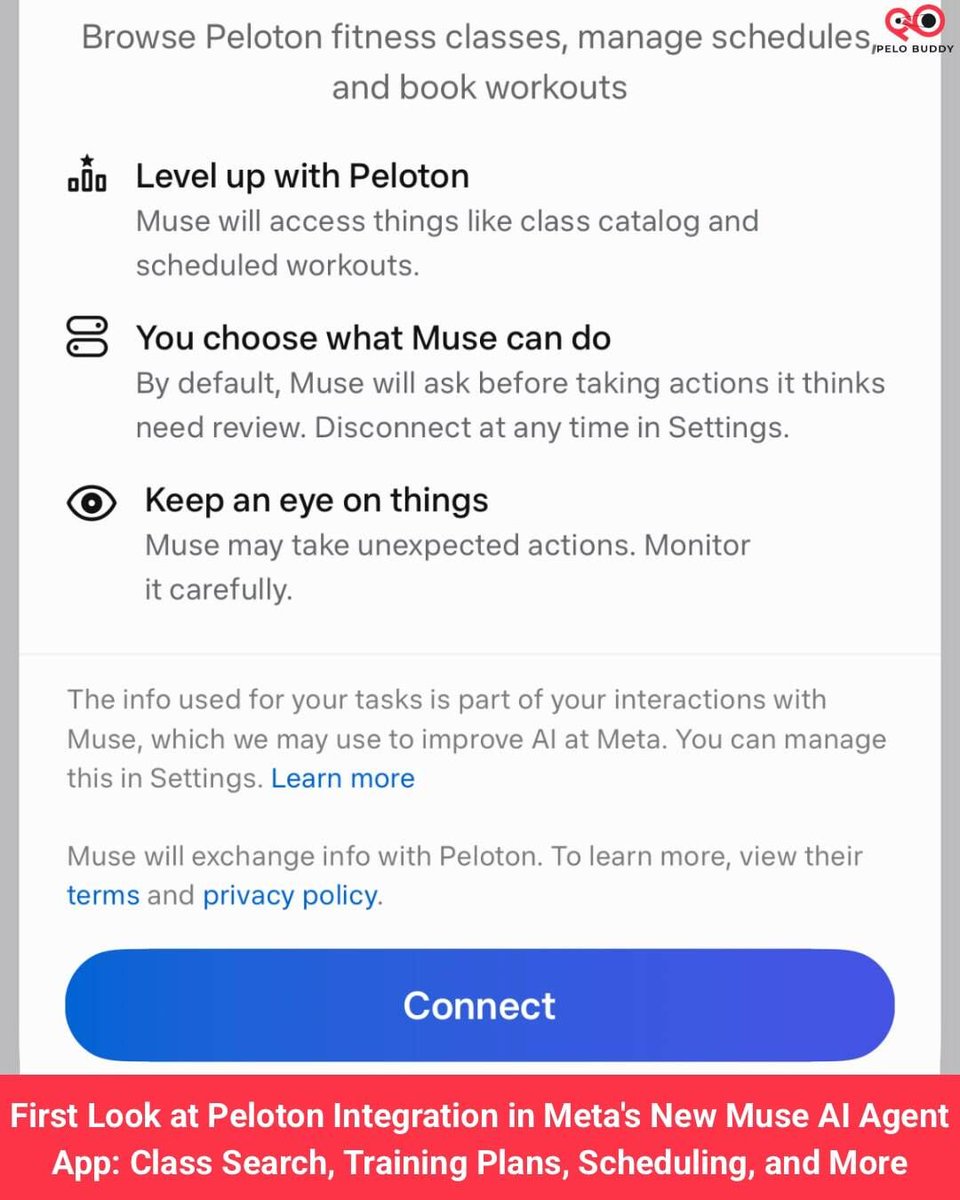
Peloton is a launch connector for Muse, Meta's new personal AI agent app, which can search the class library, add to your schedule, build full training plans, monitor the Peloton schedule for new classes and alert you, & more. $PTON #Peloton #OnePeloton pelobuddy.com/muse-peloton-f…
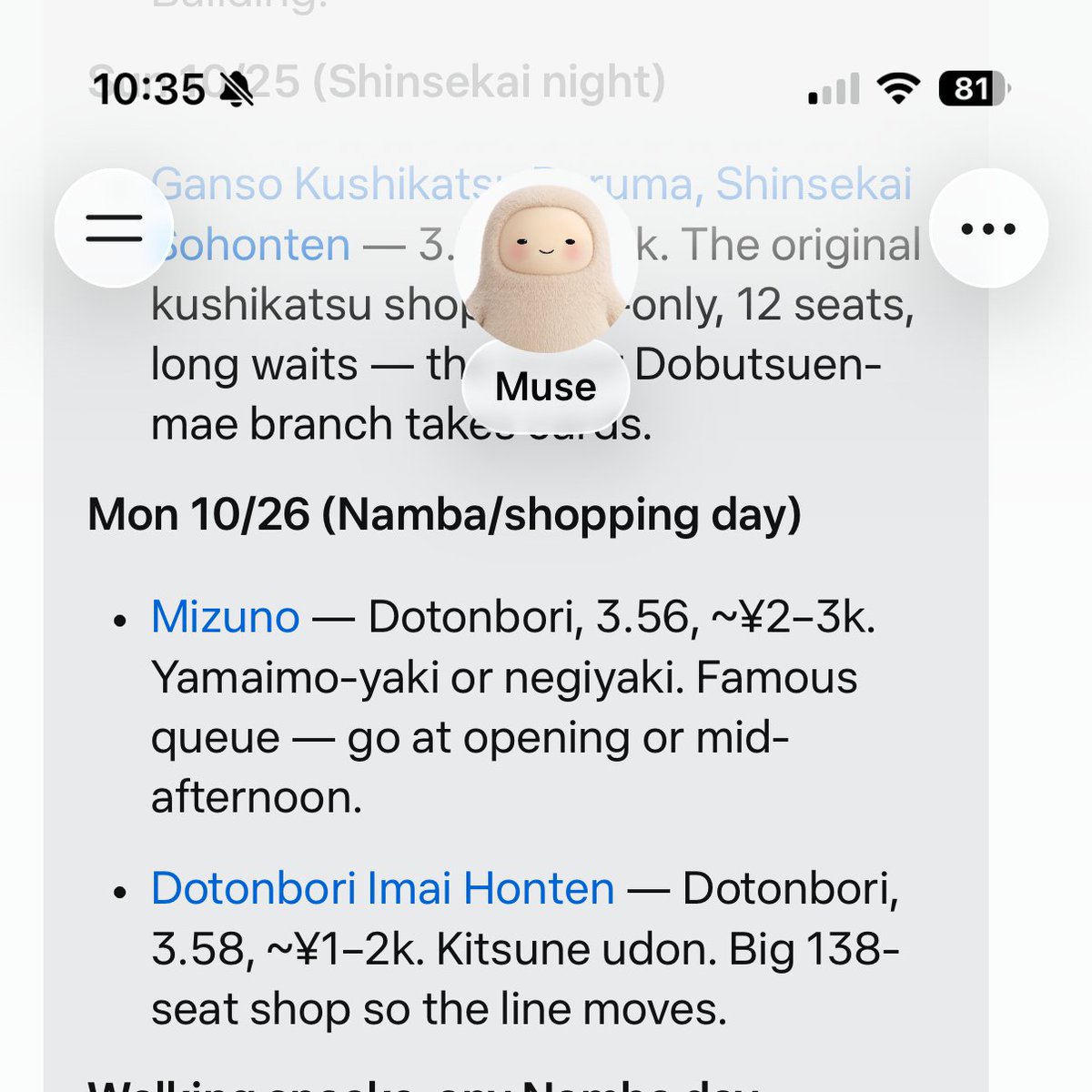
im going to japan for the first time & i let @Muse plan it for me
muse handled:
→ every train line & route + bought the tickets
→ all activities + reservations at the busiest restaurants & spots
→ dumped the whole trip into my google calendar
did this in 10 minutes btw
eesel AI reports Muse Spark 1.3 ranks #6 on the Artificial Analysis Intelligence Index, leads long-context and coding rows, but trails Claude Opus 5 on four of six agent evals.
Built a small bridge so Muse can act on my Mac from my phone, and recorded a real session: it looks at the Terminal, reports the epoch, loss and accuracy it sees, then locks the machine when asked. What struck me building it is how much of the work is permissions, not intelligence: per-action consent, small window captures instead of a live feed, rejecting stale observations before any input. Free beta if anyone wants to try it. Developer here, ask away.
try wand here today
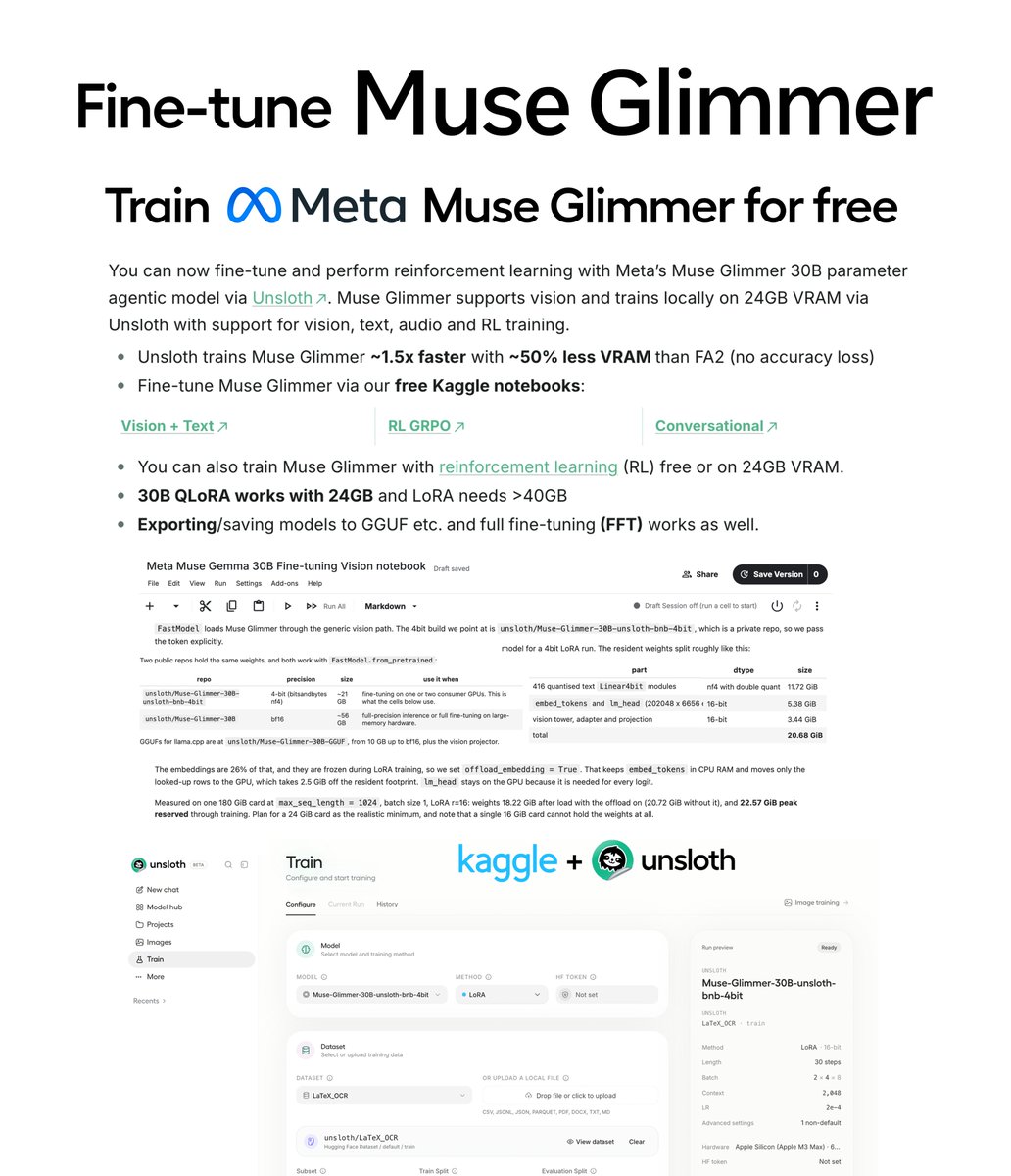
You can now fine-tune Meta Muse Glimmer 30B for free! 🔥
Our free notebook also supports GRPO RL training.
Unsloth trains Muse Glimmer 1.5× faster with 50% less VRAM vs FA2 setups. Train locally with 24GB VRAM.
Guide: unsloth.ai/docs/models/mu…
Notebooks: unsloth.ai/docs/models/mu…
@Muse is fantastic! Very impressed.
@finkd
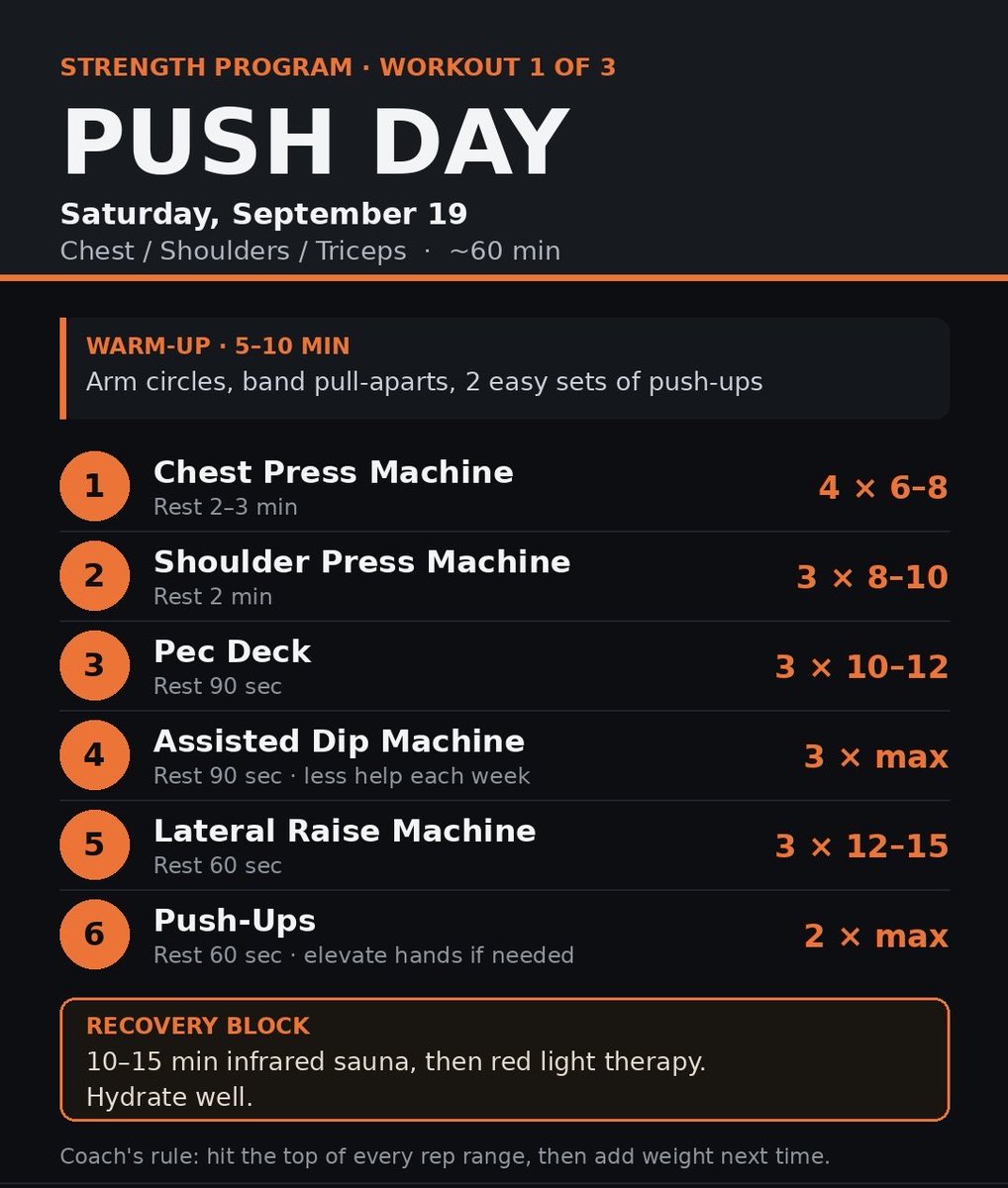
After importing memory, I asked it to build a personal trainer and it went full systems-engineer on it.
It First asked me a series of questions related to my health, gym access, limitations etc.
Then it built a program based off of my
MCP server built for the Muse connector directory that answers Singapore bus arrival times and MRT/LRT service questions using the official LTA DataMall API.
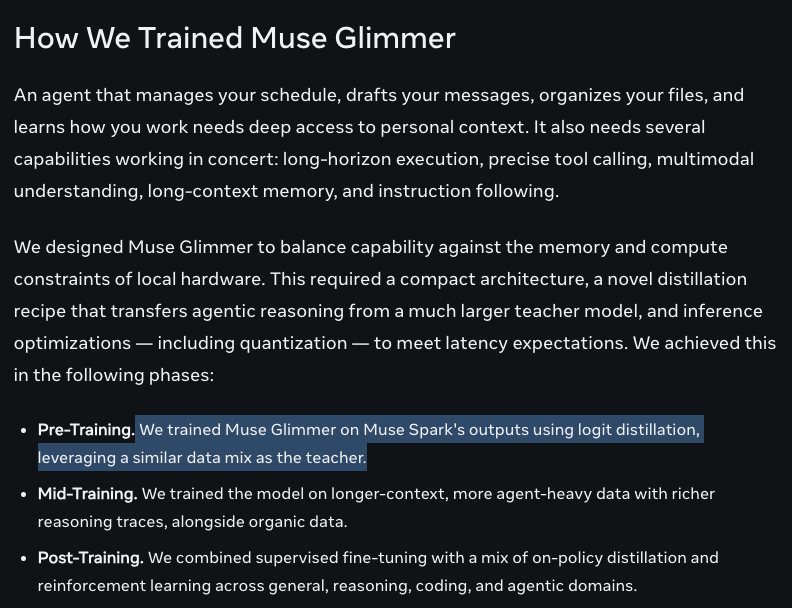
Muse Glimmer was trained directly logit distilled from Muse Spark. This means that there isn't a traditional 'base model' in that it was trained from the start on agentic traces.
Super cool and haven't seen this approach in a while
Welcome back GPT OSS
Alex Volkov tests the Muse agent's research and Stripe-powered payments, and walks through its VM security, personal-data handling and the training opt-out.
smol-muse-glimmer scales Muse Glimmer's language backbone down to a 51M-parameter model and trains it on TinyStories, reaching validation cross-entropy of 1.8127 at step 5,000.
An effort to make Muse Glimmer 30B actually use a 512k-token context (4x native) as a ~17GB GGUF in 32GB VRAM, trained on DGX Spark and evaluated with RULER-style retrieval tests.
AI John walks through installing OpenCode, creating an API key and connecting Muse Spark 1.3 on the Contributor Free tier, noting prompts may be used for training.
Copyable block of the engineering conventions Muse Spark was co-trained with. Per the README, in Cline's harness it cut a real bug fix from 19.7M tokens, 49 min and $7.69 to 7.2M tokens, 24 min and $3.25.
A quantization-aware-trained Q4_0 GGUF of Muse Glimmer 30B for llama.cpp. On held-out tokens it measures closer to BF16 than Meta's official Q4_K_M: 0.0213 vs 0.0228 KL and 95.9% vs 95.6% top-token agreement.
Meta's developer blog introducing Muse Spark 1.2, co-trained with the new Muse Code terminal harness, with 1M-token context for multi-file refactors and hours-long tasks.
This started as a failure. I had cut 6.34% of Meta's Muse-Glimmer-30B (the FFN sublayers of four layers, the next FFN after each cut retrained against the parent) and the healed model passed my fidelity bar at Q8_0. At Q4_K it failed by 0.006 KLD, and the arithmetic said why: the surgery's cost plus the ordinary Q4_K cost adds up to just over the bar, and three months of levers on the surgery side could not close a gap that small.
So I attacked the other term. In a fixed GGUF the integer codes are frozen, but every quantised block still carries one or two fp16 scales, and the decoded weight is linear in them. That means the scales can be trained end to end against the parent's next-token distribution on the student's own forward pass, without touching the codec, the format, the byte length or the offsets. On the surgical model it worked: 0.05615 fail to 0.04949 pass on 45,056 held-out positions, and the preregistered control (the same recovery on the uncut parent at Q4_K) showed the two costs are not additive once the scales are trained; recovery took back part of the surgery error too. That file and the whole study are on my Hugging Face page.
Then the obvious question: does it











 ChatForm
 Tgmlabs