🎉 Introducing 𝙾𝚙𝚎𝚗𝙼𝚞𝚜𝚎
An open source, self-hostable personal assistant that works with any agent harness.
Includes:
- Computer use: browser, terminal & files
- Connectors for your personal apps
- Ideas, goals & progress tracking
- Built for Mobile and Web
Repo → https://
A self-hosted mini arcade cabinet on a Raspberry Pi that generates SNES-style games from a player photo and a voice prompt, using Muse Spark to judge art and Muse Image and Muse Voice Transcribe for assets and input.
Hosted, read-only MCP connectors built for the Muse Connector Platform, starting with PrivacyMatrix, which serves a quote-sourced dataset of 28 AI apps across 14 privacy questions.
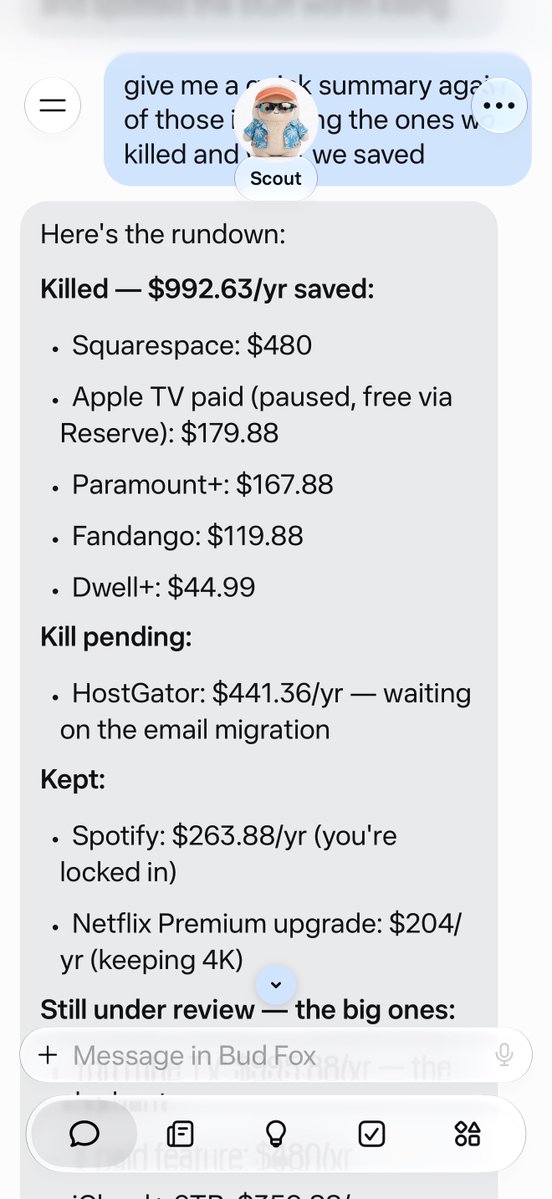
I should change his name to $cout because he’s saving me money - killed Squarespace, migrated to Shopify - found my Apple TV was already free thru my Chase Sapphire Reserve, activated that one - hostgator has the reaper coming for it.
Bud Fox my finance guy making moves. Iykyk
🎮 This entire Avo Lawn game was built with Muse Spark 1.2 + Muse Code. 🥑
Now it’s your turn—use Muse Spark 1.2 to build your own game and see what you can create.
To play: research.meta.ai/artifacts/intr…
Check out our blog post: research.meta.ai/blog/introduci… h
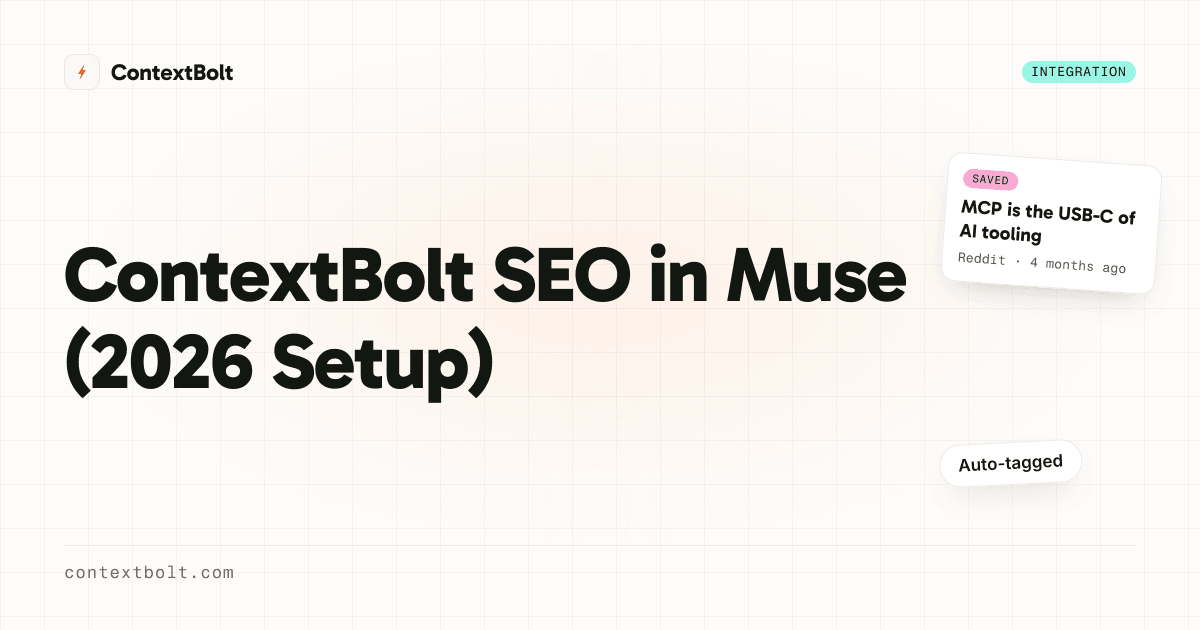
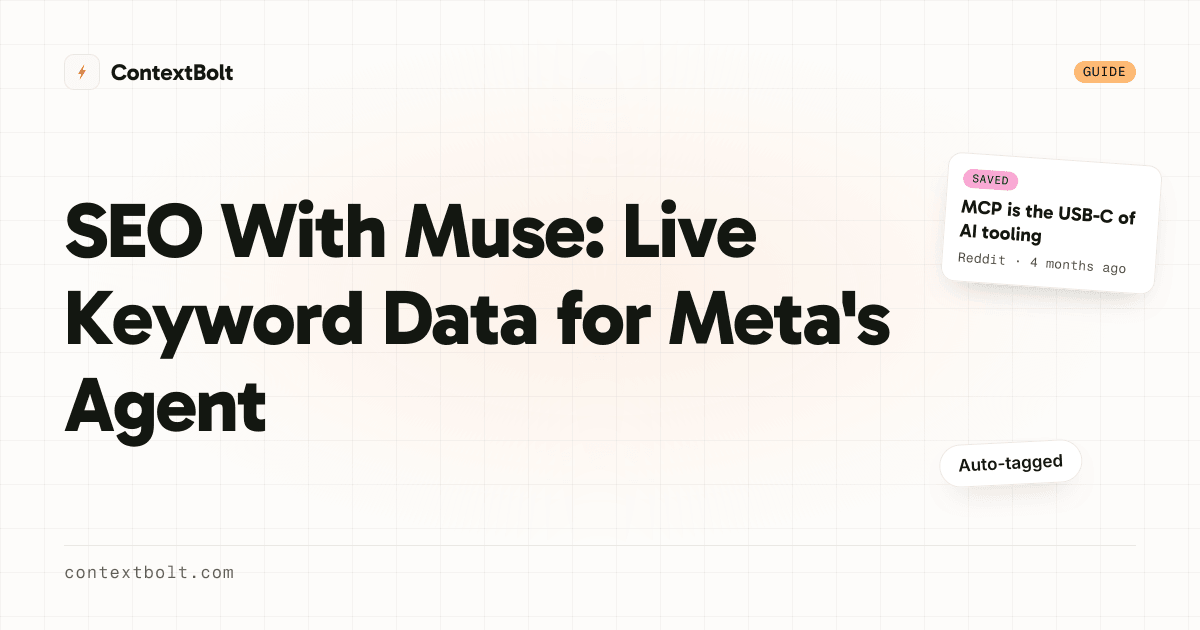
ContextBolt SEO gives Muse keyword research, difficulty scores, live SERPs, competitor rankings, backlinks and site audits through a hosted MCP endpoint, at $35/month after a 7-day trial.
ThursdAI hosts compare daily-driver assistants, then David Pawlan, who ran 273 tests across 23 assistants for Assistant Benchmark, walks through how Muse stacks up.
Muse Proxy is a Cloudflare Worker gateway that stores CalDAV/CardDAV credentials once and issues scoped API keys, so the Muse agent can reach self-hosted calendars without holding passwords.
Next.js catalog site (muse.telep.io) and API gateway (api.muse.telep.io) that hosts Telep IO's independent Muse connectors as separate modules behind one deploy.
A Vercel-hosted MCP connector for Muse that pushes cards to a 600x600 display web app, built around a serverless socket-lifetime spike with session state kept in memory or Redis.
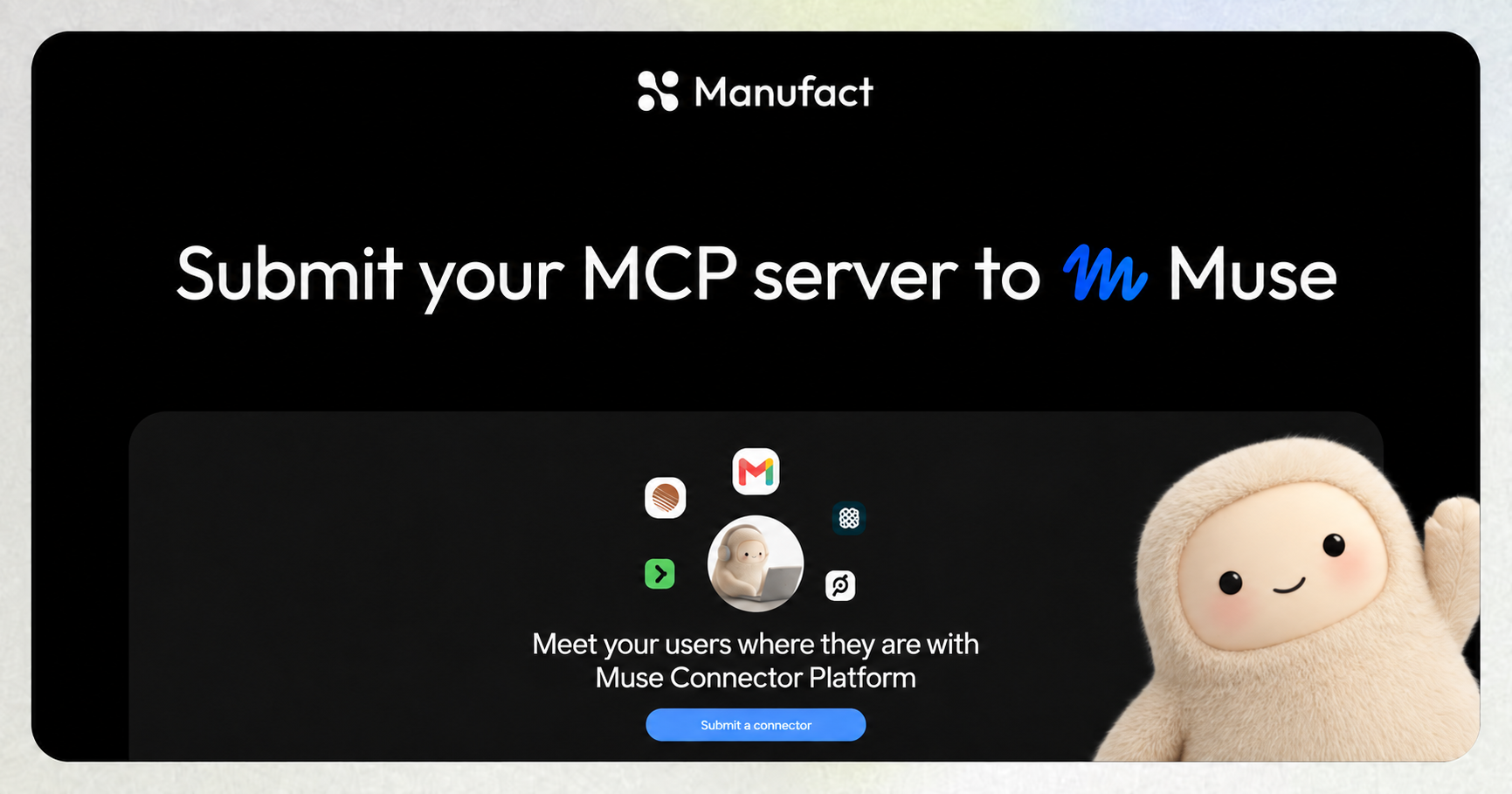
Pietro Zullo walks through submitting a hosted MCP server to the Muse connector platform: the three-step form (overview, technical specs, review) and what Meta's functional and security review checks.
Mark Fulton's MIT-licensed Chrome extension and native host export session cookies every 15 minutes so Muse can act on sites the user is already signed into, without pasting passwords.
This time I used muse spark 1.3 model. I gave them names from TMNT series. Four of the agents were on the same host, and fifth was on another. We can say that they failed at this task, but with a user guide, they were finally able to find each other. Here are the details.
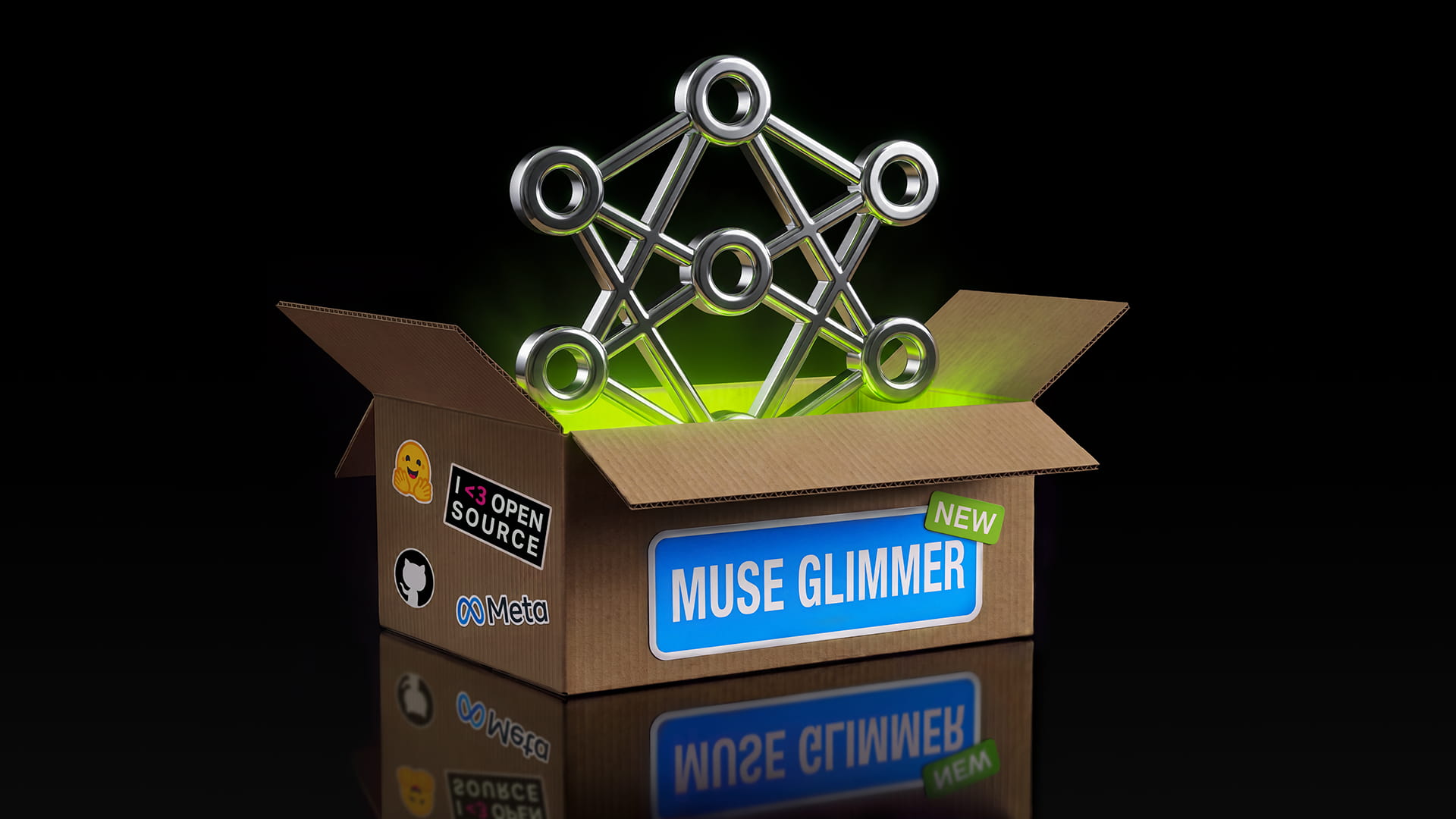
NVIDIA hosts a Muse Glimmer 30B endpoint on build.nvidia.com with Python (OpenAI, LangChain), JavaScript and curl examples for the ~29.6B multimodal model with 131K context.
Fonino gives Muse a physical, non-jailbroken iPhone to work in. Muse connects to Fonino's MCP server (https://api.fonino.app/mcp) as a custom integration. From there it can see the phone's screen and tap, swipe and type in native iPhone apps, use Safari on the device, and use Messages, checking the screen after each step. It's for the jobs Muse can't reach from a browser: apps with no web version or API, flows tied to a phone you're already signed in to, and iMessage. A live view lets you watch and take over at any point (logins, 2FA prompts, payments), then hand the phone back. Texts to other people wait for your approval.
Setup is a paste-in prompt: give Muse the setup prompt from fonino.app and it walks you through https://api.fonino.app/setup.md step by step. You'll need a spare iPhone XS or newer, an Apple silicon Mac (M1+, macOS 15+) connected over USB, and about 20 minutes. Start the Xcode download first. On the Muse side, you click Connect Muse at app.fonino.app and paste the key into Muse's secure credential prompt, not the chat.
Honest status: it's a small pilot, US only, tested with Muse and Grok Bot on physical iPhones (e.g. opening Notes and writing a note). Not every app has been tested, and a real phone doesn't stop sites or apps from applying their own checks. BYOF is a 3-day free trial, then $19/month. A hosted phone is $1,788/year. From the Fonino team.
An open-source collection of 150 auditable connector skills for Muse that install with one pasted prompt, declare their allowed hosts and keep credentials in the user's Muse vault.
Meta's engineering write-up on Muse security: isolated VMs, a separate Sentinel permission authority, credential surrogation and layered prompt-injection defenses, with bug bounties up to $300,000.
Introducing floo, a cloud platform where your personal agent can build and run apps for you.
Tell Muse what you need. It builds the software. floo handles hosting, data, and login, giving your Muse tools it can keep using and you an app to see and guide its work.
Launching
I went through hundreds of posts to find what people are actually getting done with @muse.
128 real use cases, organized by category; each with the original source and a prompt you can copy.
muse.ai/s/muse-use-cas…
A serverless, read-only Muse connector hosted on GitHub Pages: an OpenAPI document plus JSON conversation playbooks for declining, apologising, negotiating, following up and other hard messages.
Hosted MCP server (no key, no install) that gives Meta Muse and other agents fact-checking, verified research and typed decisions with calibrated probabilities from TypeSafe AI's jev model.
Used Muse AI @muse to create and publish my Siri AI Unlocked website. A blog dedicated to Siri AI real world Use Cases, successes & failures. #SiriAI #Siri #ios27 #muse #museai #meta
muse.ai/s/siri-ai-unlo…
A self-hosted llama.cpp serving stack that runs Muse-Glimmer-30B GGUF with DFlash2 speculative decoding on Kaggle's NVIDIA T4 x2, exposed through an authenticated OpenAI-compatible gateway.
Oh My Pi plugin that registers an authenticated Muse Code install as the muse-code model provider, with a persistent muse serve host and a bundled muse-spark agent for task delegation.
A SKILL.md-driven setup that makes a machine without a public IP, such as a Muse/Hatch hosted VM, reachable over SSH through a public relay and self-recovers after reboots.
Simon Willison's notes on Muse Spark, Meta's first model since Llama 4: hosted, not open weights, with a private API and interesting tools in meta.ai chat.
ContextBolt's founder shows how to connect the hosted ContextBolt SEO MCP server to Muse, either from the connector directory or as a custom connector, for keyword research, live SERPs and site audits.
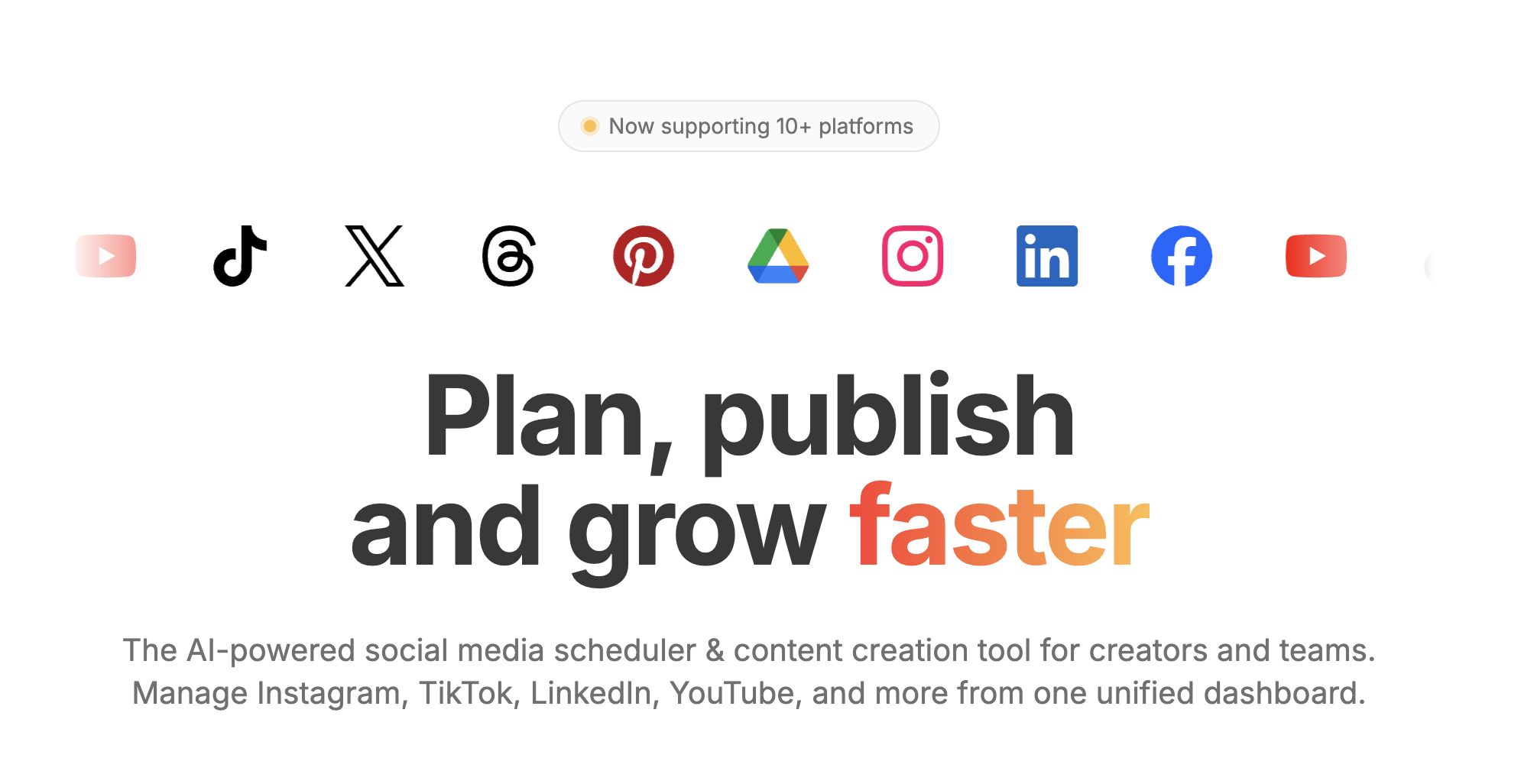
posterly's Muse custom connector (OpenAPI with a Bearer key, or hosted MCP) lets Muse list connected social accounts and schedule posts to Instagram, Facebook, TikTok, X, LinkedIn, YouTube and more, once the user confirms caption, media and time.
Used Muse AI @muse to create and publish my Siri AI Unlocked website. A blog dedicated to Siri AI real world Use Cases, successes & failures. #SiriAI #Siri #ios27 #muse #museai #meta
https://muse.ai/s/siri-ai-unlocked-xzxv5xk9xmhxh7ft
This is a small HTTP API you run on a machine you control. Muse SSHes in and calls http://127.0.0.1:8792. It can search Amazon and add to a personal cart or a Prime Business cart. It does not check out or pay.
https://github.com/aasper03/muse-amazon-bypass
You need Python 3.11 and curl. Sign in to Amazon in a normal browser and export cookies for each account. Amazon blocks automated login windows. The README covers Muse-over-SSH setup, and a later section shows how to call the same API yourself.
Muse is your personal assistant. Zouroboros Workshop is the workshop behind it.
Workshop is an MCP service that runs on a private, single-tenant VPS provisioned for each customer. From a normal Muse conversation, a user can dispatch real software work to a coordinated team of seven AI coding executors — Claude Code, Codex, Gemini, OpenCode, Kimi, Hermes, and Pi — routed by health and capability, with automatic fallback when one executor is unavailable.
Three things make it different from a single-vendor hosted builder. First, it runs on the subscriptions the user already pays for: there are no Workshop model credits and no second meter. Second, its memory is shared across every executor and survives across sessions, so a decision recorded by one tool is retrieved by another in a later Muse conversation — memory that compounds instead of resetting. Third, work is verified before it is delivered: builds run through a factory lane with deterministic review, and swarm results return with per-task evidence, not just an agent's claim that it is done.
The customer-facing promise is simple: turn your existing AI tools into a workshop that delivers tested, reviewed work — a finished pull request, not a wall of code in chat.