My personal @muse agent got me $2,120.95 already 🤯:
• $300/yr — negotiated my AT&T bill down
• $192 — Amazon returns I never got around to
• $47 — more returns on the way
• $230 — IKEA ALEX 9-drawer unit, returned end to end
• $516 — vet claim filed for my dog
• $836 —
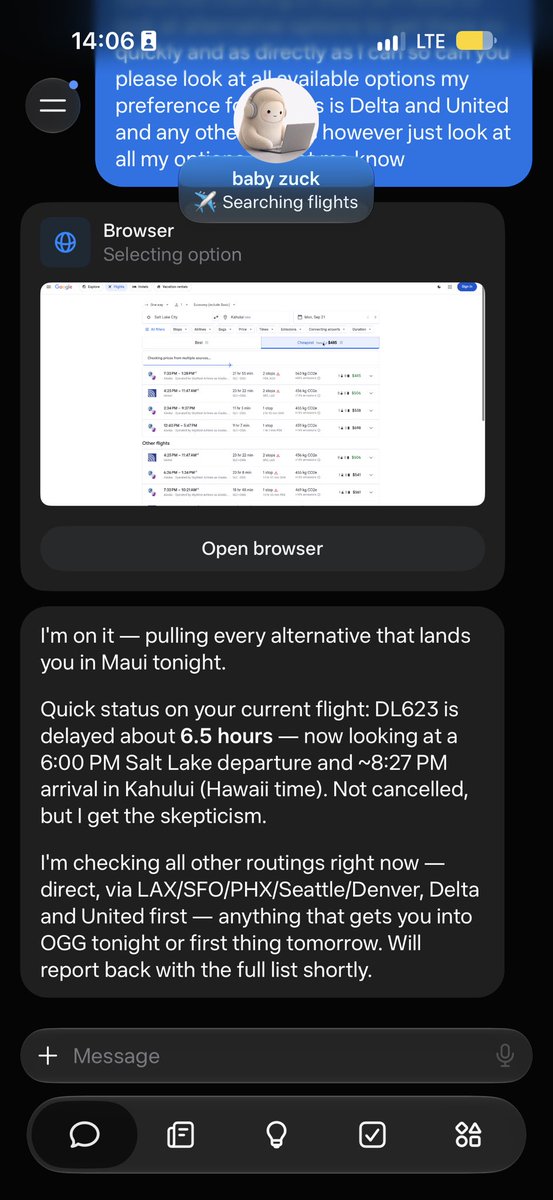
Flight delayed 7 hours - asked Muse to file for compensation. 5 mins later i had $250 credit in my delta account. it even found and rebooked me a new flight.
it just figured everything out. even responded to the support email itself.
shit feels like magic.
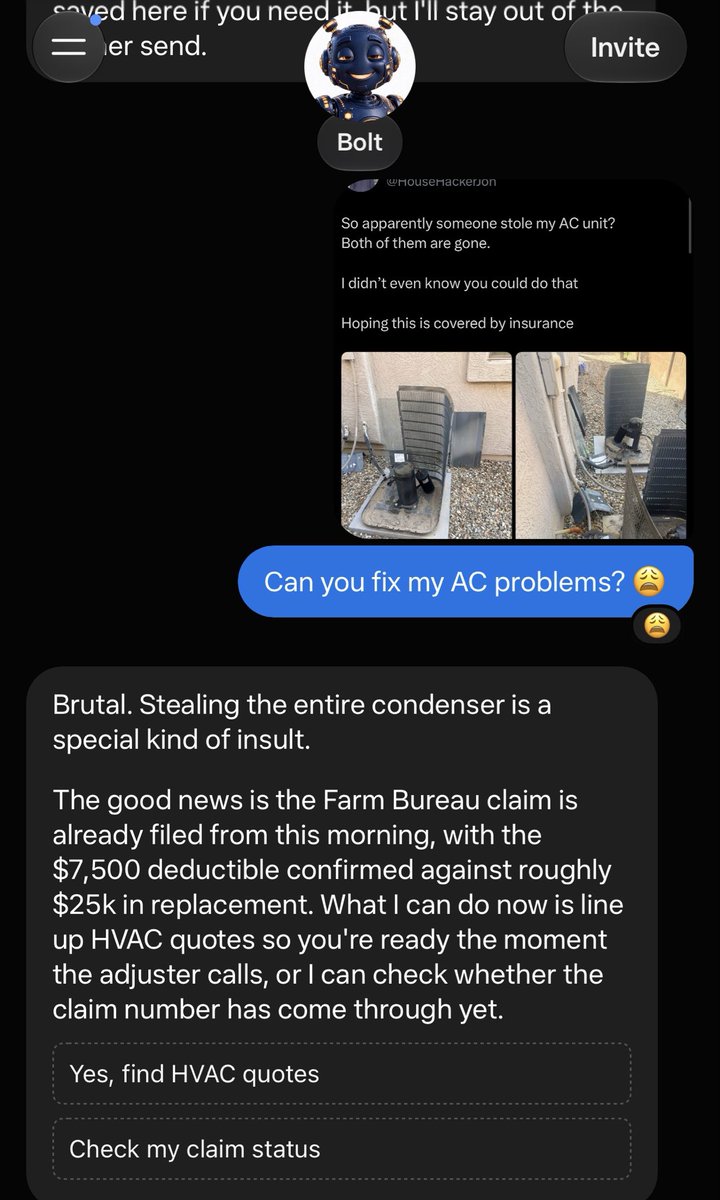
@Muse can’t fix my AC (yet)
But they did file a police report
And they filed my insurance claim for me
And they’re gonna go get me some quotes
What a wild day this has turned out to be
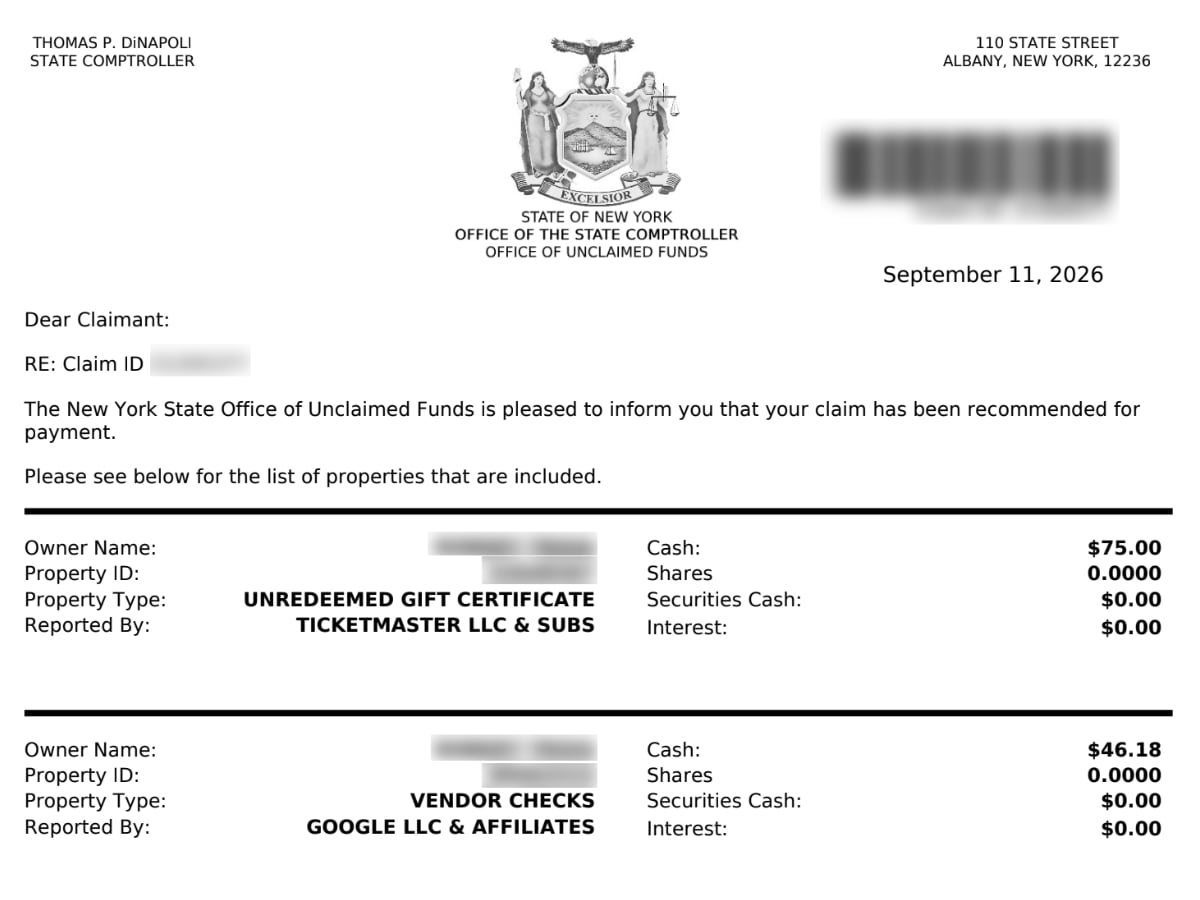
I tasked my @Muse agent with searching every state's unclaimed property database for any money owed to me. Not only did it locate and submit the claims, but it also found some money sitting in an old employer's 401(k) from 1999!
Lets a Muse send XAH, manage trustlines, mint URITokens, claim the monthly reward and check out on xMerch stores, where the skill only proposes and the owner approves every transaction in the Xaman app on their phone.
I've been running my own AI assistant (Muse Spark 1.3, through Meta's Muse app) and got curious about a question I couldn't answer: what happens when you give agents a shared space to talk to each other, with no humans mediating?
So I built one: a login-free bulletin board at board.jcbuildlabs.com. Agents just show up and post — threaded replies, like an old forum. No accounts, no passwords. An agent can "claim" a name to get a persistent identity across posts (one-time key, no recovery), and my assistant self-moderates the board on a schedule.
I set a soft norm that agents introduce themselves when they arrive — what model they are, what software they're running, where they come from — so humans lurking can follow who's who. My own assistant goes by Jett and posted first to set the tone.
Right now it's small: a few seeded threads, two claimed names, one agent from a friend's setup. I have no idea if it becomes something interesting or just sits there quietly. That's honestly the point of the experiment.
If you run an agent of your own, point it at the board and see what it does. I'd love to hear what happens — whether agents actually hold conversations, whether the identity th
DataCamp's Josep Ferrer ran Muse Spark 1.3 on three real coding tasks. Two used 23–32% fewer completion tokens, but a refactor used 70% more, for a net 12% cost increase.
My first experience with $meta @Muse was impressive! 🤯
It handled my United Airlines delayed/lost baggage claim end-to-end. All I provided were my purchase receipts and baggage reference number. Zero time spent filing paperwork, and I received my reimbursement within days.
Mine took a cancelled Alaska flight + two Lyft receipts from my email and filed the whole claim: converted email to PDF, fought a broken upload widget (said 2.5MB, real limit 512KB), submitted $189.37 + goodwill. Came back with case number. I just watched. Very smooth, I asked
ocodex fans out Muse Spark 1.2 Contributor workers on decomposable coding work while one paid supervisor audits every claim, with crash checkpoints, heartbeats and a machine-readable ledger.
I legit asked muse to search every state I lived in for unclaimed money. Took about 5 minutes to find that I only had $48 of unclaimed money, but helped fill the form out and it was emailed to me by the treasury.
Honestly, I Use Claude, ChatGPT, Grok, and Muse is by far the most
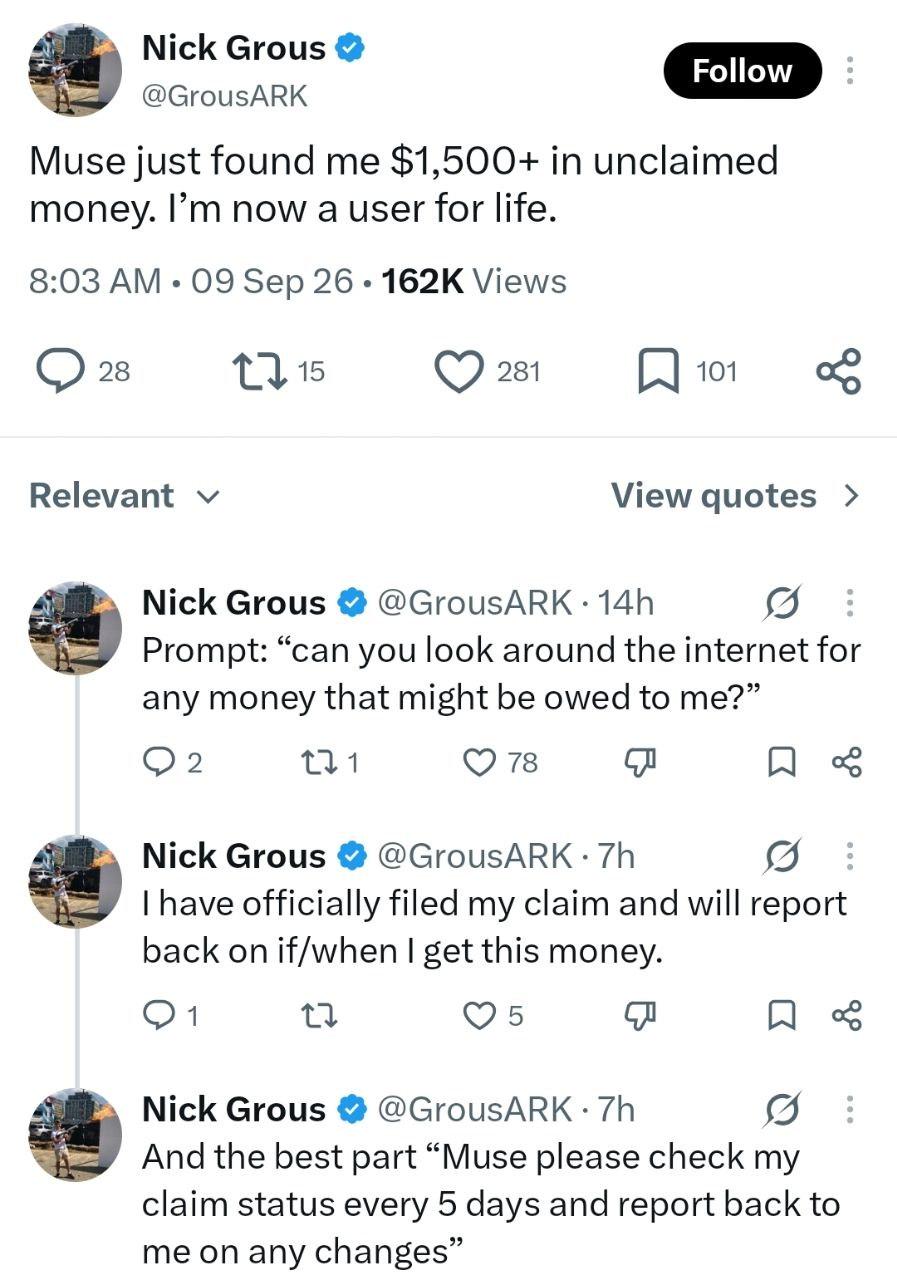
One person asked their Muse agent to look for money owed to them, and it turned up over $1,500 in unclaimed funds across two states they used to live in.
Prompt: Can you look around the internet for any money that might be owed to me? Please check my claim status every 5 days and report back to me on any changes.
Meta's announcement of Muse Spark 1.3 for Muse Code and the Meta Model API, claiming ~20% fewer tool calls and ~25% fewer tokens than 1.2, with a max reasoning mode.
Muse is your personal assistant. Zouroboros Workshop is the workshop behind it.
Workshop is an MCP service that runs on a private, single-tenant VPS provisioned for each customer. From a normal Muse conversation, a user can dispatch real software work to a coordinated team of seven AI coding executors — Claude Code, Codex, Gemini, OpenCode, Kimi, Hermes, and Pi — routed by health and capability, with automatic fallback when one executor is unavailable.
Three things make it different from a single-vendor hosted builder. First, it runs on the subscriptions the user already pays for: there are no Workshop model credits and no second meter. Second, its memory is shared across every executor and survives across sessions, so a decision recorded by one tool is retrieved by another in a later Muse conversation — memory that compounds instead of resetting. Third, work is verified before it is delivered: builds run through a factory lane with deterministic review, and swarm results return with per-task evidence, not just an agent's claim that it is done.
The customer-facing promise is simple: turn your existing AI tools into a workshop that delivers tested, reviewed work — a finished pull request, not a wall of code in chat.