I wanted to try something quick with Muse Spark 1.3, so I had it build this pirate platformer. It was incredibly fast and worked flawlessly at one-shot! Now I’m enhancing the artwork, sprites and adding new levels 😊This is such a fun coding model, it just works, fast and cheap!
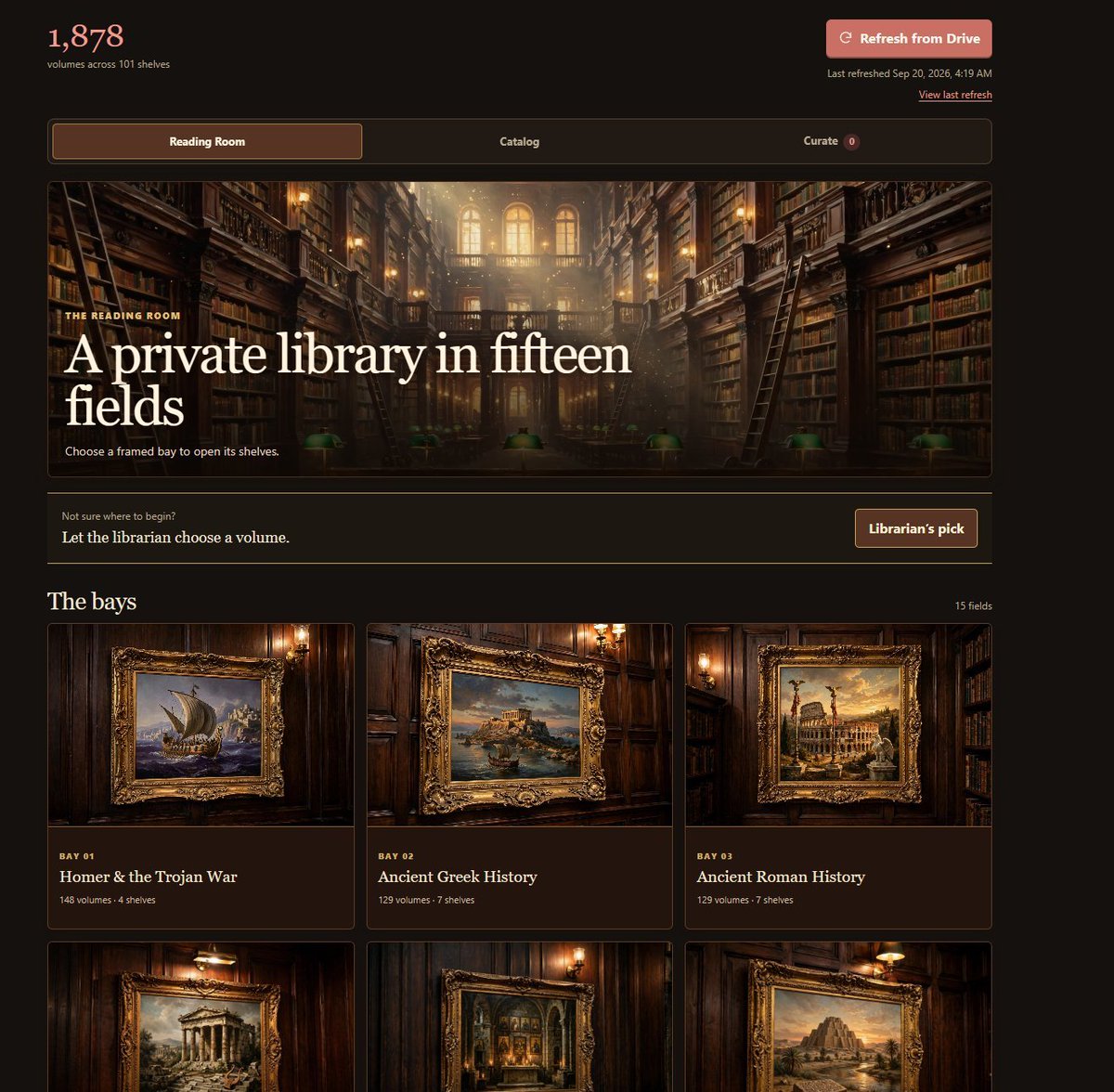
Muse built me a private library for the e-books and articles in my Google Drive. Everything is organized by topic, and each section opens onto its own subcategorized shelves. Each book opens like a real book and is readable in-app
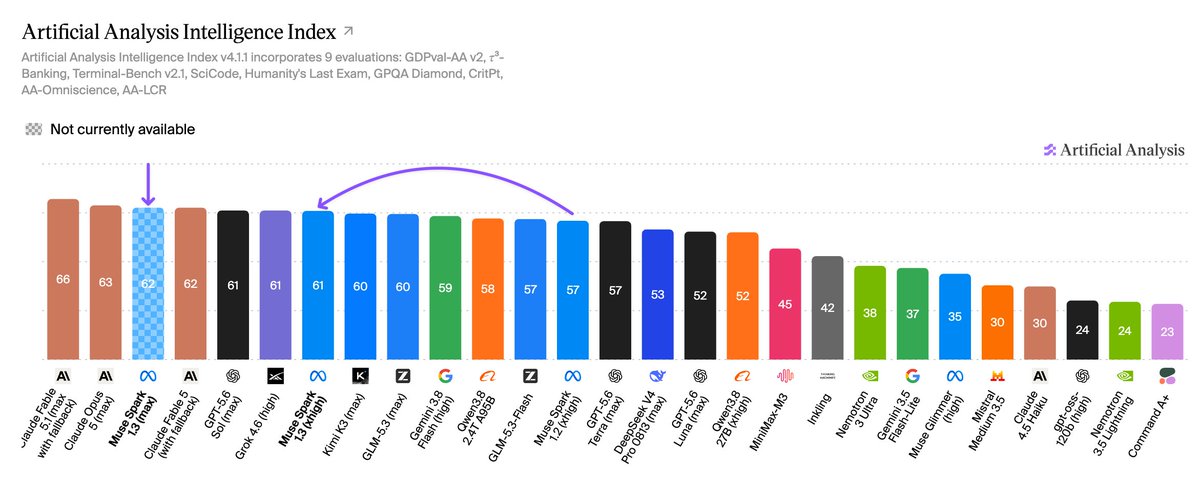
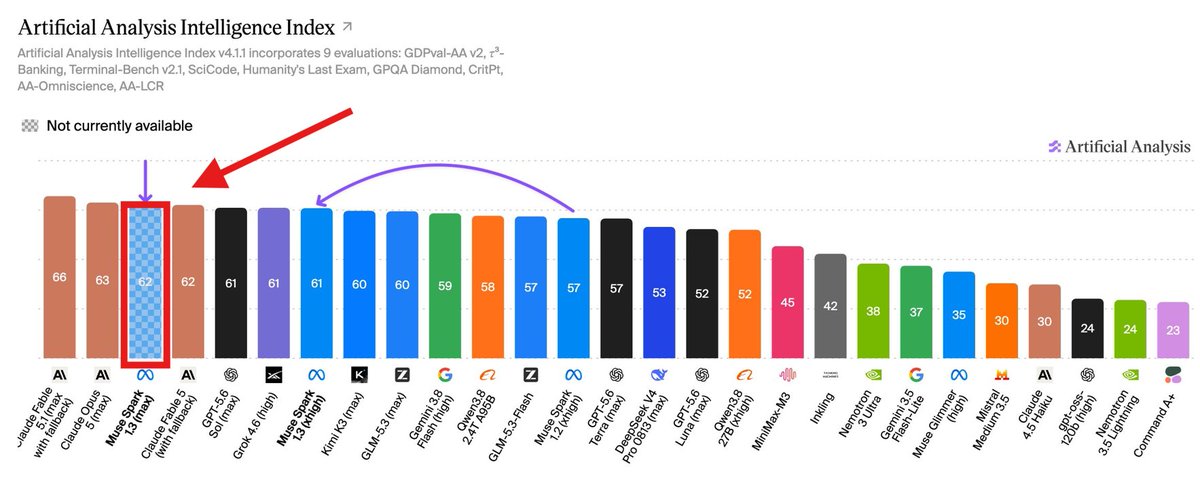
Meta has released Muse Spark 1.3, their fourth Muse Spark model release in five months. Muse Spark 1.3 (max), which is in limited preview for Meta’s partners, scores 62 on the Artificial Analysis Intelligence Index, behind only Claude Fable 5.1 and Claude Opus 5. The variant
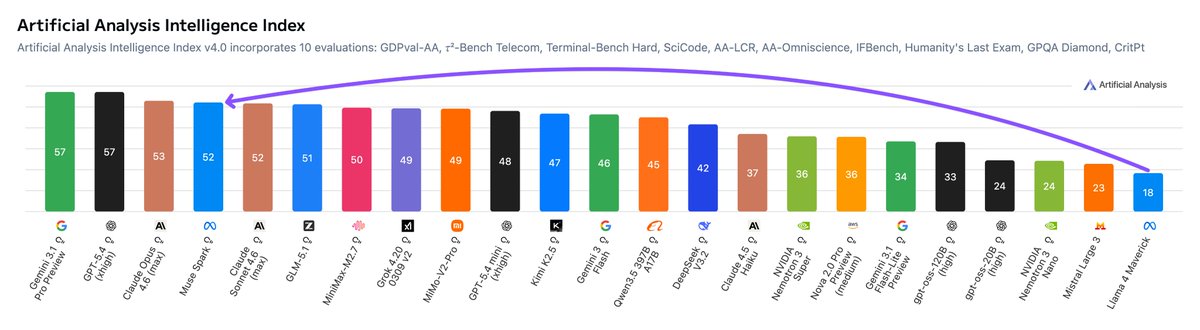
Meta is back! Muse Spark scores 52 on the Artificial Analysis Intelligence Index, behind only Gemini 3.1 Pro, GPT-5.4, and Claude Opus 4.6. Muse Spark is the first new release since Llama 4 in April 2025 and also Meta's first release that is not open weights
Muse Spark is a new
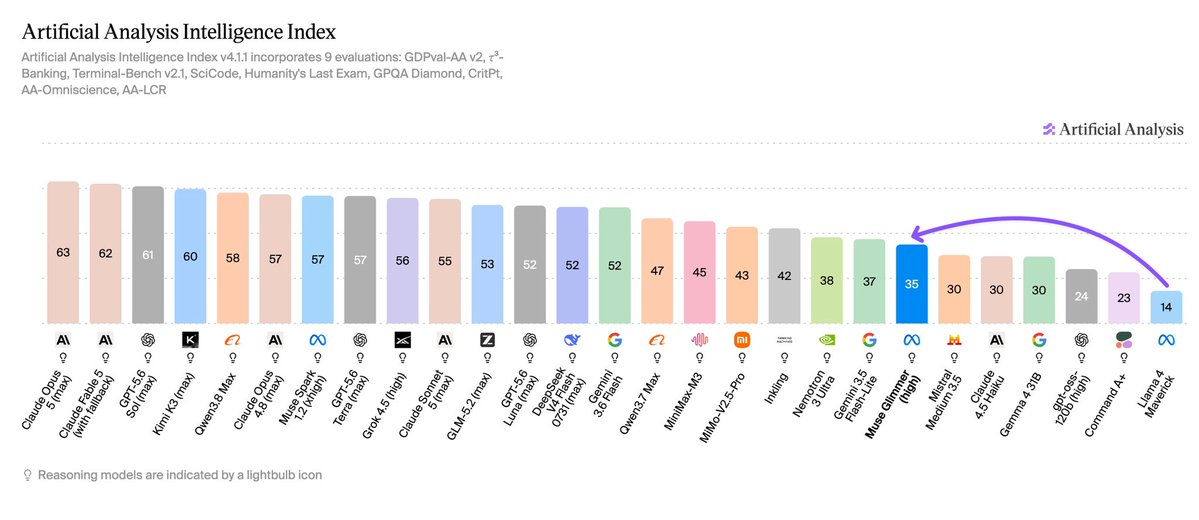
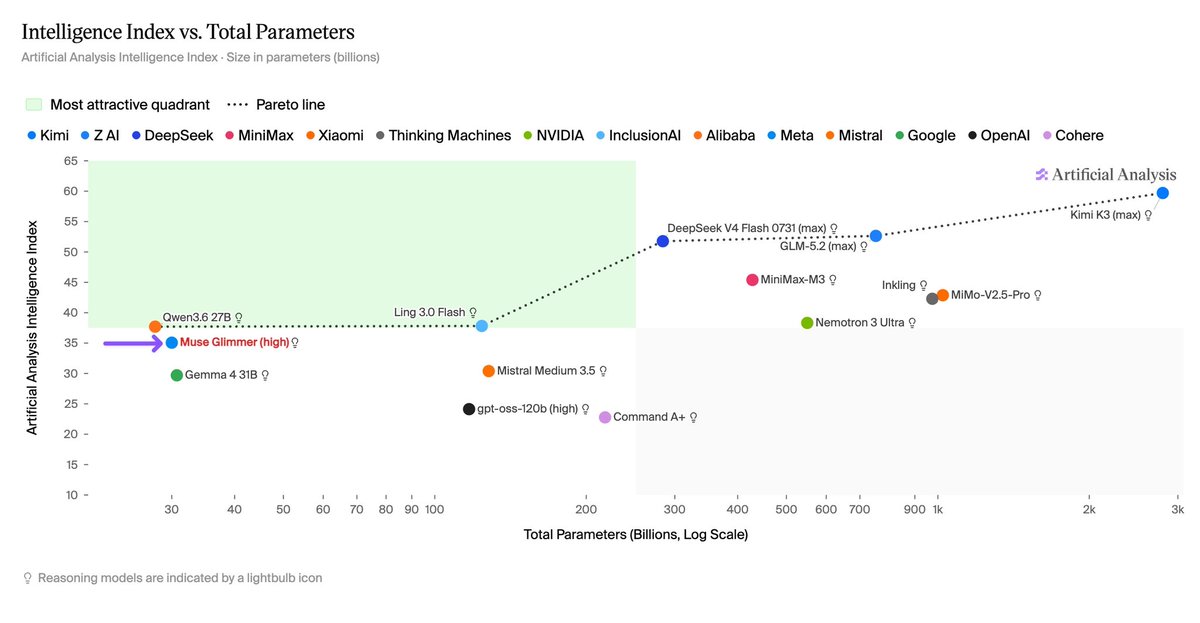
Meta returns to open weights: Muse Glimmer, its first open-weights release since Llama 4, scores 35 on the Artificial Analysis Intelligence Index. It is a 30B-parameter model, and the first from Meta to be released under Apache 2.0
Muse Glimmer (high) arrives 16 months after
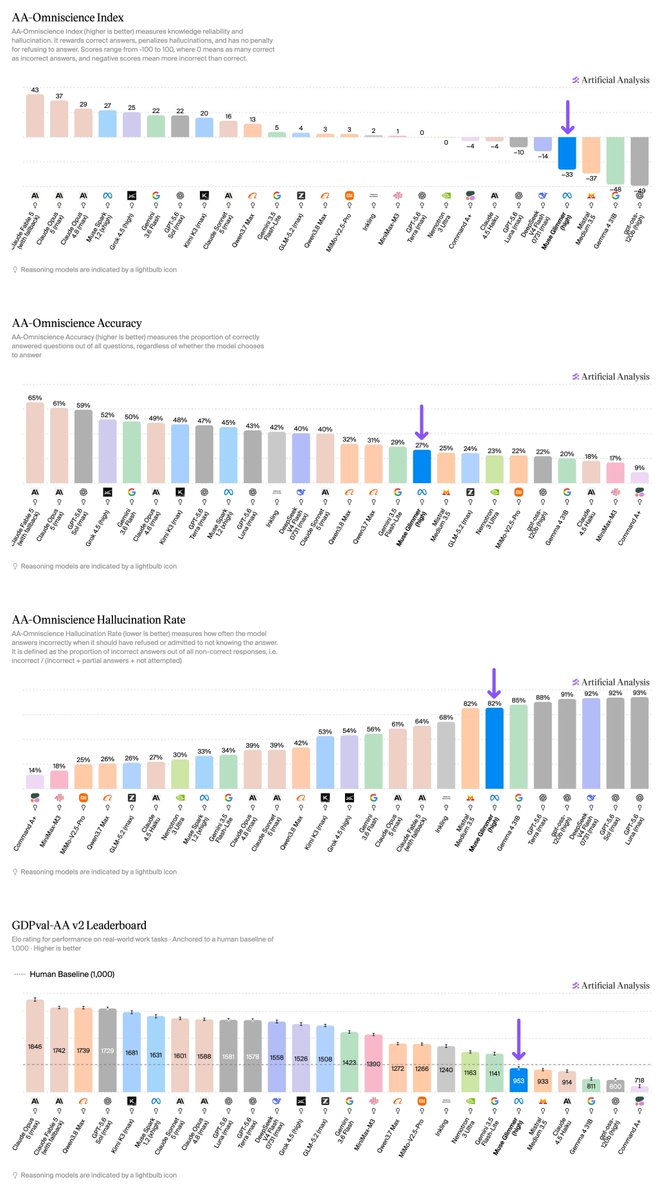
Muse Glimmer's gaps against its class concentrate in agentic evaluations: 953 Elo on GDPval-AA v2 against 1141 for Qwen3.6 27B (Reasoning), 1141 for Gemini 3.5 Flash-Lite, and 1004 for Kimi K2.5 (Reasoning), with Terminal-Bench v2.1 (52%) also behind Qwen3.6 27B (61%). The
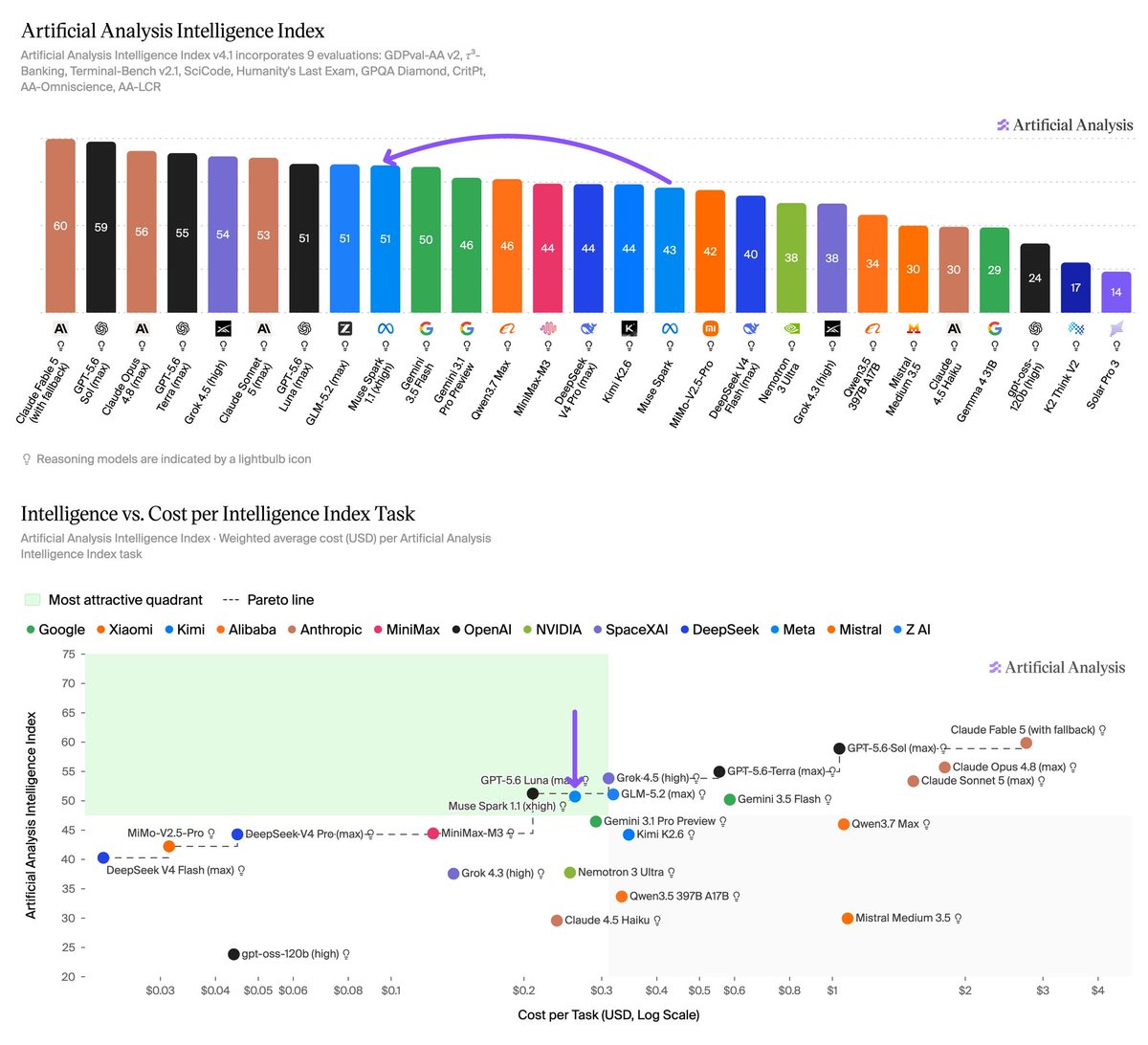
Last week the Intelligence Index vs Cost Pareto frontier moved out substantially. Claude Fable 5.1, Muse Spark 1.3, and GPT-6 Astra each set a new point in efficient intelligence
Link to analysis: artificialanalysis.ai/#intelligence-…
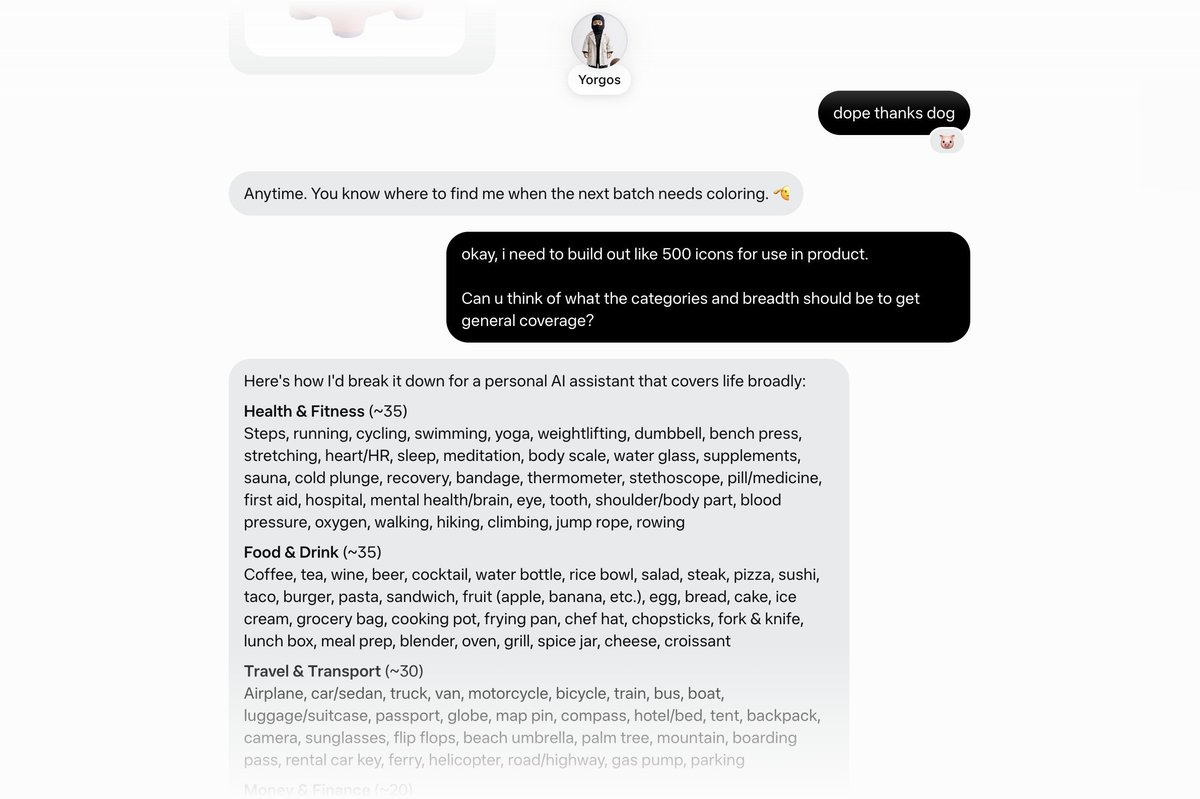
For the icons, we discussed it at length in a sidechat and my Muse made me the initial list, helped with prompts, and the approach for expansion.
We rendered them right there in chat with Muse Image, and he made me a catalog Artifact to manage them and add notes for re-runs.
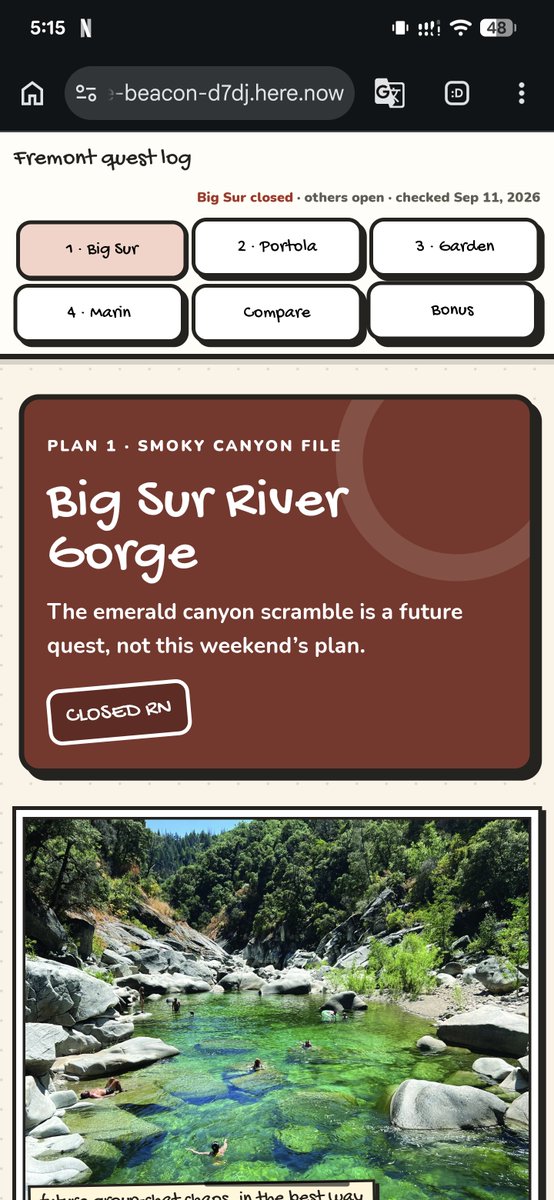
Had it plan me a day trip & it built me a little interactive quest log with maps, swim spots and everything
cool little artificact🌲
@adamludwin
bronze-beacon-d7dj.here.now
eesel AI reports Muse Spark 1.3 ranks #6 on the Artificial Analysis Intelligence Index, leads long-context and coding rows, but trails Claude Opus 5 on four of six agent evals.
Meta’s Muse Spark 1.3 just scored 62 on Artificial Analysis’ Intelligence Index.
That ties Claude Fable 5, but Muse costs 8x less for input and nearly 12x less for output.
It also scores above GPT-5.6 Sol, Grok 4.6, Kimi K3, and Gemini 3.8 Flash.
Meta is suddenly in the top
MindStudio notes Muse Spark 1.3 topped DeepSWE at 75.4 and placed third on Artificial Analysis, yet in a hands-on game-clone test produced "a cube shooting at other cubes."
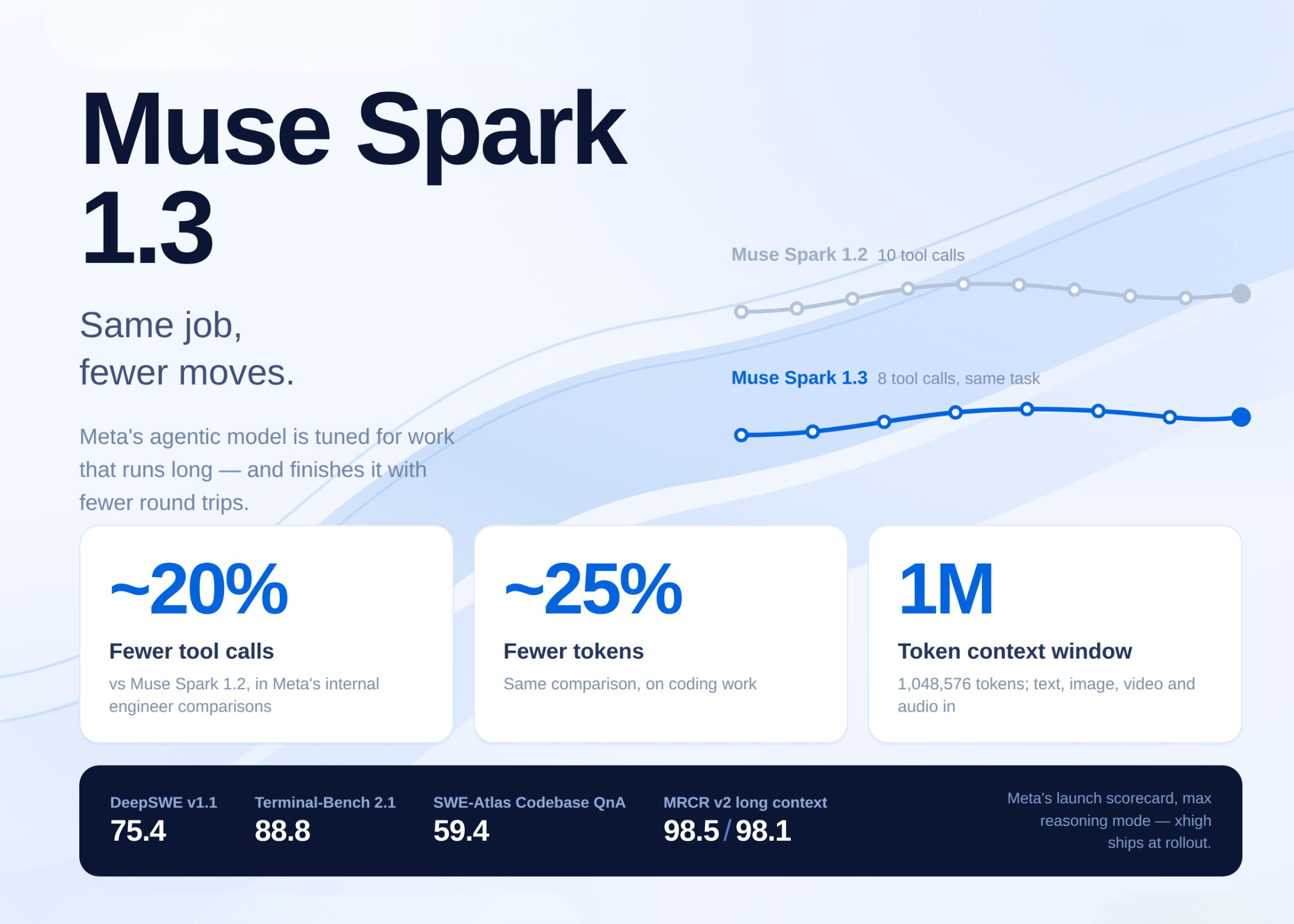
MarkTechPost summarizes Meta's numbers: 75.4 on DeepSWE v1.1 (Opus 5 74.0, GPT-5.6 Sol 72.7), 88.8 on Terminal-Bench 2.1, and 98.1 on MRCR v2 at 512K–1M context.
A self-hosted mini arcade cabinet on a Raspberry Pi that generates SNES-style games from a player photo and a voice prompt, using Muse Spark to judge art and Muse Image and Muse Voice Transcribe for assets and input.
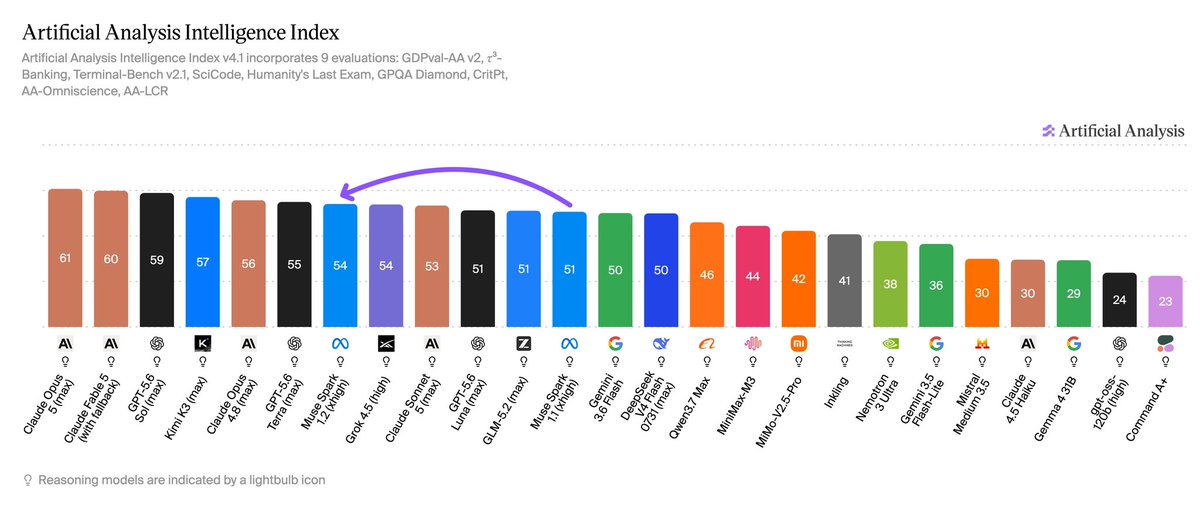
Meta has released Muse Spark 1.2. It's their third release in four months and scores 54 on the Artificial Analysis Intelligence Index, significantly improving agentic knowledge work capabilities over prior releases and putting Meta next to SpaceXAI in a tie for third place
Meta's Muse Spark 1.1 scores 51 on the Artificial Analysis Intelligence Index and is cost and token efficient compared to its peers
Muse Spark 1.1 (xhigh) improves 8 points over Muse Spark 1.0 (43) in three months. It is effectively tied with GLM-5.2 (max), GPT-5.4 (xhigh), and
At 30B parameters, Muse Glimmer sits near the Intelligence vs Parameters frontier for open weights models: 5 points above Gemma 4 31B (Reasoning) at the same size, effectively matching Kimi K2.5 (Reasoning) at 33x fewer total parameters, and just behind Qwen3.6 27B (Reasoning),
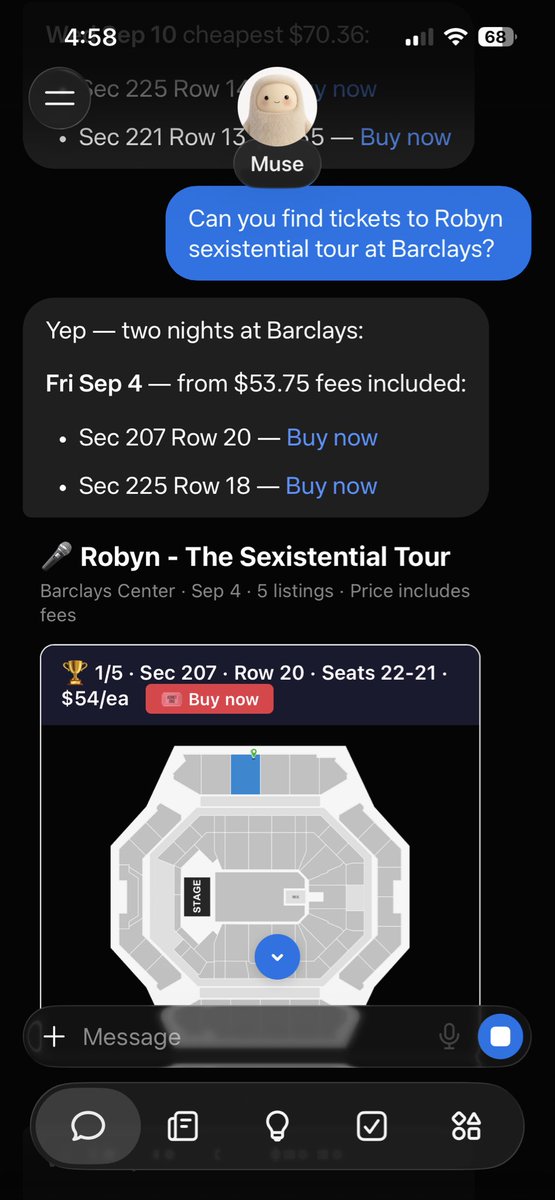
Ticketmaster is now a connector in Muse, a new personal AI agent from Meta.
🏟️ Based on the artists, teams and shows you already care about, your Muse can surface live events worth checking out, with real seating and pricing info right there.
Just tell Muse what you’re looking
A gallery of 100 self-contained generative-art, physics-toy and typography pages generated with Muse Spark 1.3, each shown next to its original prompt.
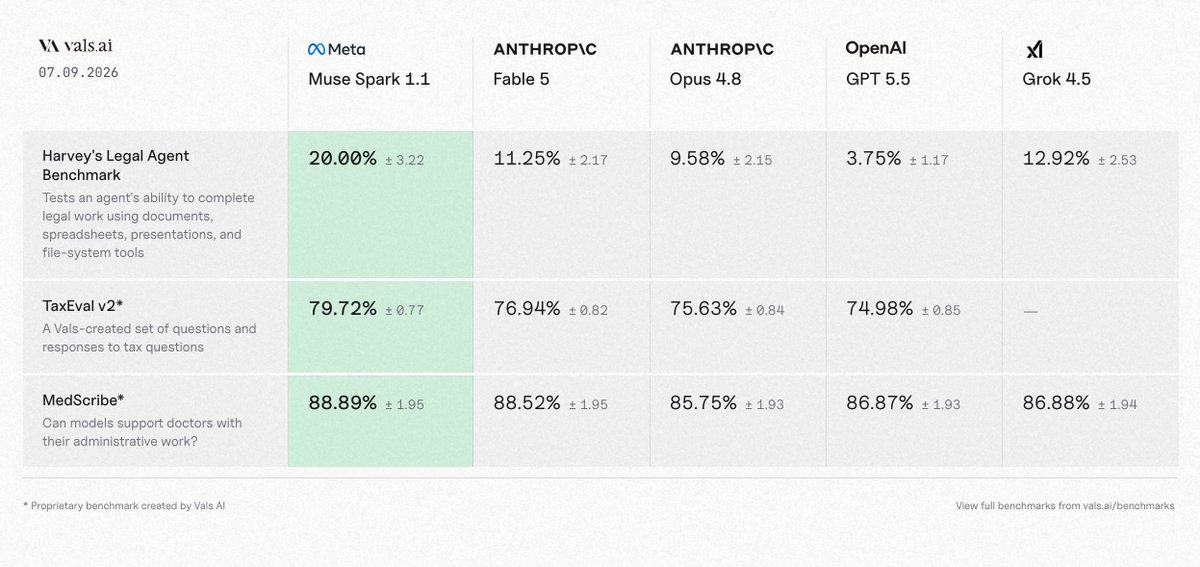
Meta just released Muse Spark 1.1 and is the new SOTA on MedScribe and TaxEval, taking the top spot from Fable 5 while being 10x cheaper and twice as fast. Meta currently holds the top 2 spots on TaxEval
It is also the new #1 on Harvey's Legal Agent Bench, dethroning Grok 4.5
freeCodeCamp's write-up of its three-hour Muse course by Andrew Brown, covering model benchmarks, API integrations, agent frameworks, the Muse Code harness, and a Go/SQLite/Docker full-stack build.
Glimmer obtient 92 % du score d'intelligence de Qwen3.6 (35/38), mais Qwen a généré environ 2,9× plus de tokens sur l'ensemble de l'Intelligence Index. Et sur les endpoints mesurés par Artificial Analysis, Glimmer génère environ 1,8× plus vite. Et le context de glimmer et bien plus efficace !
C est une belle avancer architecture tout de meme , je pense que si il sorte une version 1.1 (surtout pour améliorer terminal benchmark ) ont pourrai être très surpris !
Hey everyone I just wanted to share this: you can have Muse build you an app and then create a shortcut for your phone. My first use case was a workout tracker. I hope this helps someone!
I've been running my work in Codex as project folders, and recently tried to properly understand how Muse Goals work under the hood. Made it a goal — good way to watch the machinery operate on itself.
The structural problem is worth naming: the current design is a halfway house between two coherent designs, and it gets the costs of both.
Design A is Codex: the project is a container. Everything — chat, state, artifacts, scheduled work — lives in one place. My course project has one tracker file, explicit resume rules for new chats, and the curriculum never holds status. Legible, but you have to go to it.
Design B is full ambient: no containers at all. The goal is just context that wakes up wherever you mention it, and there's no Goals tab pretending otherwise.
Muse picked ambient for activation — talk about the goal anywhere, it wakes up, you never "open" it. But then it built half of containment: a Goals tab showing summary, artifacts, activity, without the other half. Conversations, check-ins, and briefings still leak into whatever chat they happened in. So you get the scattering of ambient with the implied promise of a container. That's the worst combination.
The fix is to















 ChatForm
 Tgmlabs