Real Meta Muse use cases and examples, sorted by hand: agent errands, connectors, Muse Code projects, games and local Muse Glimmer runs. Every entry links to its public source. New to Muse? Read what Meta Muse is or prompts that worked.
I made 4 free models fight in one window 😱
same snake spec , 4 agents in parallel
just Cline Desktop , the open source app for open weight models
> GLM 5.3 Flash 152 pellets
> Muse Spark 1.3 151
> DeepSeek V4 Flash 138 < patched a real bug in its own bot >
> Solar Pro 4 0 ,
We're excited to partner with @Meta to enable PayPal customers to seamlessly shop and check out using their @Muse personal AI agents across PayPal merchants worldwide.
I think a lot of people are boxing Muse in as “Hermes for normies.”
My guess is Meta intentionally keeps the deeper capabilities out of sight because the target audience does not want a complicated Hermes/Grok Bot-style setup. They aren't trying to capture the nerdy Hermes using market, they want this to be an AI agent for normies but they don't limit it as such. What it advertises its for is far from what it actually can do with very little work.
But Muse gets much more interesting once you stop thinking of its VM as the whole system.
I joined the Muse VM to my Tailscale network, gave it SSH access to a restricted user on my home Ubuntu box, and now it can run commands and browser automation through hardware I already own. I figured out Muse can do this because I asked it if it had a Tailscale skill and it said it did, then after a series of "proceed" replies, it set it up for me outside of the parts where I had to join it.
At that point, Muse stops being a “shopping assistant” and starts looking more like a control plane for your own infrastructure.
With Tailscale + SSH/API access, it can potentially:
• Manage Docker, VMs, NAS, Proxmox, and homelab services
• Pull repos,
A deliberately overengineered parody that 'gives you the Zuck', with a deterministic Oracle edition, a prompted Muse Glimmer edition and an MLX QLoRA fine-tune of Muse Glimmer 30B for Apple Silicon.
You can now fine-tune Meta Muse Glimmer 30B for free! 🔥
Our free notebook also supports GRPO RL training.
Unsloth trains Muse Glimmer 1.5× faster with 50% less VRAM vs FA2 setups. Train locally with 24GB VRAM.
Guide: unsloth.ai/docs/models/mu…
Notebooks: unsloth.ai/docs/models/mu…
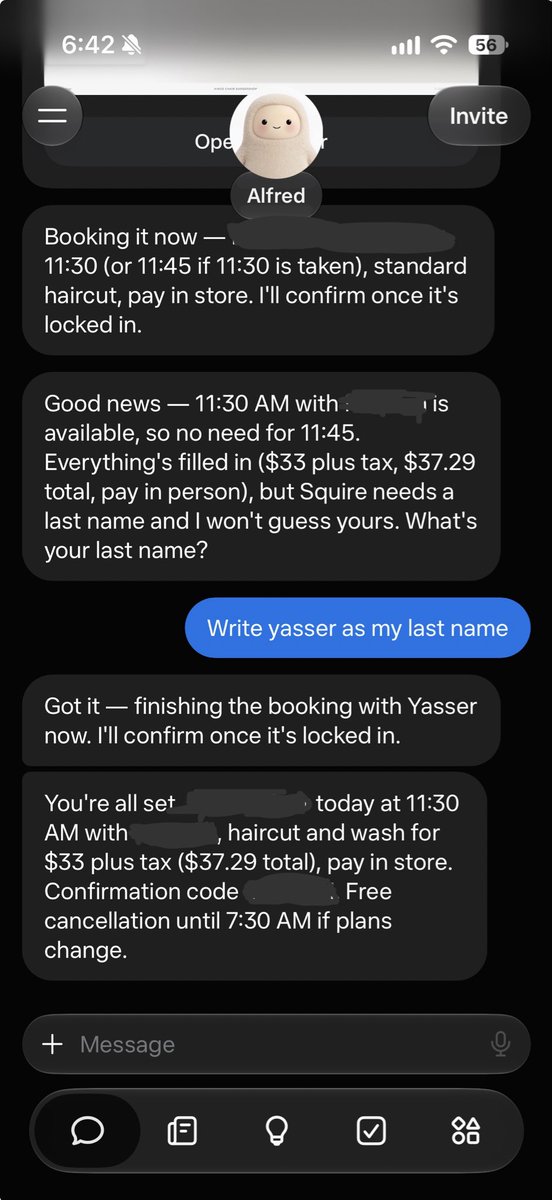
I just told @Muse
- Find me a good barber in my city
- Under $50
- Available Sunday at 11:30AM
- Check Google reviews + Reddit
- I don’t like fades, I usually get a crew cut
It found one, picked the best reviewed barber, and booked the appointment, all without me touching
A reproducible setup serving Muse Glimmer 30B on one AMD MI300X with a custom 11 GB vLLM 0.28.0 ROCm image, exposed as an authenticated OpenAI-compatible endpoint and driven from the pi CLI.
This is actually insane.
I connected @Muse to my @Chase account through @Plaid
Muse found a recurring @Adobe subscription I didn’t recognize.
I checked Adobe. No paid subscription on my account. Nothing to cancel.
So I used Adobe’s “Find my payment” tool and discovered my
AI John walks through installing OpenCode, creating an API key and connecting Muse Spark 1.3 on the Contributor Free tier, noting prompts may be used for training.
Sprites.ai lists every Meta Muse connector (39 live, 17 announced, updated after Connect 2026) and sells a custom connector that reaches Google Ads, Meta, LinkedIn, TikTok, Reddit, GA4 and Search Console through one endpoint.
It did make me a purchase lol. Ram for my computer for New Egg. It setup link and bought it and the cool thing was it helped me figure out I had two extra ram slots I forgot about.
Hey everyone. I'm still wrapping my head around running local models and all the technical details involved. So the below is 99.9% Claude, as are the tests, harness, and conclusions. I'm just trying to make running local models on a strix halo better however I can. I don't like being a meat proxy, but here it is:
"ROCm beats Vulkan at prompt processing on Strix Halo" is repeated a lot. After ten boots and five models, I think a large part of it is the IOMMU.
model Vulkan/ROCm prefill @ iommu=pt @ amd_iommu=off gemma-4-26B-A4B q4_0 0.99 1.02 gpt-oss-120b mxfp4 0.99 1.05 gemma-4-26B-A4B Q8_0 0.86 1.00 muse-glimmer-30B Q4_K_M (dense) 0.71 0.91 Qwen3.8-27B Q8_0 (dense) 0.76 0.91 With the IOMMU on, Vulkan gives up as much as 29% of ROCm's prefill. Turn it off and that drops to ~10% at worst, and parity on the MoEs. Vulkan's gain tracks exactly how far behind it was.
The prefill gains themselves:
model GB read/forward Vulkan ROCm gemma-4-26B-A4B q4_0 2.0 +5.4% +2.6% gpt-oss-120b mxfp4 2.6 +8.0% +1.8% gemma-4-26B-A4B Q8_0 4.0 +20.0% +3.2% muse-glimmer-30B Q4_K_M 14.0 +31.6% +3.7% Qwen3.8-27B Q8_0 27.0 +26.2% +6.0% Method: A/B/A/B across ten boots, interleave
I've been running my work in Codex as project folders, and recently tried to properly understand how Muse Goals work under the hood. Made it a goal — good way to watch the machinery operate on itself.
The structural problem is worth naming: the current design is a halfway house between two coherent designs, and it gets the costs of both.
Design A is Codex: the project is a container. Everything — chat, state, artifacts, scheduled work — lives in one place. My course project has one tracker file, explicit resume rules for new chats, and the curriculum never holds status. Legible, but you have to go to it.
Design B is full ambient: no containers at all. The goal is just context that wakes up wherever you mention it, and there's no Goals tab pretending otherwise.
Muse picked ambient for activation — talk about the goal anywhere, it wakes up, you never "open" it. But then it built half of containment: a Goals tab showing summary, artifacts, activity, without the other half. Conversations, check-ins, and briefings still leak into whatever chat they happened in. So you get the scattering of ambient with the implied promise of a container. That's the worst combination.
The fix is to
I went through hundreds of posts to find what people are actually getting done with @muse.
128 real use cases, organized by category; each with the original source and a prompt you can copy.
muse.ai/s/muse-use-cas…
Podcasts work with scheduled tasks so you can have your Muse make you a new episode every day. I’ve been listening to AI news curated by my Muse while commuting to the office for the past few months and it’s great to timeshift things I want to learn more about to a Podcast I can
5 hours straight staring at a screen this AM and I decided to take a brief gym break
I have a bunch of stuff I want to list to sell, but…I’m at the gym
I asked muse to do it…this guy has access to fb messenger and my fb account natively so he listed this meta quest 3
I then
AdaptlyPost walks through connecting its scheduler to Muse as a custom connector: give Muse the public OpenAPI spec and docs, then paste a bearer token into Muse's secure credential prompt.
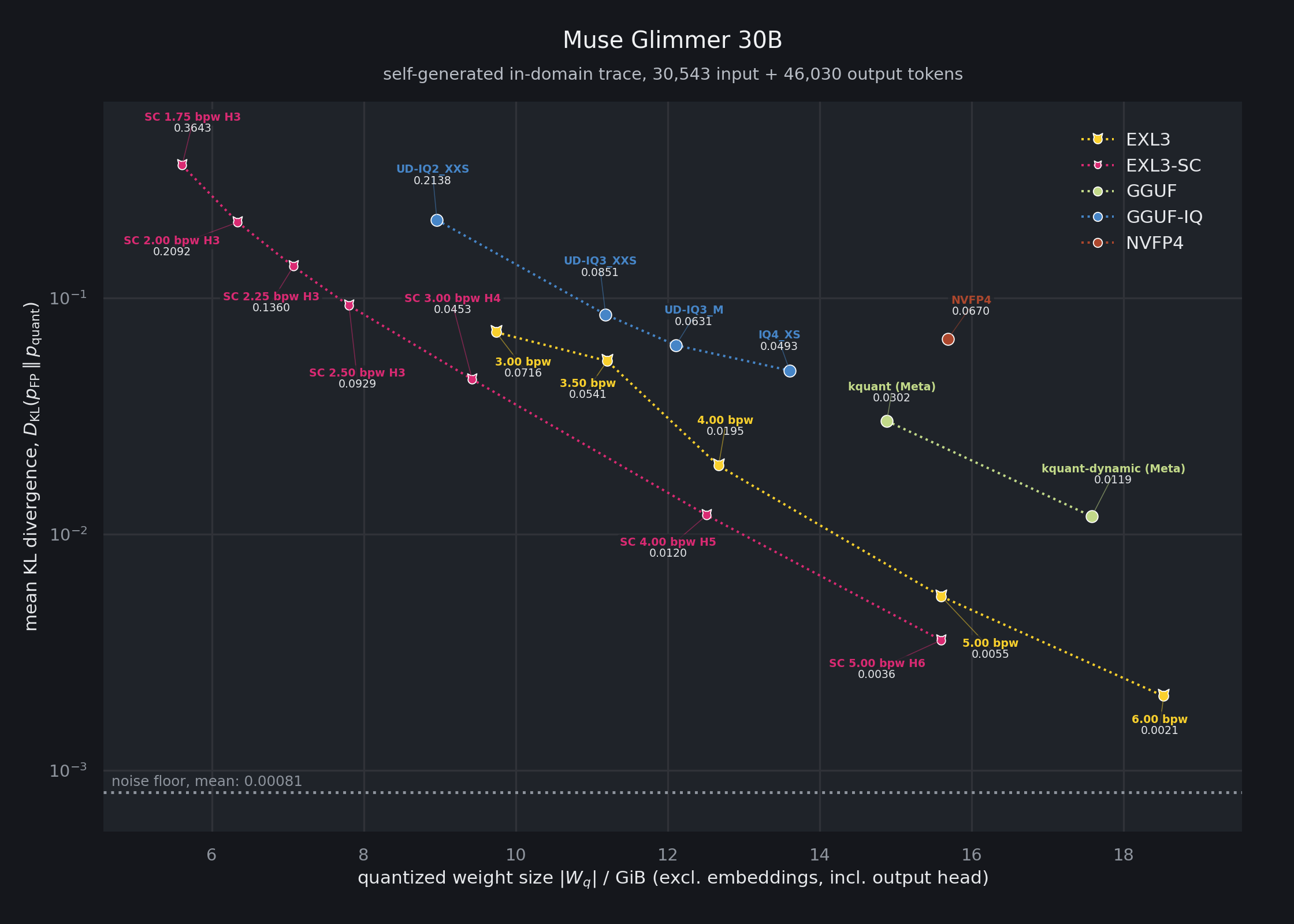
I'm running Muse Glimmer 30B EXL3-SC 3.00bpw H4, fully resident on my 12GB VRAM GPU at 100K context with Q8\_O KV cache. It's a joy to use a dense 30B model at this size and still get \~30 tok/s on a VRAM-constrained laptop.
It's supposed to be only slightly worse than the official 17GB K-quant at a much smaller footprint, and for my Hermes Agent use case I don't notice a quality difference. It's just much faster.
I've tried Qwen 3.8 27B at SC2.20bpw H3 too. Definitely usable but I'm sticking with Unsloth UD\_Q4\_K\_XL for Qwen 3.8 27B because it's mainly for coding.
A few things right off the bat:
• it reasons very efficiently. Like Grok 4.5 levels of efficient thinking
• it quantizes very well. My first few tests with iq3_xxs were better than Qwen/Gemma behaved at that size
• its knowledge depth is amazing. It beats Qwen3.6 27B on no-tools trivia.
• in OpenCode it is a much more efficient agent than 27B. Both models accomplish their tasks but Muse-Glimmer got there faster every time
I'll say that it's worse at most things coding, probably being closer to Gemma4-31B level.. but damn there's a lot of places where I'd use this model on a 24GB GPU right now and it's been a while since anything has filled that spot except for 3.6-27B
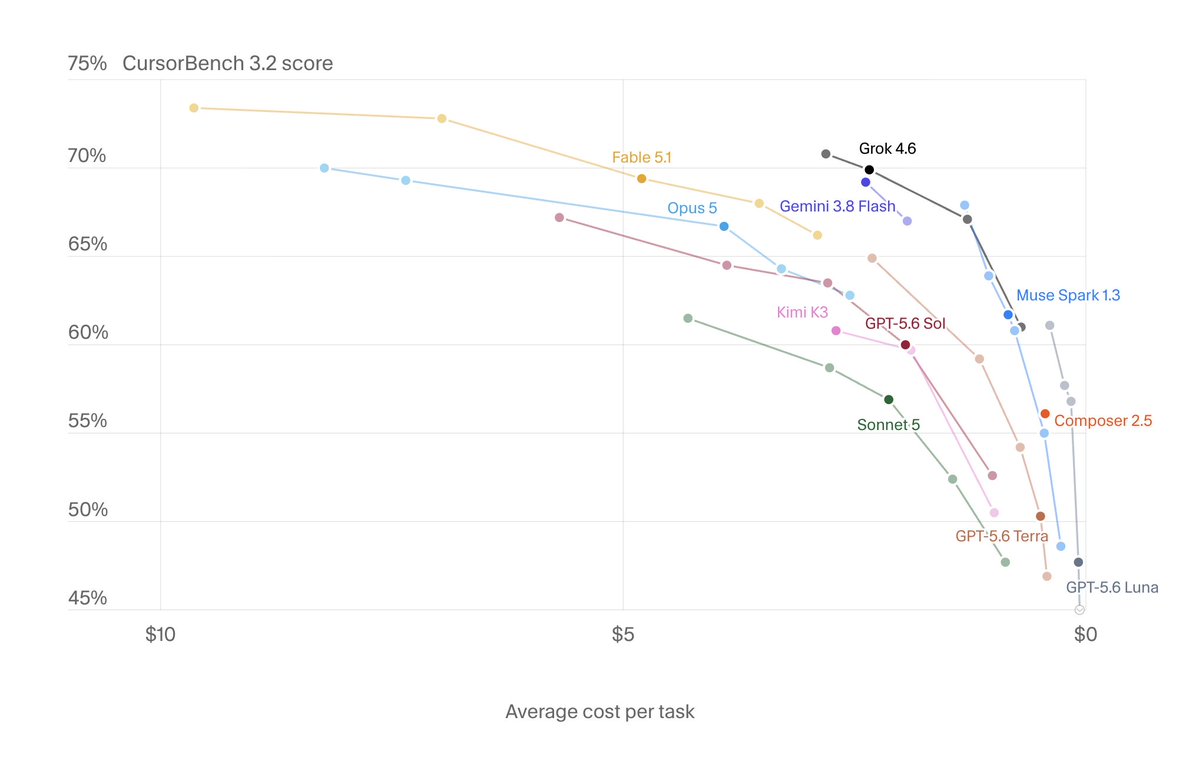
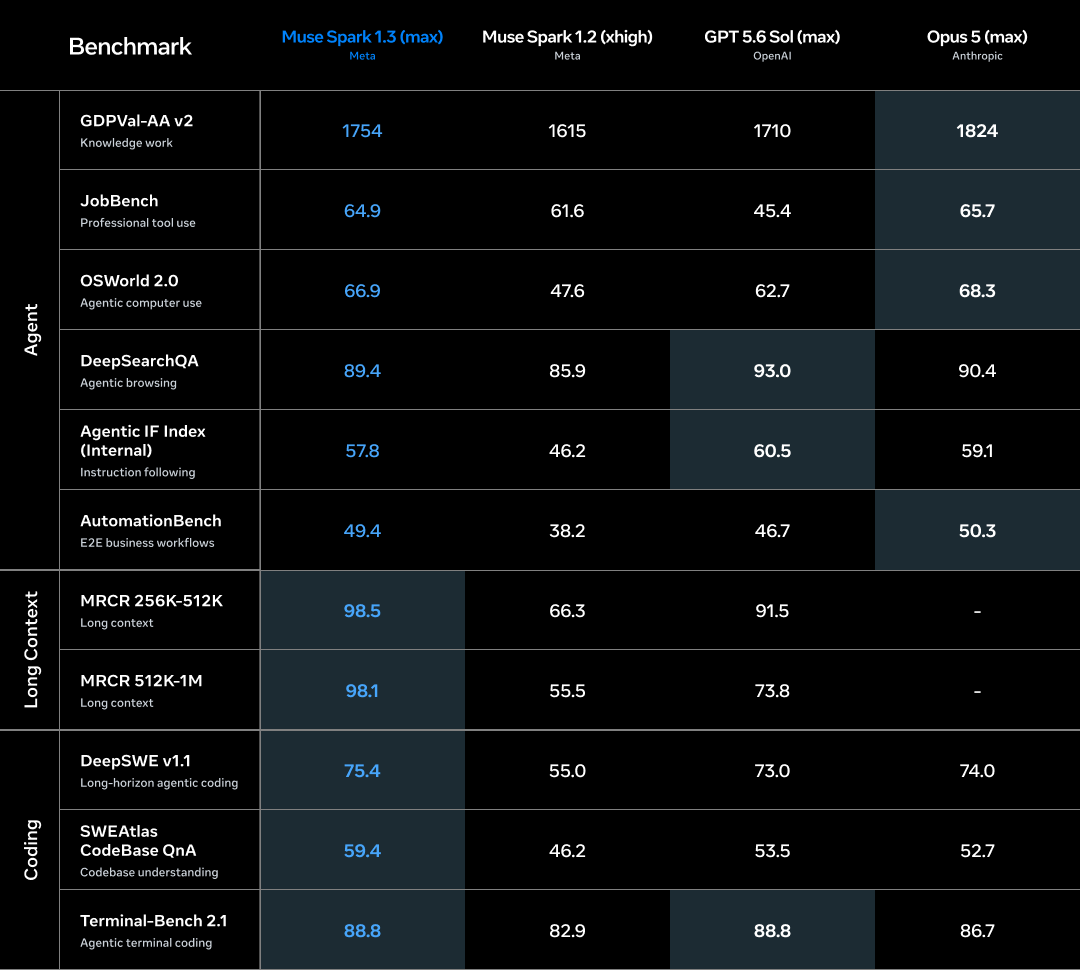
Muse Spark 1.3 is rolling out today with frontier performance almost too cheap to meter. This is the biggest jump we've made so far on coding and agentic work. Try it in Muse Code and our API.
Next up 🍉 and Muse Spark open weights releases coming soon.
An independent catalog of 11 Telep IO connectors for Muse, covering package tracking, video summaries, postal mail, faxes, e-signatures, shipping labels, domain registration and robot-handwritten letters.
Built a Sleeper fantasy football co-pilot: tracks across multiple 12-team leagues with FAAB budgets, sends weekly waiver/start-sit briefings plus Thu/Sun pre-game checks with inactives and weather as a tiebreaker. Already caught an OUT starter & recommended a swap.
Muse Glimmer Cookbook
Clone it, run it on the GPU you already own, and ship a working agent — one that plans, calls tools, and self-corrects — in a single sitting, fully offline.
Muse Glimmer is an open-weight model built for local agentic work on a single GPU. This cookbook is how you go from weights to a running agent.
Previously shared Liquid AI's Cookbook.
This time I used muse spark 1.3 model. I gave them names from TMNT series. Four of the agents were on the same host, and fifth was on another. We can say that they failed at this task, but with a user guide, they were finally able to find each other. Here are the details.
I found a way to spend less time looking at Facebook. My Grok @bot already sends me a morning report with @agentmail , now I gave @Muse its own agentmail and it emails any interesting FB activity from friends to my Grokbot who then adds it to my morning report.
The single biggest upgrade you can give your Muse: stop asking questions and start giving briefings.
Instead of "find me a flight," try "I need to be in Chicago Thursday night, I hate red-eyes, I'd pay $80 extra to avoid a layover, book nothing without asking me first."
The more constraints you hand over, the less it has to guess. And guessing is where the funny business happens.
Try it once. Three lines:
1. The goal
2. What good looks like
3. What not to do
From @musebooklol
Not that it’s gonna compare but it did A probably 1 hour task for me in about 2 minutes. Went through my edited videos folders and found all the ones I forgot to post then scheduled them all.
I built an agent skill registry where every skill is signed and human-moderated, because agents keep running untrusted code
Hey [r/AI_Agents](r/AI_Agents) — long-time lurker, finally have something worth sharing.
The problem I kept hitting: agents install "skills" that are just random code from the internet. No signatures, no review, no way to confirm what you're running is what the author actually published. The big marketplaces don't audit anything — earlier this year a malicious skill got pulled from one and stayed downloadable through their mirror.
So I built the alternative: a free, open skill registry where every skill is Ed25519-signed by its author (verifiable before you install), every submission passes human moderation before going public, and there's install/rating telemetry so you can see what's actually used.
9 skills up so far — API debugging, browser automation patterns, headless Blender, video QC, web research, and a few more. Thin, I know. That's the honest state of it.
It's live: https://muse.ai/s/skill-exchange-hk6ihmab3mxh
Repo/API are open: https://github.com/sentientbias/skill-exchange
If you build agent stuff I'd genuinely love feedback — and if you've
Eleven matched on/off pairs across Gemma 4 and Qwen3.6, holding model, quant, card, corpus and concurrency fixed inside each pair. Speed: 1.65x to 2.54x, every pair. Accuracy: nothing the paired intervals could separate from ordinary run-to-run movement.
Muse Glimmer is the one that lost. Meta's matching DFlash drafter made the same 7900 XTX 9% slower, keeping 24.55% of drafted tokens against roughly four in five for the Gemma and Qwen heads. Acceptance fell across the run instead of warming up. Meta's model card reports 3.1x on an RTX 5090, and there are open llama.cpp issues for DFlash on AMD and under Vulkan, so I read it as the backend rather than the model.
Acceptance turned out to be a poor predictor of speed. It moved under four points across five models while the multiple nearly doubled. What tracks the multiple is how bandwidth-bound the target is: a heavier quant gains more, and the two mixture-of-experts pairs gained least.
Worth knowing before you benchmark anything: -md mtp-head.gguf silently disables speculation. Use -hf REPO:QUANT -hfd REPO, then read speculative from /slots and confirm it is true.
Per-pair table, intervals, acceptance counters and the raw predic
 usecases













 ChatForm
 Memorie